★
Loading archive…
Loading archive…
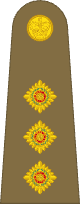
The 20-Year-Old Fighter Ace Who Became a Legend of the Royal Flying Corps By the time Albert Ball was twenty years old, he had become one of the most celebrated fighter pilots in Britain. Within months, he was dead. In an extraordinarily short combat career over the Western Front, Ball rose from a young officer of the Sherwood Foresters to one of the Royal Flying Corps' most formidable fighter pilots, earning the Victoria Cross, Distinguished Service Order and two Bars, Military Cross, a Mention in Despatches, France's Légion d'honneur, and Russia's Order of St George, 4th Class. His story is remarkable not simply because of the number of enemy aircraft credited to him, but because the official citations repeatedly describe a pilot willing to attack formations that vastly outnumbered him. Born on 14 August 1896, Albert Ball came from Nottingham and was educated at Trent College. He entered military service with the 7th (Robin Hood) Battalion, Sherwood Foresters, Nottinghamshire and Derbyshire Regiment, and was seconded while serving with the North Midland Divisional Cyclist Company in early 1915. Aviation soon became his future. Ball earned his Royal Flying Corps pilot's brevet on 22 January 1916, and once he reached operational flying his reputation developed with extraordinary speed. His Military Cross provided an early indication of what was to come. Published in the Supplement to The London Gazette on 27 July 1916, Issue 29684, page 7435, the citation praised his repeated skill and gallantry. It singled out an attack on an enemy observation balloon. After his first attempt failed, Ball returned for more bombs, went back across the lines and destroyed the balloon in flames. The same citation recorded another occasion when he attacked six enemy aircraft during a single flight, forced two down and drove the others away, several miles inside enemy territory. Yet Ball's fighting style was about to produce an even more extraordinary series of official citations. His Distinguished Service Order, announced on 26 September 1916, followed an engagement in which he encountered seven enemy aircraft, attacked immediately and shot one down at extremely close range. He then encountered another formation of five, destroyed two more, landed at the nearest aerodrome to replenish his ammunition, and returned to attack yet another group. His own aircraft was badly damaged during the fighting. The citation described his conduct as one of conspicuous gallantry and skill. On that same date came a first Bar to the Distinguished Service Order, and its citation is equally revealing. While escorting a bombing raid, Ball encountered four enemy aircraft, broke up their formation and shot one down. On another occasion he attacked a formation of twelve enemy machines, diving directly among them. He drove one down out of control, engaged further aircraft as they arrived, and eventually crossed back over the lines at low altitude in a heavily damaged machine. The official Gazette citation again praised his conspicuous skill and gallantry. There was still another award to come. A second Bar to the Distinguished Service Order was published on 25 November 1916, Issue 29837, page 11531. The citation recorded Ball attacking three hostile aircraft and bringing one down, and noted that in a short period he had brought down eight hostile machines while forcing many others to land. At an age when most young men were only beginning their adult lives, Ball had accumulated a DSO and two Bars through repeated acts of aerial combat. His courage was recognised beyond Britain as well. Ball received the Russian Order of St George, 4th Class, and the French government appointed him a Chevalier of the Légion d'honneur. His French appointment was formally published in The London Gazette on 2 June 1917, naming Lieutenant, temporary Captain, Albert Ball of the Nottinghamshire and Derbyshire Regiment and Royal Flying Corps. Unlike his British gallantry decorations, the Gazette announcement of the Légion d'honneur did not contain a narrative citation describing a particular action. The RAF Museum also records his Russian Order of St George as part of his recognised honours. Then came the period that defined his place in British military history. Between 25 April and 6 May 1917, Ball fought an almost continuous series of air combats. His posthumous Victoria Cross citation, published in The London Gazette on 8 June 1917, Issue 30122, page 5702, recorded that in those twelve days he participated in twenty-six aerial combats, destroyed eleven hostile aircraft, drove two down out of control and forced several more to land. Flying alone, he fought six enemy machines on one occasion, five on two occasions and four on another. When leading two British aircraft, he attacked an enemy formation of eight. The citation stressed that on each of these occasions he brought down at least one opponent. Perhaps the most revealing part of that citation concerned what happened after the fighting. Ball repeatedly returned with damaged aircraft. On one occasion, so many control wires had been shot away that his machine was close to structural failure, yet after landing he had to be restrained from immediately taking another aircraft back into combat. The official citation concluded by crediting him with the destruction of forty-three German aeroplanes and one balloon, while praising his exceptional courage, determination and skill. Modern historical accounting commonly describes Ball as a 44-victory fighter ace, which corresponds to the forty-three aircraft and one balloon recorded in the VC citation. He would never know that he had been awarded the Victoria Cross. On the evening of 7 May 1917, Captain Albert Ball took off with No. 56 Squadron, Royal Flying Corps, flying his SE5a on a fighting patrol. The precise sequence of events surrounding his final flight remains uncertain. The RAF Museum records that German witnesses saw Ball's aircraft emerge from low cloud inverted and trailing a thin plume of smoke. He was killed when the aircraft crashed, and examination reportedly revealed no combat damage to the machine. He was only twenty years old. Ball was buried in Annoeullin Communal Cemetery and German Extension in France, where his grave remains a physical link to one of the shortest yet most intensely decorated careers in the history of British military aviation. Nottinghamshire's Roll of Honour records him as VC, DSO and two Bars, MC, Mentioned in Despatches, while the RAF Museum additionally confirms the French Légion d'honneur and Russian Order of St George. Albert Ball's reputation has endured because his story contains an extraordinary contradiction. He became famous for destroying enemy aircraft, yet his career lasted little more than a year and ended before his twenty-first birthday. His surviving citations allow something more valuable than legend to remain. They show, action by action, why his contemporaries regarded him so highly. The Military Cross, DSO and two Bars, and ultimately the Victoria Cross trace the progression of a young pilot whose willingness to engage the enemy repeatedly placed him against overwhelming odds. More than a century later, Captain Albert Ball VC remains one of the defining figures of First World War aviation and one of the most remarkable recipients of the Victoria Cross associated with the Royal Flying Corps.
Become the named supporter for this profile and edit the tribute biography and portrait (Owner account required). Proceeds help keep the archive online.
$25 USD / year — annual sponsorship renewal. Keeps the page online and, where enabled, the family anniversary remembrance emails active.
