★
Loading archive…
Loading archive…
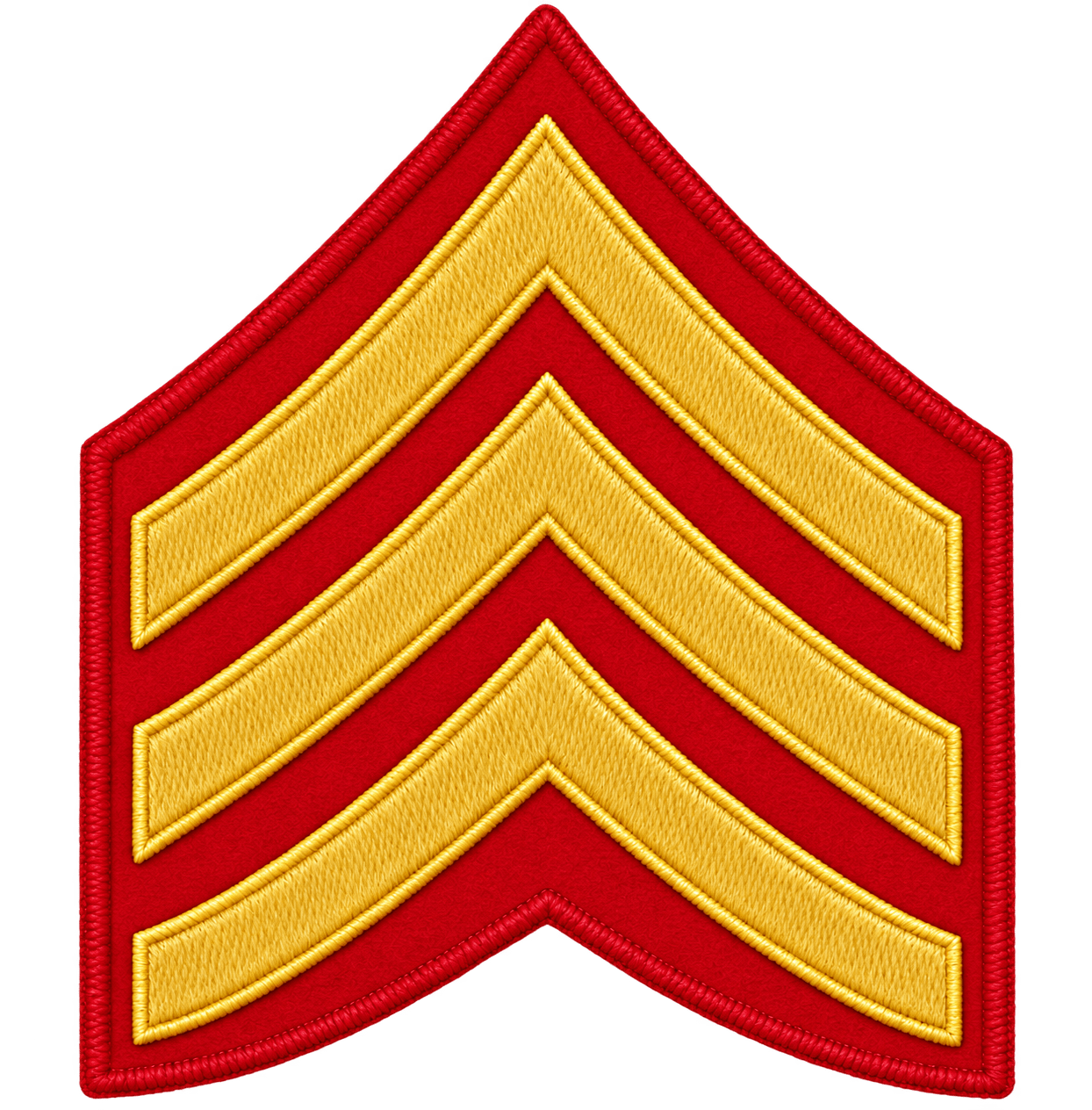
Sergeant Albert Joseph Smith (31 July 1898 – 27 March 1973) was a United States Marine Corps serviceman and Medal of Honor recipient whose distinction came not from battlefield combat, but from an extraordinary act of lifesaving courage at Naval Air Station Pensacola, Florida, on 11 February 1921. While serving as a Private and standing sentry duty, Smith entered the wreckage of a burning U.S. Navy seaplane and rescued a sailor who was trapped beneath it, continuing despite exploding gasoline and suffering serious burns himself. He later attained the rank of Sergeant before leaving the Marine Corps.
Early life in Michigan
Albert Joseph Smith was born on 31 July 1898 in Calumet, Houghton County, Michigan. Official Marine Corps and Medal of Honor records consistently give Calumet as his birthplace. Local historical research from Schoolcraft County adds more detail, identifying his parents as Albert Smith Sr. and Martha Smith and recording that the family moved several times within Michigan before eventually settling on a farm in Thompson Township. His father had worked in occupations including saloon keeping and mining-related engineering before acquiring the farm.
According to the Schoolcraft County Historical Society, young Albert spent part of his formative years working on the family farm. He was also employed for a period as a printer. Local accounts say he developed a strong interest in aviation, which helped influence his decision to join the Marine Corps after the First World War. These details come from local historical and contemporary newspaper research rather than Smith's abbreviated official Marine Corps biography, so they are best treated as well-supported biographical context rather than formal service-record data.
Enlistment in the United States Marine Corps
Smith enlisted in the United States Marine Corps on 13 October 1919 in Detroit, Michigan, when he was twenty-one years old. This date is important for historical classification: the First World War had already ended with the Armistice of November 1918, so Smith was not a World War I veteran and should not be tagged as such in a military database. His period of service belongs to the postwar or interwar era.
His official branch was exclusively the United States Marine Corps. There is no evidence that he transferred between multiple military branches. He later served in a Marine aviation organization, but this did not make him a Navy sailor, pilot, or formally designated naval aviator. His correct service classification is therefore Marine Corps, with no separate aviation-pilot designation unless a source documenting pilot qualification were found.
Smith's highest documented rank was Sergeant, although at the time of the deed for which he received the Medal of Honor he was still a Private. The official Marine Corps History Division page itself identifies him as Sergeant while specifying “Rank at time of award: Private.”
Naval Air Station Pensacola
By early 1921 Smith was serving at the Marine Barracks, Naval Air Station Pensacola, Florida, one of the most important centers of American naval aviation. His Medal of Honor deed occurred there not during combat but during routine military duty. The Congressional Medal of Honor Society consequently classifies his award under the Interim 1920–1940 period rather than under a named war or combat campaign.
On the morning of 11 February 1921, Smith was assigned as a sentry at Gate No. 1 of the Marine Barracks. At approximately 7:30 a.m., a U.S. Navy H-16 seaplane, No. 848, came down close to his position and caught fire. The original Navy Department General Order identifies the trapped sailor as Plem M. Phelps, a former machinist's mate second class, U.S. Navy. Later Medal of Honor databases sometimes render the given name as “Plen,” but the contemporary Navy General Order itself uses “Plem.”
The rescue of Plem M. Phelps
The wreck immediately became extremely dangerous because of its fuel load. According to the official Navy Department account, the aircraft's gravity gasoline tank exploded while Phelps remained pinned beneath the burning structure. Smith did not wait for the fire to subside or for specialized rescue personnel. He forced his way close enough to the wreckage to reach the trapped man.
Smith succeeded in freeing Phelps and pulling him away from the burning seaplane. In doing so he suffered painful burns to his head, neck, and both hands. The official General Order emphasized that he acted with complete disregard for his own safety while carrying out the rescue.
A contemporary Michigan newspaper account preserved by the Schoolcraft County Historical Society gives additional color to the accident. It reported that two Navy machinists had been working around the aircraft before it unexpectedly became airborne and crashed, and that another fuel explosion occurred during the rescue. The article described Smith entering the burning wreckage and freeing the injured man despite sustaining burns himself. Because the Navy Department's formal citation is the primary source, it should remain the authority for the essential facts; the newspaper account is useful supplementary evidence.
The rescue was therefore a case of non-combat military heroism. Smith did not receive the Medal of Honor for engaging an enemy, commanding troops, or participating in a battle. This is significant because Medal of Honor award standards evolved over time; some earlier Navy and Marine Corps awards recognized extraordinary lifesaving conduct performed in the line of duty. Smith's 1921 award belongs to that historical category. The Naval History and Heritage Command lists him among the Marine Corps Medal of Honor recipients for the 1920–1940 period and identifies Pensacola as the place of action.
For this reason, your database correction of Combat Achievement Type = None, Major Engagements = 0, Combat Command = OFF and Combat Tours = 0 is historically appropriate. His rescue can still reasonably be counted as one defining mission/action, because it was the event for which he received the nation's highest military decoration.
Medal of Honor award
The Navy Department formally announced Smith's Medal of Honor through General Order No. 72, dated 29 September 1921. The order described his conduct as “extraordinary heroism displayed in the line of his profession” and also authorized a $100 gratuity, a detail recorded directly in the original document.
The official Marine Corps History Division likewise gives 29 September 1921 as the date the Medal of Honor was awarded. At that time Smith was still recorded as a Private.
There is an important distinction between the award date and the presentation date. The Congressional Medal of Honor Society records that Smith was personally presented with his Medal of Honor on 17 October 1921 in Santo Domingo, Dominican Republic, by Brigadier General Harry Lee. Thus, the award was authorized in Washington on 29 September and formally presented to Smith several weeks later while he was serving overseas.
Marine aviation service in Santo Domingo
After his service at Pensacola, Smith joined the First Marine Aviation Squadron in Santo Domingo, according to contemporary Michigan reporting preserved by the Schoolcraft County Historical Society. His presence there is also independently corroborated by the Congressional Medal of Honor Society's record of his October 1921 presentation in Santo Domingo.
At the time, the United States Marine Corps maintained substantial forces in the Dominican Republic as part of the U.S. occupation. Naval History and Heritage Command records show that the military government established in 1916 remained until 1924, with more than two thousand Marine officers and enlisted personnel present in 1921.
Smith's Santo Domingo assignment is therefore valid service-history context, and Occupation of the Dominican Republic can be included as a theater or deployment if your database supports it. However, the available evidence does not establish that Smith personally participated in a documented combat engagement there. His record should therefore not be inflated into a combat tour or major battle.
His Dominican service also creates a possible entitlement question concerning the Marine Corps Expeditionary Medal. The service period falls within qualifying expedition-era dates, but in the research completed for your database we did not locate a Smith-specific medal roll, issue record, surviving group, or official biography explicitly stating that he personally received that medal. For a strict “individually confirmed medals only” database, it should therefore remain excluded from his ribbon rack.
Rank and end of service
Smith continued serving after receiving the Medal of Honor and eventually attained the rank of Sergeant. The precise date of his promotion is not provided on the Marine Corps History Division's condensed biography, so it would be inappropriate to invent a promotion date. What can be established is that Sergeant was his highest documented Marine Corps rank.
He was honorably discharged from the Marine Corps on 22 October 1922, almost exactly three years after enlisting. His official service period can therefore be represented as 1919–1922.
There is no verified evidence in the authoritative sources reviewed that Smith served in a second military branch, fought in another war, became a prisoner of war, exercised unit-level combat command, or qualified as a military pilot. Those negative findings support the conservative database configuration established earlier.
Awards and decorations
For a strict historical medal rack, Smith's only individually verified decoration is the Medal of Honor. It is directly documented by the original Navy Department General Order, the U.S. Marine Corps History Division, the Naval History and Heritage Command, the Congressional Medal of Honor Society, and the National Medal of Honor Museum.
No clasp or additional device is documented for his Medal of Honor ribbon. The earlier research into a Marine Corps Expeditionary Medal identified potential service eligibility but not personal issuance, while there is no substantiated basis for adding a World War I Victory Medal, Dominican Campaign Medal, Marine Corps Good Conduct Medal, or another campaign decoration to his confirmed rack.
Accordingly, the final verified rack remains one medal: Medal of Honor.
Life after the Marine Corps
The readily available official Marine Corps biography provides very little detail about Smith's civilian life after his 1922 discharge. Rather than filling those decades with unsupported assumptions, the historically responsible approach is to state only what can be verified: he remained associated with Michigan and was living in the Detroit area by the later part of his life. Official Medal of Honor sources record Detroit as his place of death.
An interesting episode occurred in 1959, when Representative Martha Griffiths of Michigan informed the U.S. House of Representatives that Smith had been omitted from a published roster of living Medal of Honor recipients. She specifically called attention to his case so that official lists would be corrected to include him. The episode illustrates how his unusual peacetime/interim Medal of Honor was sometimes overlooked in lists organized primarily around wartime recipients.
Death and burial
Albert Joseph Smith died on 27 March 1973 in Detroit, Michigan, aged seventy-four. The Marine Corps History Division, Congressional Medal of Honor Society and National Medal of Honor Museum all agree on his death date and identify Detroit as the location.
He was buried in Grand Lawn Cemetery in Detroit. The Congressional Medal of Honor Society gives the more precise location as Section X, Lot 64, Grave 5, while its database marks the burial as a Medal of Honor gravesite.
Where is his Medal of Honor today?
The Congressional Medal of Honor Society currently identifies Smith's Medal of Honor as being located at the Michigan Heroes Museum in Frankenmuth, Michigan. This gives his story a direct museum connection within his home state rather than leaving the medal's whereabouts uncertain.
The National Medal of Honor Museum also maintains Smith in its recipient database, listing his branch as the United States Marine Corps, his highest rank as Sergeant, his hometown as Calumet and his year of action as 1921.
Historical significance
Albert Joseph Smith's story differs fundamentally from that of many Medal of Honor recipients. He did not earn the decoration while assaulting an enemy position or commanding men in battle. He was a young Marine Private standing sentry duty when an aircraft accident suddenly turned an ordinary morning into a life-or-death emergency. His decision to enter a burning, fuel-filled wreck and rescue another serviceman while sustaining burns himself was the act that defined his military career.
His case is also valuable for understanding the historical development of the Medal of Honor. Today the decoration is closely associated with gallantry in combat, but in the Navy and Marine Corps tradition of the late nineteenth and early twentieth centuries it could also recognize exceptional heroism in lifesaving situations. The Congressional Medal of Honor Society therefore categorizes Smith under the Interim 1920–1940 era rather than attaching his action to a war.
Smith's later posting to Santo Domingo places him within the wider history of Marine Corps operations in the Caribbean, yet the evidence reviewed does not justify portraying him as a combat veteran of that occupation. His verified distinction remains the Pensacola rescue. This is why the historically conservative database settings are United States; U.S. Marine Corps; highest rank Sergeant; Medal of Honor action rank Private; no war tag; Dominican Republic occupation as a service theater if desired; Combat Tours 0; Combat Command OFF; POW OFF; Multi-Service/Multi-War OFF; Combat Type None; Major Engagements 0; Defining Missions 1.
In concise historical terms, Albert Joseph Smith was a Michigan-born United States Marine who served from 1919 to 1922, rose from Private to Sergeant, received the Medal of Honor for rescuing a trapped Navy sailor from a burning H-16 seaplane at Pensacola on 11 February 1921, subsequently served with Marine aviation forces in Santo Domingo, was honorably discharged in 1922, and died in Detroit in 1973. His confirmed medal rack consists of the Medal of Honor alone.
Become the named supporter for this profile and edit the tribute biography and portrait (Owner account required). Proceeds help keep the archive online.
$25 USD / year — annual sponsorship renewal. Keeps the page online and, where enabled, the family anniversary remembrance emails active.