★
Loading archive…
Loading archive…
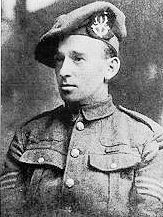
Sergeant, British Army
Support & adopt this hero ↓
The Lossiemouth Soldier Who Refused to Stop
Badly wounded, with officers falling around him and enemy fire still cutting across the battlefield, Sergeant Alexander Edwards kept moving forward. What followed during the opening days of the Third Battle of Ypres made the Lossiemouth soldier one of Scotland's most remarkable Victoria Cross recipients of the First World War.
Alexander Edwards was born at Lossiemouth, Morayshire, Scotland, on 4 November 1885. Before the First World War he worked as a cooper, a trade closely connected with the fishing industry that shaped life in Lossiemouth. When Britain entered the war in 1914, Edwards answered the call. The contemporary Morayshire Roll of Honour records that he enlisted at Elgin on 1 September 1914 and served with the 1/6th Battalion, Seaforth Highlanders, eventually rising to the rank of Sergeant.
The 1/6th Seaforth Highlanders formed part of the 51st (Highland) Division, one of the formations that would become closely associated with some of the hardest fighting on the Western Front. Edwards served in France from 1915, placing him among the men who endured the long, grinding reality of trench warfare before the battle that would permanently attach his name to the Victoria Cross. His overseas service also established his entitlement to the 1914–15 Star, British War Medal 1914–20 and Victory Medal 1914–19. These were campaign and service awards rather than individually cited gallantry decorations. The National Archives confirms the qualifying principles for all three First World War campaign medals.
Edwards's defining moment came on 31 July 1917, during the opening of the Third Battle of Ypres, in the fighting associated with the Battle of Pilckem Ridge. The advance quickly became a test of survival and leadership. When a hostile machine gun in a wood threatened the attack, Edwards located the position and led men directly against it. The gun crew was overcome and the weapon captured. When an enemy sniper then began inflicting casualties, Edwards went after him personally. Even after being badly wounded in the arm, he continued the pursuit and eliminated the threat.
But Edwards was not finished.
With only one officer remaining with his company and the success of the operation depending on reaching the furthest objective, Edwards continued to lead despite his wound. His men followed him forward and the objective was taken. He then helped consolidate the position and carried out personal reconnaissance in circumstances that exposed him to further danger. On the following day, 1 August 1917, he was wounded twice more, yet continued to display the determination and disregard for personal safety that had inspired the men around him. The official Victoria Cross citation praised his "high example of coolness and determination", words that captured not only his individual courage but the effect his leadership had upon his company.
For these actions, Sergeant Alexander Edwards, No. 265473, Seaforth Highlanders, was awarded the Victoria Cross, Britain's highest decoration for gallantry in the face of the enemy. His award was announced in the London Gazette on 14 September 1917. The citation described how he attacked the machine gun position, stalked the sniper despite his wound, led the remaining men to their final objective, consolidated the captured ground and continued showing exceptional courage after being wounded again.
Only twelve days after the Gazette announcement, Edwards stood before King George V at Buckingham Palace on 26 September 1917 and received the Victoria Cross. For a cooper from a Scottish fishing town, the journey from Lossiemouth to a royal investiture was extraordinary. Yet the decoration did not remove him from the war. Edwards eventually returned to active service with the Seaforth Highlanders. The Highlanders' Museum preserves his story among those of the regiment's Victoria Cross recipients and confirms both his gallantry at Ypres and his investiture by King George V.
His return to France would prove fatal. In March 1918 the German Army launched its massive Spring Offensive, threatening to break through British positions across the Western Front. Edwards and the Seaforth Highlanders were drawn into the desperate defensive fighting. On 24 March 1918, at the age of 32, Sergeant Alexander Edwards was killed during the fighting. His body was never recovered or identified, and he is commemorated on the Arras Memorial, alongside thousands of British and Commonwealth servicemen who have no known grave. Contemporary casualty records identify him as Serjeant Alexander Edwards, service number 265473, 6th Battalion Seaforth Highlanders, killed on that date.
There is a poignant detail to Edwards's medal story. Although his complete First World War entitlement includes the Victoria Cross, 1914–15 Star, British War Medal and Victory Medal, the three campaign medals were instituted or authorised too late for him to wear them as a complete group during his lifetime. The 1914–15 Star was authorised in 1918, while the British War Medal and Victory Medal were authorised in 1919. His complete medal entitlement therefore tells a story that continued even after his death.
More than a century later, Sergeant Alexander Edwards VC remains one of the most compelling Victoria Cross stories of the Seaforth Highlanders and the 51st Highland Division. His courage was not confined to one sudden act. He attacked an enemy machine gun, pursued a sniper while wounded, continued leading when command had been devastated, pushed his men to the objective and remained at his post despite further wounds. The Victoria Cross recognised those actions, but the most powerful part of Edwards's story may be what his official citation recorded about the men around him: his courage created courage in others.
Alexander Edwards did not survive the First World War, but the example he set at Ypres survived him. His name remains inseparable from Lossiemouth, the Seaforth Highlanders and the Victoria Cross.
Become the named supporter for this profile and edit the tribute biography and portrait (Owner account required). Proceeds help keep the archive online.
$25 USD / year — annual sponsorship renewal. Keeps the page online and, where enabled, the family anniversary remembrance emails active.