★
Loading archive…
Loading archive…
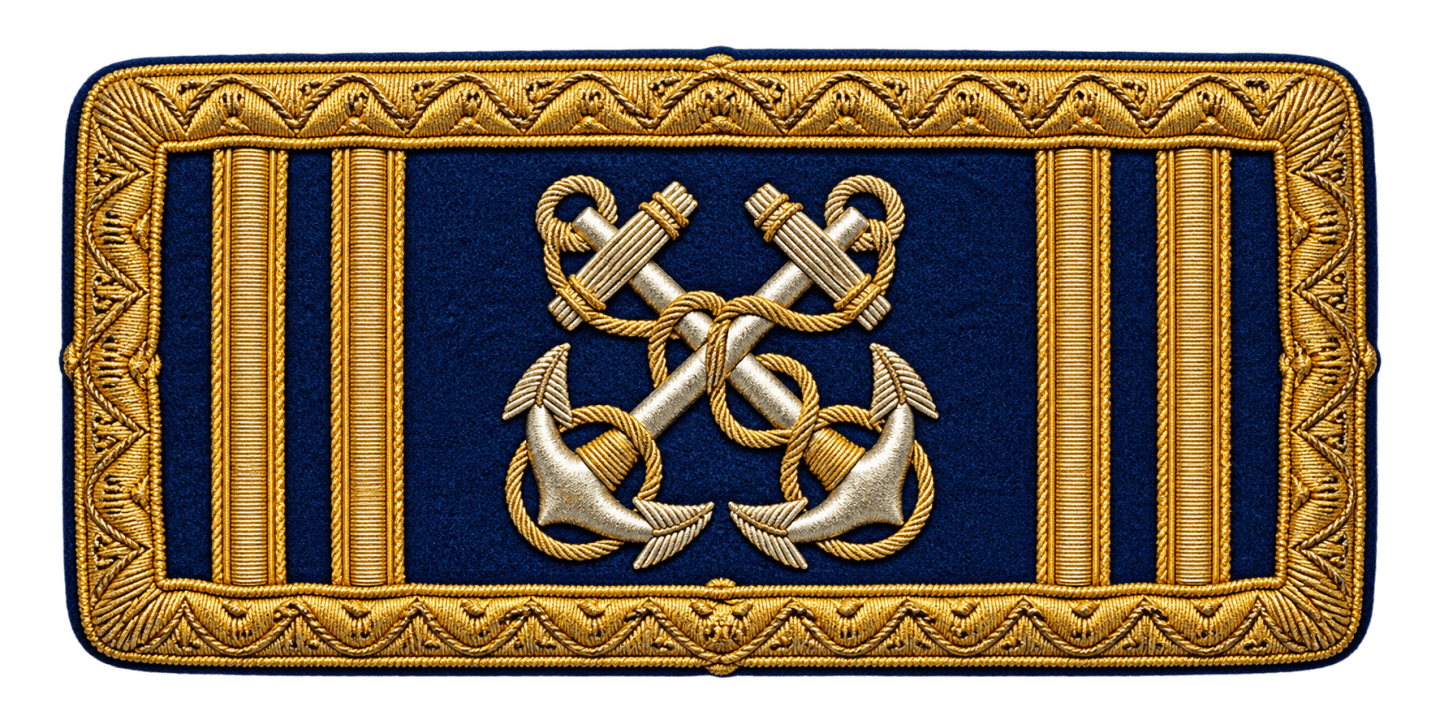
Alexander Robinson was an English-born sailor in the United States Navy who earned the Medal of Honor for extraordinary conduct during the American Civil War. Serving as a Boatswain’s Mate aboard USS Howquah, Robinson remained at his post during a dangerous nighttime engagement off Wilmington, North Carolina, on September 25, 1864, while his ship pursued the Confederate blockade runner Lynx. Caught between Confederate shore batteries and fire from other Union vessels, Robinson continued performing his duties under circumstances that the official record described as exceptionally trying. His steadfast conduct during the destruction of Lynx became the defining documented action of his naval career.
Early Life
Alexander Robinson was born in England in 1831.
The surviving authoritative Medal of Honor record provides very little information about his childhood, family, education, or life before entering American naval service. His Medal of Honor record associates him with New York, New York, but specifically as his place of accreditation for the award. That should not automatically be interpreted as his birthplace, residence, or enlistment location.
Because no sufficiently authoritative service file has yet been recovered to establish those details, his early life should remain described conservatively rather than reconstructed from assumption.
Service in the United States Navy
By 1864, Robinson was serving in the United States Navy with the rating of Boatswain’s Mate.
The Boatswain’s Mate rating was one of the Navy’s traditional deck and seamanship specialties. Men in this field were associated with the practical working of a vessel—rigging, lines, boats, deck equipment, working parties, and the execution of shipboard orders.
For Robinson, this makes Surface Naval the historically appropriate combat-specialty classification.
His confirmed ship at the time of his Medal of Honor action was the steam vessel USS Howquah.
USS Howquah and the Union Blockade
USS Howquah had been purchased by the Navy in June 1863 and was soon assigned to operations off Wilmington, North Carolina.
Wilmington was one of the Confederacy’s most important ports for blockade running. Protected by the Cape Fear River defenses and especially Fort Fisher, it became a critical gateway through which fast steamers attempted to carry cotton outward and military supplies inward.
The Union Navy maintained a demanding blockade off the approaches to the port.
Howquah spent much of her wartime service near Wilmington, pursuing blockade runners and supporting Union operations against Confederate coastal defenses.
Robinson is recipient-specifically confirmed aboard the vessel for the action of September 25, 1864. Earlier or later actions of Howquah should not automatically be attributed to him without additional muster or personnel records.
September 25, 1864 — The Blockade Runner Lynx
On September 25, 1864, the Confederate blockade runner Lynx attempted to leave Wilmington.
Lynx was a fast side-wheel steamer used to carry valuable cargo through the Union blockade. On this voyage she was carrying a substantial cargo that included hundreds of bales of cotton as she attempted to make her way out toward Bermuda.
Union vessels detected her.
USS Howquah, together with USS Niphon and USS Governor Buckingham, began the pursuit.
The chase developed into a dangerous naval engagement.
A Deadly Crossfire
As Howquah closed on the blockade runner, the situation became increasingly hazardous.
Confederate shore batteries opened fire from the Wilmington defenses. At the same time, Union vessels were also firing at the fleeing blockade runner.
This placed Howquah in an extraordinary position.
She was exposed not only to Confederate fire but also to shots passing from other Union vessels toward the target. The ship was therefore operating in what contemporary and later official descriptions characterized as a crossfire.
During the action, Howquah suffered casualties.
One Union sailor was killed and four others were wounded, although the ship itself escaped serious structural damage.
It was under these conditions that Alexander Robinson distinguished himself.
Robinson Holds His Post
Robinson was serving as Boatswain’s Mate while the engagement unfolded.
The official Medal of Honor record emphasizes that he did not abandon his responsibilities despite the fire surrounding the ship.
He remained at his post and continued carrying out his assigned duties under extremely dangerous circumstances.
The essential wording of his citation records that he:
“stood firmly at his post”
while caught in the crossfire from Confederate shore batteries and American vessels.
This is the central fact behind Robinson’s Medal of Honor.
His distinction was not based on commanding the ship, capturing an enemy flag, or personally firing a decisive shot. It was based on steadfast performance of duty under direct and sustained danger.
For a Boatswain’s Mate aboard a combatant vessel, remaining at his assigned station was essential to the functioning of the ship and the discipline of the crew.
Robinson did exactly that while men around him were being killed and wounded.
Destruction of the Lynx
The Union attack ultimately succeeded.
Lynx was repeatedly hit during the engagement. Naval historical records describe the blockade runner as being struck several times, including hits below the waterline.
Damaged badly enough that escape was no longer possible, she was forced ashore approximately six miles below Fort Fisher.
The Confederate crew and passengers escaped, but the vessel was lost.
The wreck was subsequently burned, completing the destruction of the blockade runner.
The encounter therefore ended with a clear operational success for the Union blockade, but it had placed the crew of Howquah in considerable danger.
Robinson’s conduct during precisely that period became the basis of his award.
Medal of Honor
Alexander Robinson received the Medal of Honor, the highest military decoration of the United States.
His award was associated with General Order No. 45, dated December 31, 1864.
That distinction is important because the date of the heroic action, the General Order date, and the eventual presentation date are separate historical events.
His timeline is therefore:
Action: September 25, 1864 General Order: December 31, 1864 Recorded presentation: August 25, 1868
The Congressional Medal of Honor Society confirms that Robinson’s award was not posthumous.
The four-year difference between the action and recorded presentation should therefore not be treated as evidence that he had died before receiving the decoration.
Official Citation
Robinson’s Medal of Honor citation identifies him as a Boatswain’s Mate aboard USS Howquah and specifically connects the award with the destruction of Lynx off Wilmington.
It recognizes that, under exceptionally difficult circumstances, he continued performing his duties while the vessel was caught between fire from the Confederate shore defenses and the Union ships engaged in the pursuit.
The citation is short, but its language reveals what the Navy valued in Robinson’s conduct:
discipline, courage, steadfastness, and devotion to duty while under fire.
Another Medal of Honor Recipient Aboard Howquah
Robinson was not the only member of Howquah’s crew recognized with the Medal of Honor for the September 25 action.
Boatswain’s Mate William C. Connor also received the Medal of Honor for the same engagement.
Connor’s citation closely parallels Robinson’s, describing his continued performance of duty while Howquah was caught in the crossfire.
The separate awards reinforce the severity of the conditions aboard the vessel that night.
However, Robinson’s biography should remain focused on his individual citation rather than assuming actions beyond those specifically recorded for him.
Awards and Medals
Under the strict recipient-specific evidence standard used for this project, Alexander Robinson’s verified ribbon rack currently contains:
Medal of Honor
No additional award device is verified for the decoration.
Robinson’s Civil War service could potentially make other period medals or commemorative awards subjects for further research, but qualifying service by itself does not establish individual entitlement.
Until a medal roll, issue record, service record, or equivalent recipient-specific document identifies another medal belonging to Alexander Robinson, no additional ribbon should be added to his final rack.
Therefore:
Final Verified Medal Count: 1
The Medal of Honor During the Civil War
Robinson’s award belongs to the earliest era of the Medal of Honor.
The Navy Medal of Honor was created during the Civil War, initially for enlisted sailors and Marines. Its original design and regulations differed significantly from the modern decoration.
During the war, naval Medal of Honor actions ranged from dramatic boarding operations and heavy gun battles to exceptional performance at critical battle stations.
Robinson’s award represents the latter type.
He was recognized because he continued doing his duty when the circumstances around him gave every reason for fear, confusion, or withdrawal.
Wilmington and the Importance of the Blockade
Understanding Robinson’s action also requires understanding why Wilmington mattered.
By 1864, the Union blockade had closed or greatly restricted many Confederate ports. Wilmington remained particularly important because its geographic position and coastal defenses made it difficult to seal completely.
Fast blockade runners moved through the area carrying cotton outward and military supplies inward.
Fort Fisher protected the approaches to the Cape Fear River, making the port one of the Confederacy’s last major connections with overseas trade.
The destruction of vessels such as Lynx therefore contributed to the broader Union effort to isolate the Confederacy economically and militarily.
Robinson’s action occurred within this strategically important naval campaign.
What Is Known — and What Is Not
Unlike some Medal of Honor recipients, Alexander Robinson did not leave behind a richly documented public biography.
The authoritative record presently establishes:
his birth in England in 1831;
his service in the United States Navy;
his rating as Boatswain’s Mate;
his assignment to USS Howquah during the Medal of Honor action;
his participation in the September 25, 1864 engagement off Wilmington;
his Medal of Honor;
his association with New York, New York for award accreditation;
and the fact that his award was not posthumous.
What remains unresolved is equally important.
A reliable exact birth date has not been established. His original enlistment date, complete pre- and post-1864 service chronology, date of discharge, civilian occupation, later residence, exact death date, and burial location are not established in the authoritative recipient record currently available.
Those gaps should remain gaps rather than being filled with unsupported information.
Later Life
Robinson survived both the action and the Civil War.
The Medal of Honor Society records his decoration as non-posthumous and gives August 25, 1868 as the presentation date, demonstrating that he was alive several years after the engagement.
Beyond that point, however, the reliable historical trail becomes sparse.
No sufficiently authoritative source recovered during this research establishes the details of his later civilian life or death.
For publication purposes, it would therefore be inaccurate to assign him a death date, cemetery, postwar occupation, or later military career without additional documentation.
Historical Legacy
Alexander Robinson’s historical importance rests on a single exceptionally well-documented night of naval combat.
On September 25, 1864, USS Howquah pursued the Confederate blockade runner Lynx outside Wilmington.
The chase brought the Union vessel into fire from Confederate shore batteries while shells from friendly vessels were also crossing the same battlefield.
Men aboard Howquah were killed and wounded.
Robinson remained at his station.
He continued performing the duties expected of a Boatswain’s Mate despite the danger around him, contributing to the disciplined operation of his ship until Lynx was driven ashore and destroyed.
That steadfastness earned him the Medal of Honor.
His surviving record does not reveal a famous postwar career or a long sequence of additional decorations. What it preserves instead is a moment when an enlisted sailor faced an unusually dangerous situation and refused to abandon his duty.
Alexander Robinson — born in England in 1831 — served as a Boatswain’s Mate in the United States Navy and earned the Medal of Honor for remaining steadfastly at his post aboard USS Howquah during the destruction of the Confederate blockade runner Lynx off Wilmington, North Carolina, on September 25, 1864. Caught amid fire from Confederate shore batteries and Union vessels, Robinson continued performing his duty under extreme danger, securing his place among the naval Medal of Honor recipients of the American Civil War.
Become the named supporter for this profile and edit the tribute biography and portrait (Owner account required). Proceeds help keep the archive online.
$25 USD / year — annual sponsorship renewal. Keeps the page online and, where enabled, the family anniversary remembrance emails active.