★
Loading archive…
Loading archive…
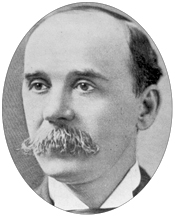
Corporal, U.S. Army
Support & adopt this hero ↓
History is often defined by the courage of ordinary soldiers who perform extraordinary deeds when the fate of a battle hangs in the balance. During the American Civil War, Corporal Alexander Scott displayed exceptional bravery amid the fierce fighting at the Battle of Monocacy, capturing a Confederate battle flag under heavy fire. His fearless action earned him the Medal of Honor and secured his place among the Union Army's most distinguished heroes.
Alexander Scott was born on 13 April 1847 in Groton, Vermont. When the American Civil War threatened the future of the United States, he enlisted in the 10th Vermont Infantry, serving as a Corporal in Company D. The regiment became part of the Union Army's defenses during the final campaigns of the war, taking part in operations that helped protect Washington, D.C., from Confederate attack.
Scott's defining moment came during the Battle of Monocacy, near Frederick, Maryland, on 9 July 1864. Often remembered as "The Battle That Saved Washington," Monocacy saw a determined Union force delay the advance of Confederate Lieutenant General Jubal Early's army, buying precious time for reinforcements to reach the nation's capital. Amid the intense fighting, Corporal Scott displayed extraordinary courage by capturing a Confederate battle flag, one of the most dangerous and prestigious acts a Civil War soldier could accomplish. Regimental colors served as the focal point of every unit, and capturing an enemy flag required advancing directly into hostile lines under heavy fire. For this conspicuous act of gallantry, Scott was awarded the Medal of Honor, the United States' highest military decoration for valor.
Although the Union forces were ultimately forced to withdraw from Monocacy, their stubborn resistance delayed the Confederate advance long enough to strengthen the defenses of Washington. Historians widely regard the battle as a strategic Union success despite the tactical defeat, and the bravery of soldiers like Corporal Scott played a vital role in achieving that outcome.
In recognition of his honorable Civil War service, Scott was also entitled to the Civil War Campaign Medal, established in 1907 to commemorate surviving Union Army veterans. Together with his Medal of Honor, these are his verified wearable military decorations, reflecting both his exceptional gallantry in combat and his faithful service during one of America's defining conflicts.
Following the war, Scott returned to civilian life in Vermont, where he lived as a respected veteran of the Union Army. He remained a proud representative of the generation that preserved the Union through courage and sacrifice until his passing on 23 March 1923. He was laid to rest in West Groton Cemetery, Groton, Vermont, where his legacy continues to be honored.
Today, Corporal Alexander Scott Medal of Honor is remembered as one of the brave Union soldiers whose individual acts of heroism shaped the outcome of the American Civil War. His fearless capture of a Confederate battle flag at the Battle of Monocacy exemplified the highest ideals of courage, determination, and devotion to duty. His Medal of Honor and Civil War Campaign Medal stand as enduring symbols of a soldier whose valor helped protect the nation's capital and preserve the United States for future generations.
Become the named supporter for this profile and edit the tribute biography and portrait (Owner account required). Proceeds help keep the archive online.
$25 USD / year — annual sponsorship renewal. Keeps the page online and, where enabled, the family anniversary remembrance emails active.