★
Loading archive…
Loading archive…

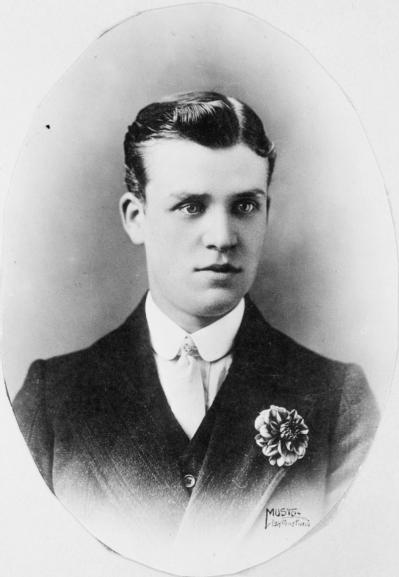
The Rifle Brigade Hero Who Gave His Life to Save His Officer He was only 21 years old. His officer lay wounded close to the German lines, enemy rifles and a machine gun were sweeping the ground, and Corporal Alfred George Drake had a chance to withdraw. Instead, he stayed. That decision, made on the night of 23 November 1915, would cost Drake his life and earn him the Victoria Cross, Britain's highest award for gallantry in the presence of the enemy. His story is one of the most powerful examples of self-sacrifice to emerge from the First World War. Alfred George Drake VC was born on 10 December 1893 in Stepney, East London, the son of Robert and Mary Ann Drake. He attended Ben Jonson London County Council School and later worked as a messenger before the outbreak of the First World War changed the direction of his life. Drake enlisted in the Rifle Brigade on 3 September 1914 and went to France in May 1915. He served with the 8th Battalion, The Rifle Brigade (The Prince Consort's Own) and rose to the rank of corporal. victoriacrossonline.co.uk Within months of reaching the Western Front, Drake found himself facing the moment for which he would forever be remembered. On the night of 23 November 1915, Drake was one of four men taking part in a reconnaissance patrol near La Brique, Belgium, close to the German positions north of Ypres. The patrol had moved dangerously close to the enemy when it was discovered. German troops opened heavy fire with rifles and a machine gun. The British officer leading the patrol was wounded, as was another member of the party. The VC and GC Association One soldier helped the other wounded man back toward the British position. Drake remained behind with his wounded officer. What followed formed the basis of his Victoria Cross citation. Despite the continuing enemy fire and the extreme danger of remaining so close to the German lines, Corporal Drake stayed beside the injured officer and attempted to treat his wounds. He was last seen kneeling beside him, applying bandages while exposed to hostile fire. When a rescue party later crawled forward, they found the officer unconscious but alive and his wounds bandaged. Drake was lying beside him, dead from multiple bullet wounds. The VC and GC Association The official citation ended with words that capture the scale of his sacrifice: “He had given his own life and saved his Officer.”
Drake's Victoria Cross was announced in The London Gazette, Supplement No. 29447, page 946, published on 21 January 1916. The citation opened by recognizing his conduct as being “For most conspicuous bravery.” The Gazette There is a small historical detail worth noting. The original Gazette citation described the action as taking place near La Brique, France, but the location of the action was actually La Brique in Belgium, in the Ypres sector. Modern Victoria Cross records correctly identify the action as occurring in Belgium. The VC and GC Association Drake never lived to know that his actions had earned the Victoria Cross. The decoration was awarded posthumously. On 16 November 1916, King George V presented Drake's Victoria Cross to his father at Buckingham Palace. The VC and GC Association His verified First World War entitlement also included the 1914-15 Star, the British War Medal 1914-1920, and the Victory Medal 1914-19. These were campaign and war service awards rather than gallantry decorations, so they did not carry individual citations like the Victoria Cross. Their presence reflects Drake's qualifying wartime service in France and Belgium before his death. The Victoria Cross and George Cross Association records all three alongside his Victoria Cross, and the same four-medal group is documented in specialist records of Drake's surviving honours. The VC and GC Association His medals therefore tell a remarkably concentrated story. Drake had served overseas for only a matter of months, yet in that short period he went from a young London volunteer to a corporal on the Western Front and finally to a posthumous recipient of the Victoria Cross. Alfred George Drake was buried at La Brique Military Cemetery No. 2, near Ypres. His grave is recorded in Plot I, Row C, Grave 2. Remembering the Fallen His Victoria Cross later became part of the Lord Ashcroft Collection, preserving the physical decoration associated with an extraordinary act of courage. Victoria Cross But the medal itself is only part of Alfred George Drake's legacy. His story endures because of what happened before any medal was awarded. Faced with the choice between seeking safety and remaining with a wounded comrade under intense enemy fire, Drake stayed. He continued tending his officer knowing that every additional second exposed him to the German guns. The officer survived. Alfred George Drake did not. At just 21 years of age, Corporal Alfred George Drake VC of the 8th Battalion, Rifle Brigade, gave his life during one of the countless small patrol actions fought around Ypres. Yet his conduct transformed that otherwise obscure night near La Brique into a lasting story of courage, loyalty and self-sacrifice. More than a century later, the final sentence of his Victoria Cross citation remains the simplest and strongest summary of the man: “He had given his own life and saved his Officer.” The VC and GC Association
Become the named supporter for this profile and edit the tribute biography and portrait (Owner account required). Proceeds help keep the archive online.
$25 USD / year — annual sponsorship renewal. Keeps the page online and, where enabled, the family anniversary remembrance emails active.