★
Loading archive…
Loading archive…
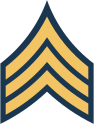
Andrew Johnson Cummins was a United States Army sergeant and Medal of Honor recipient whose military service became permanently associated with the fighting around Santiago, Cuba, during the Spanish–American War. He served with Company F, 10th United States Infantry, and on July 1, 1898, during one of the most intense days of the Santiago campaign, he exposed himself to heavy enemy fire to assist in rescuing wounded soldiers from in front of the American lines.
Cummins was born in Alexandria, Madison County, Indiana, in December 1868. Authoritative Medal of Honor records identify Alexandria as both his birthplace and the location to which his award was accredited. He later entered the United States Army and by the time of the Spanish–American War had attained the rank of Sergeant.
As a sergeant in Company F, 10th U.S. Infantry, Cummins belonged to a Regular Army infantry regiment that was deployed to Cuba during the American campaign against Spanish forces in 1898. The campaign around Santiago was one of the decisive land operations of the war. American troops faced strongly positioned Spanish defenders, difficult terrain, heat, disease, and direct rifle and artillery fire as they advanced toward the city.
On July 1, 1898, American forces launched major attacks against the Spanish defensive positions around Santiago. The fighting that day included actions at San Juan Heights and nearby positions, where units of the U.S. Army advanced under sustained enemy fire.
It was during this fighting that Sergeant Cummins performed the act for which he received the nation's highest military decoration.
The Action at Santiago
During the battle, wounded American soldiers were left in exposed positions in front of the lines, where enemy fire continued to sweep the battlefield. Reaching those men required soldiers to leave relative cover and move into areas still under direct Spanish fire.
Cummins voluntarily assisted in bringing wounded soldiers back from this dangerous ground.
His official Medal of Honor citation is notably brief, but its meaning is clear: he assisted in the rescue of wounded men from in front of the lines while under heavy enemy fire.
The action placed Cummins in immediate personal danger. Instead of remaining behind the established American position, he moved toward wounded comrades who were exposed between the opposing forces. The rescue effort required him to continue functioning under fire while helping men who were unable to return to safety on their own.
His conduct represented one of the fundamental forms of battlefield courage: risking his own life to save other soldiers when remaining in a safer position would have been possible.
Cummins was not alone in being recognized for this rescue effort. Several other members of Company F, 10th U.S. Infantry were also awarded the Medal of Honor for assisting wounded soldiers under enemy fire during the Santiago fighting. Their decorations reflect the extreme conditions under which the rescue work was carried out.
For Cummins, however, the recognition was individual and recipient-specific. His personal conduct on July 1, 1898, was formally recorded as an act of gallantry worthy of the Medal of Honor.
Medal of Honor
For his actions at Santiago, Sergeant Andrew Johnson Cummins was awarded the Medal of Honor.
The Medal of Honor is the highest military decoration of the United States. Its origins date to the American Civil War, when Congress first authorized a Medal of Honor for the Navy in 1861 and for the Army in 1862. Over time, it became the nation's premier decoration for extraordinary military valor.
During the Spanish–American War, the standards and administrative system surrounding the Medal of Honor differed somewhat from modern practice, but the award still represented exceptional bravery under dangerous battlefield conditions.
Cummins' Medal of Honor was issued on June 22, 1899, almost a year after the Santiago action.
His official citation records him as:
Rank: Sergeant Organization: Company F, 10th U.S. Infantry Place of Action: Santiago, Cuba Date of Action: July 1, 1898 Date of Award: June 22, 1899
The award was not posthumous. Cummins survived both the battle and the war and lived for more than two decades after receiving the decoration.
His Medal of Honor had no additional device, because there is no verified evidence of a second Medal of Honor award or any repeat-award attachment.
Service in the 10th U.S. Infantry
The 10th U.S. Infantry Regiment was one of the Regular Army units committed to the Cuban campaign. Cummins' position as a sergeant meant that he was an experienced enlisted leader within his company.
His Medal of Honor action was fundamentally an infantry battlefield action, which is why his combat classification is best recorded as Infantry and Ground Combat, rather than command, cavalry, artillery, or another specialty.
Although his rank carried leadership responsibilities, the official Medal of Honor record does not establish that Cummins was commanding a larger combat unit during the action. For that reason, his heroism is best understood as personal battlefield gallantry rather than as a command-level action.
The courage demonstrated by Cummins and his fellow soldiers occurred during one of the most important engagements of the Spanish–American War. The American success around Santiago placed enormous pressure on Spanish forces in Cuba and contributed directly to the collapse of organized Spanish resistance in the region.
End of Military Service
Available military records indicate that Cummins left the Army after the Spanish–American War period. His highest verified military rank remained Sergeant.
There is no verified evidence that he subsequently received a higher military rank, served in another branch of the armed forces, or participated in another war.
That distinction is important for his historical profile. His military identity should therefore remain:
United States Army — Sergeant — Company F, 10th U.S. Infantry
His record should not be expanded with later ranks or additional conflicts unless recipient-specific service documentation establishes them.
Later Life
After leaving active military service, Cummins eventually moved west.
He later lived in Montana, where he spent the final period of his life. Detailed documentation of his civilian career is much less extensive than the surviving material concerning his Medal of Honor action, so it is preferable not to fill gaps in his postwar life with speculation.
What is securely documented is that Cummins remained a recognized Medal of Honor recipient for the rest of his life.
He died on September 15, 1923, in Lewistown, Montana.
Cummins was buried in Lewistown Cemetery in Lewistown, Fergus County, Montana. The Congressional Medal of Honor Society records his burial location as E-236-3, preserving a precise connection between his grave and his Medal of Honor legacy.
Historical Importance of His Medal
Andrew Johnson Cummins' Medal of Honor is important not because it commemorates the destruction of an enemy position or an individual combat victory, but because it recognizes battlefield rescue under fire.
The act of moving toward wounded soldiers while enemy fire continued required a different form of courage from an offensive assault. Cummins knowingly entered an exposed area to help men who could not safely withdraw.
His citation's brevity reflects nineteenth-century military recordkeeping, but the essential fact is unmistakable: he risked his life to bring wounded soldiers back from dangerous ground.
The Medal of Honor therefore memorializes both his personal courage and the broader ethic of soldiers refusing to abandon wounded comrades on the battlefield.
Legacy
Andrew Johnson Cummins' legacy is closely tied to three things:
his service in the United States Army, his role as a Sergeant in Company F, 10th U.S. Infantry, and his actions during the Battle of Santiago on July 1, 1898.
He came from Alexandria, Indiana, entered Regular Army service, fought during the Spanish–American War, and distinguished himself in a rescue operation carried out under sustained enemy fire.
His military career did not depend on a long list of decorations. Under a strict recipient-specific research standard, the single decoration that can be securely placed in his final medal record is also the most significant military award in the United States:
Final Verified Award
Medal of Honor — No Device
Action Date: July 1, 1898 Location: Santiago, Cuba Unit: Company F, 10th U.S. Infantry Rank at Action: Sergeant Award Date: June 22, 1899 Posthumous: No
Andrew Johnson Cummins died in 1923, approximately twenty-five years after the battlefield action that defined his military legacy. His grave in Montana and his continued listing among the Medal of Honor recipients of the Spanish–American War preserve the memory of a soldier whose highest distinction came from placing himself in danger to rescue wounded comrades.
His story remains a concise but powerful example of battlefield courage: a sergeant who moved forward under heavy enemy fire not to seek personal glory, but to help bring wounded soldiers to safety.
Become the named supporter for this profile and edit the tribute biography and portrait (Owner account required). Proceeds help keep the archive online.
$25 USD / year — annual sponsorship renewal. Keeps the page online and, where enabled, the family anniversary remembrance emails active.