★
Loading archive…
Loading archive…
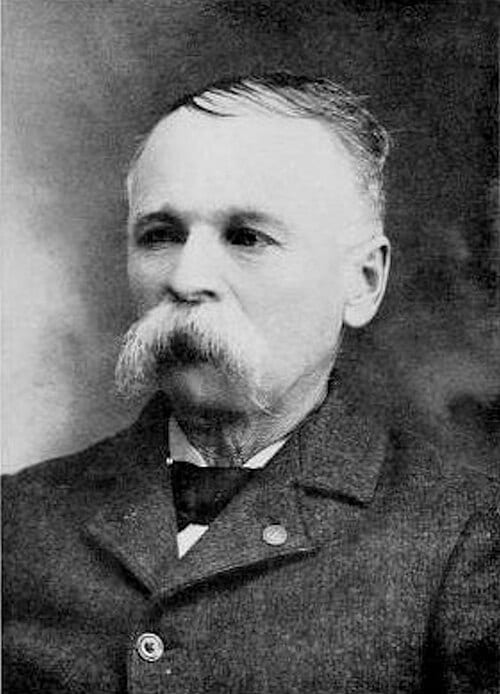
What makes a soldier remain behind when ordered to retreat, knowing that enemy forces are advancing and death may be only moments away? For Andrew John Kelley, the answer was an extraordinary sense of courage and duty. During the American Civil War, this young Union Army soldier risked his life to complete a dangerous mission at Knoxville, Tennessee. His remarkable bravery would eventually earn him the Medal of Honor, the United States' highest military decoration for valor.
Born on September 2, 1845, in LaGrange County, Indiana, Andrew John Kelley grew up during a period of increasing division across the United States. When the Civil War erupted, he answered the call to serve the Union. On August 12, 1862, he enlisted at Ypsilanti, Michigan, joining Company E of the 17th Michigan Volunteer Infantry Regiment. Still only sixteen years old, Kelley entered a conflict that would test his courage, endurance, and determination.
The 17th Michigan Infantry, later celebrated as the Stonewall Regiment, earned a reputation for its resilience in battle. Kelley served during some of the war's most demanding campaigns, including operations associated with South Mountain, Antietam, Vicksburg, and the fighting in East Tennessee. These experiences placed him among soldiers who faced relentless marching, harsh conditions, and the constant danger of combat.
But it was on November 20, 1863, during the Siege of Knoxville, that Andrew J. Kelley performed the act of heroism that would secure his place in American military history.
Confederate sharpshooters were using nearby buildings to threaten Union positions. To eliminate this danger, Kelley volunteered to accompany a small party assigned to set the buildings on fire. The mission required the men to advance into an exposed and dangerous area, where enemy fire and advancing Confederate forces threatened their survival.
As the situation deteriorated, the party received orders to withdraw. Kelley, however, refused to abandon the unfinished task. Despite the approaching enemy and the risk of being killed or captured, he remained behind and continued working until the buildings were successfully destroyed.
His decision was an extraordinary demonstration of battlefield courage. At a moment when retreat offered a chance of survival, Kelley placed the success of the mission above his personal safety. His actions helped remove a dangerous threat to the Union defensive position and reflected the determination of a soldier unwilling to leave his duty unfinished.
Kelley continued serving in the Union Army through the final years of the Civil War, eventually attaining the rank of Sergeant. He was discharged in June 1865, having completed nearly three years of military service during one of the most devastating conflicts in American history.
Yet official recognition of his exceptional bravery did not come immediately. More than thirty-six years after his courageous actions at Knoxville, Andrew John Kelley was awarded the Medal of Honor on April 17, 1900. The long-awaited recognition ensured that his sacrifice and determination would become a permanent part of the nation's military heritage.
Following the war, Kelley built a civilian life in Minnesota, where he worked as a farmer and contributed to his local community. Like many Civil War veterans, he carried the experiences of wartime service into a quieter life, far removed from the battlefields where his courage had been tested.
Andrew John Kelley died on June 4, 1918, at the age of seventy-two. He was laid to rest at Oakdale Cemetery in Crookston, Minnesota.
Today, Andrew John Kelley is remembered as a Union Army Medal of Honor recipient whose extraordinary actions during the Siege of Knoxville demonstrated the highest traditions of military valor. His story is not simply one of a soldier who disobeyed the instinct to retreat. It is the story of a young man who understood the danger before him and chose to complete his mission regardless of the consequences.
His legacy reminds us that true heroism is not the absence of fear, but the determination to fulfill one's duty even when the cost may be one's own life.
Become the named supporter for this profile and edit the tribute biography and portrait (Owner account required). Proceeds help keep the archive online.
$25 USD / year — annual sponsorship renewal. Keeps the page online and, where enabled, the family anniversary remembrance emails active.