★
Loading archive…
Loading archive…
Major, Indian Army
Support & adopt this hero ↓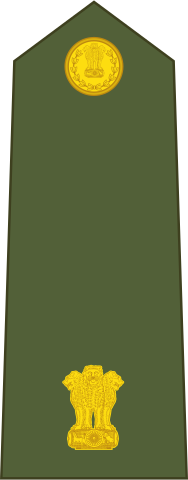
Fought off attackers to save a wounded officer
Major Andrew Scott VC was an English officer of the Bengal Staff Corps whose military career was spent largely on the north-western frontier of British India. He is remembered above all for an extraordinary rescue at Quetta on 26 July 1877, when he rushed without hesitation to the aid of two Royal Engineers officers who had been attacked, personally fought their assailants at close quarters, and saved the life of the surviving officer. For that action he received the Victoria Cross. He later served during the Second Anglo-Afghan War, including the operations connected with Peiwar Kotal, and ultimately rose to the substantive rank of Major.
His final verified medal profile consists of:
Victoria Cross (VC) — no additional bar Afghanistan Medal 1878–80 — Clasp: Peiwar Kotal
Early Life
Andrew Scott was born on 22 August 1840 in Devon, England. The surviving published military biographies do not provide a securely verified exact town or village of birth, so Devon is the appropriate location to record rather than assigning a more precise place without evidence.
He entered military service as a young man and began the career that would eventually take him to India and the frontier regions of the British Empire.
On 4 March 1860, at the age of nineteen, Scott entered the Army as an officer. He subsequently became associated with the Bengal Staff Corps, the organisation through which many British officers were appointed to command and staff roles with regiments of the Bengal Army.
Early Promotions
Scott's advancement through the officer ranks was steady.
He was promoted to Lieutenant on 1 January 1862 and then to Captain on 4 March 1872. Contemporary material records that on reaching the rank of Captain he became Adjutant and Wing Officer of the 4th Sikh Infantry, a regiment with which his name would become permanently associated.
The 4th Sikh Infantry was part of the Bengal Army's frontier establishment. Service with such units demanded considerable experience in infantry administration, field operations, discipline and frontier conditions.
By the mid-1870s Scott was therefore an experienced officer rather than a newly commissioned soldier.
Service at Quetta
By 1877 Scott was serving with the 4th Sikh Infantry at Quetta, then an increasingly important British military position in Baluchistan.
Quetta's strategic importance lay in its proximity to Afghanistan and the routes leading through the frontier. British military authorities were expanding their presence in the region during a period of increasing concern about Afghanistan and Russian influence in Central Asia.
Scott was a Captain in the Bengal Staff Corps, attached to the 4th Sikh Infantry, when the event that defined his military reputation occurred.
The Quetta Incident — 26 July 1877
On the evening of 26 July 1877, Scott was on duty at the regimental parade ground of the 4th Sikh Infantry at Quetta.
He suddenly heard an alarm that British officers were being attacked.
The men under assault were Lieutenant Hewson and Lieutenant Kunhardt of the Royal Engineers.
Scott did not wait to assemble a formal party or assess the situation from a distance. He immediately ran toward the disturbance.
When he arrived, he found that Lieutenant Hewson had already been cut down. Lieutenant Kunhardt was wounded, being driven back by his attackers, and was being defended by Sepoy Ruchpal Singh of the 4th Sikh Infantry.
Scott's Victoria Cross Action
Scott immediately entered the fight.
According to the official London Gazette citation, he attacked the assailants and personally bayoneted two men.
He then closed with a third attacker.
The struggle became hand-to-hand, and Scott and the man fell together to the ground. Sepoys of the regiment then killed the third assailant.
The official citation concluded that Scott's intervention saved Lieutenant Kunhardt's life.
The action was unusual in Victoria Cross history because it was not part of a conventional set-piece battle. Scott's gallantry occurred during a sudden attack inside the military environment at Quetta rather than during a formal engagement between opposing armies.
What mattered was the immediacy of his response.
He heard that fellow officers were being killed, ran directly toward the danger, entered close combat without hesitation, and prevented a wounded officer from being overwhelmed.
Victoria Cross
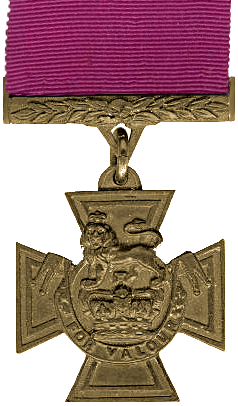
For his actions at Quetta, Andrew Scott was awarded the Victoria Cross.
The award was published in the London Gazette in January 1878, where he was listed as Captain Andrew Scott, Bengal Staff Corps, serving with the 4th Sikh Infantry.
History of the Victoria Cross
The Victoria Cross had been created by Queen Victoria in 1856 as Britain's premier decoration for exceptional gallantry.
Its significance lay partly in the fact that it recognised individual courage regardless of social standing or military rank. Officers and enlisted soldiers could receive the same decoration.
For Scott, the VC represented a very specific act of personal courage rather than the completion of a campaign.
His final profile entry is:
Victoria Cross — No Bar
He received the decoration once; no second award or VC Bar has been verified.
Presentation of the Victoria Cross
Scott was formally presented with his Victoria Cross in India on 15 April 1878.
The presentation took place less than a year after the Quetta action.
By this point he had already become widely identified with the 4th Sikh Infantry and his rescue of Lieutenant Kunhardt.
The medal would remain the highest individual distinction of his career.
The Second Anglo-Afghan War
Only a short time after Scott's Victoria Cross award, frontier tensions developed into the Second Anglo-Afghan War of 1878–80.
The British government sought greater influence over Afghanistan's foreign relations during the wider geopolitical rivalry with Russia. When diplomatic tensions failed to resolve, British and Indian forces entered Afghanistan in November 1878.
Scott served during this conflict.
His service placed him within the operations of the Kurram Valley Field Force, one of the principal British columns entering Afghanistan.
Among the major actions of the opening campaign was Peiwar Kotal, fought on 2 December 1878.
Peiwar Kotal — 2 December 1878
Peiwar Kotal was one of the first important British victories of the Second Anglo-Afghan War.
The Afghan army occupied a strong mountain position controlling the route through the Kurram Valley. British and Indian troops under Major-General Frederick Roberts launched a difficult operation involving a night march and a flanking movement through mountainous terrain.
The Afghan position was eventually captured, opening the route farther into the frontier region.
Scott's documented campaign service established his entitlement to the Afghanistan Medal 1878–80 with the Peiwar Kotal clasp, which we have retained in his final medal profile.
Afghanistan Medal 1878–80
The Afghanistan Medal 1878–80 was the principal British campaign medal for service in the Second Anglo-Afghan War.
The National Army Museum records that the medal was awarded to British and Indian personnel who participated in the conflict. The silver medal showed Queen Victoria on the obverse, while the reverse depicted troops and an elephant carrying an artillery piece beneath the inscription “Afghanistan 1878-79-80.”
Unlike the Victoria Cross, the Afghanistan Medal did not recognise one individual act of gallantry.
It recognised qualifying campaign service.
That distinction is central to understanding Scott's medal group:
The Victoria Cross represented what he personally did at Quetta.
The Afghanistan Medal represented his later operational service during the Afghan War.
Peiwar Kotal Clasp
Scott's Afghanistan Medal carries the verified clasp:
Peiwar Kotal
Clasps were attached to the medal to identify participation in particular major actions.
Six battle clasps were authorised for the Second Afghan War:
Ali Masjid Peiwar Kotal Charasia Kabul Ahmed Khel Kandahar.
The Peiwar Kotal clasp specifically commemorated participation in the action of 2 December 1878.
For Scott, the final medal entry is therefore:
Afghanistan Medal 1878–80 — Clasp: Peiwar Kotal
No additional Afghanistan Medal clasp has been verified for his final profile.
Further Afghan Service
Scott's service continued beyond the single engagement at Peiwar Kotal.
His military chronology places him in operations associated with the Kurram and Khost areas during the Afghan campaign.
These operations were part of the wider effort to secure British positions, protect communications and extend military control through areas occupied or contested during the war.
However, no separate clasp existed for every movement, expedition or skirmish.
For that reason, later service in the Khost or Matun area does not automatically create another medal clasp, and none has been added to Scott's final rack.
Brevet and Substantive Promotion
Scott's Afghan-era service coincided with further professional advancement.
By 1880 he was officially styled Captain and Brevet Major Andrew Scott, V.C.
The distinction between brevet and substantive rank was important in the nineteenth-century British Army. A brevet rank could recognise seniority or distinguished service without necessarily carrying all of the authority, appointment, or pay associated with a substantive rank.
On 4 March 1880, Scott was promoted to the substantive rank of Major in the Bengal Staff Corps.
The London Gazette formally recorded:
Captain and Brevet Major Andrew Scott, V.C. — to be Major, dated 4 March 1880.
This was his final and highest verified substantive rank.
Therefore:
Rank at Victoria Cross action: Captain Final rank: Major
Final Verified Medal Group
Andrew Scott's final medal profile is:
Victoria Cross (VC) — None Afghanistan Medal 1878–80 — Peiwar Kotal clasp
Total: 2 medals
These two awards describe two different phases of his service.
The Victoria Cross records an extraordinary rescue in Baluchistan in 1877.
The Afghanistan Medal records his subsequent participation in a major imperial war on the north-west frontier.
Together they form a concise summary of the most important verified military events of his career.
Later Career
Scott remained in Indian military service after his promotion.
His association with the Bengal Staff Corps meant that his career continued within the complex structure of British officers commanding and administering units of the Indian Army.
Unlike officers who returned permanently to Britain after active campaigning, Scott remained in the subcontinent.
His career after the Afghan War was, however, brief.
Only about two and a half years separated his substantive promotion to Major from his death.
Death in Kashmir
Major Andrew Scott died on 5 September 1882 at Srinagar, Kashmir, aged 42.
Later Victoria Cross records describe him as having been killed while still in military service. He was buried in Kashmir Cemetery, Srinagar.
The surviving sources reviewed for this profile do not provide enough reliable detail to reconstruct the precise circumstances surrounding his death, so no more specific narrative should be added without stronger archival evidence.
Burial
Scott's burial in Kashmir reflects the geographical breadth of his military career.
He had been born in Devon, entered British military service as a young man, spent much of his career with the Bengal Army, served at Quetta and in Afghanistan, and died in Kashmir.
His grave therefore lies thousands of miles from his English birthplace.
The Present Location of His Medals
The present location of Andrew Scott's original Victoria Cross and associated medals is not securely documented in the authoritative records reviewed.
Specialist Victoria Cross records describe the medal as not publicly held or its custodian as unknown.
Accordingly, the profile should not claim that Scott's original medals are in a specific museum or collection unless later provenance evidence becomes available.
Legacy
Andrew Scott's military career was relatively short, but it included two very different forms of recognised service.
At Quetta on 26 July 1877, he was not leading a planned attack.
There was no time for orders, formation or preparation.
He simply heard that fellow officers were being attacked and ran toward them.
By the time he arrived, one officer had already been cut down and another was wounded and in immediate danger.
Scott personally entered the fight, killed two attackers with the bayonet and grappled with a third.
The result was the survival of Lieutenant Kunhardt.
That spontaneous decision brought Scott the Victoria Cross.
His later career showed a different form of service.
During the Second Anglo-Afghan War, he served as a professional British Indian Army officer in a major frontier campaign. His participation in the operations around Peiwar Kotal brought him the Afghanistan Medal 1878–80 with the Peiwar Kotal clasp.
By 1880 he had advanced from Captain and Brevet Major to substantive Major.
He died only two years later at Srinagar.
Scott's surviving historical record is therefore dominated by three points: his sudden act of courage at Quetta, his Afghan campaign service, and his rise to Major before his early death at forty-two.
Become the named supporter for this profile and edit the tribute biography and portrait (Owner account required). Proceeds help keep the archive online.
$25 USD / year — annual sponsorship renewal. Keeps the page online and, where enabled, the family anniversary remembrance emails active.