★
Loading archive…
Loading archive…
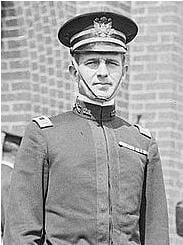
Lieutenant Colonel, U.S. Army
Support & adopt this hero ↓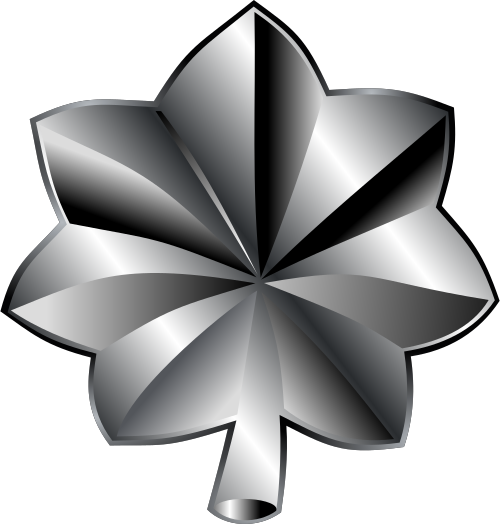
Archie Miller was a career officer of the United States Army whose military life connected three dramatically different eras of American service: the cavalry campaigns of the Spanish-American War period, combat in the Philippines, and the rapid development of American military aviation during and after the First World War. His most famous act occurred on July 2, 1909, at Patian Island in the Philippine Islands, where, as a First Lieutenant of the 6th U.S. Cavalry, he exposed himself to intense enemy fire to restore a disabled machine-gun position. For this action he received the Medal of Honor. He later served in senior positions in the Army's wartime aviation organization and ultimately held the permanent rank of Lieutenant Colonel.
Early Life and Entry into Military Service
Miller was born in 1878 at Fort Sheridan, Illinois. By the beginning of the Spanish-American War in 1898, he was living in St. Louis, Missouri. Rather than remain outside the conflict, he entered military service with the 6th Missouri Infantry Regiment, part of the Missouri National Guard organization mobilized for the war.
He served with the regiment in Cuba during the Spanish-American War, beginning a military career that would ultimately span more than two decades. His early Missouri service is particularly important because it preceded his long Regular Army career and explains his enduring association with Missouri; his Medal of Honor record was later accredited to St. Louis.
After his initial volunteer service, Miller continued his Army career and served in the Philippines. Congressional records confirm that by February 28, 1901, he held a Regular Army commission as a Second Lieutenant of Cavalry. He subsequently advanced through the cavalry ranks and became closely associated with the 6th U.S. Cavalry, the regiment with which he would earn the nation's highest military decoration.
Cavalry Service in the Philippines
The Philippines at the beginning of the twentieth century presented the U.S. Army with a difficult combination of conventional fighting, small-unit expeditions, remote garrison duty and operations against armed resistance groups.
Miller's service took him into this environment as a cavalry officer. By 1909 he had reached the rank of First Lieutenant and was serving with the 6th U.S. Cavalry.
His Medal of Honor action occurred during fighting against armed Moros on Patian Island. Although modern summaries sometimes place the event under the broad label of the Philippine-American War or Philippine Insurrection, the immediate opponents identified in Miller's official citation were hostile Moro fighters.
The Medal of Honor Action — Patian Island, July 2, 1909
On July 2, 1909, Miller's unit became heavily engaged with hostile forces on Patian Island.
During the fighting, an American machine-gun detachment was subjected to such intense fire that it was forced from its position. One member of the detachment had already been killed.
The machine gun was an important source of firepower, but the position had become extremely dangerous. Under enemy pressure, simply returning to the weapon exposed anyone attempting it to concentrated fire.
Miller chose to act.
Working with an enlisted soldier, he moved the machine gun forward approximately twenty yards from its previous position, bringing it significantly closer to the enemy instead of withdrawing it farther from danger.
The task was made even more difficult because one leg of the machine-gun tripod was damaged or unusable. Miller had to improvise a repair by splicing a piece of timber to the tripod leg while still under enemy fire.
Bullets repeatedly struck the tripod as the work continued.
Despite this, Miller and the soldier assisting him successfully restored and repositioned the weapon.
The official Medal of Honor citation specifically emphasizes that Miller carried out the entire action while subjected to heavy hostile fire, with the equipment itself being struck several times.
This was not merely an act of remaining at a threatened position. Miller deliberately returned to a position from which the previous machine-gun crew had already been driven, repaired damaged equipment under fire, and then established the gun even closer to the opposing force.
That conduct became the defining act of his career.
Medal of Honor
For his actions at Patian Island, Archie Miller was awarded the Medal of Honor.
Final Verified Medal Rack
Medal of Honor — No Device
Miller was not killed in the action; his award was therefore not posthumous.
The medal was formally presented to him on November 23, 1912, at the White House, by President William Howard Taft. At the time of the 1909 action Miller had been a First Lieutenant; by the time of the presentation his Army career had continued to advance.
History of the Medal of Honor
The Medal of Honor originated during the American Civil War. Congress first authorized a version for the Navy in 1861 and established the Army Medal of Honor in 1862.
Over the decades its standards evolved. By Miller's era, it was already established as the United States' highest decoration for exceptional military gallantry.
Miller's award belongs to an important period in Medal of Honor history. Many decorations from the Philippine campaigns recognized soldiers who performed conspicuous acts under direct enemy fire in difficult small-unit operations far from the large conventional battlefields more familiar from later twentieth-century wars.
His citation is unusually practical and specific. It does not rely on elaborate language. It records a damaged machine gun, a crew driven back by enemy fire, a dead soldier, an improvised repair, and Miller's decision to move the weapon closer to the enemy despite bullets striking around him.
For the VictoriaCross.ca project, no additional medal has been added to his final verified rack merely because he served in several wars or campaigns. Under the client standard, service history alone does not prove recipient-specific entitlement to campaign or service medals.
Continued Cavalry Career
Miller remained a professional Army officer after receiving the Medal of Honor.
His Regular Army career continued through the cavalry, and by the years immediately preceding the First World War he had advanced beyond the junior-officer ranks. His career illustrates the traditional path of an officer trained in the mounted arm just before military technology began rapidly transforming warfare.
Yet rather than remain confined to cavalry service, Miller moved into one of the Army's newest and most rapidly developing fields: military aviation.
That transition became the second major phase of his career.
World War I and the Aviation Section
When the United States entered the First World War in 1917, military aviation was still part of the United States Army. There was no independent United States Air Force.
At the beginning of the American war effort, aviation functions were organized through the Aviation Section of the Signal Corps and later the Army Air Service.
Miller moved into this developing organization.
Congressional records from the wartime period identify him as a cavalry officer serving in the Signal Corps, demonstrating the transition from his original cavalry specialty into Army aviation administration.
During the enormous wartime expansion of the aviation establishment, Miller held high temporary grades. Contemporary official Air Service publications identify him as Colonel Archie Miller, Air Service, and he occupied positions far above the responsibilities of his prewar cavalry assignments.
This distinction is essential for his historical rank:
Medal of Honor action rank: First Lieutenant Highest permanent/final verified rank: Lieutenant Colonel Temporary World War I grade: Colonel
The temporary Colonel designation reflected wartime organization and responsibility; it does not replace Lieutenant Colonel as the highest permanent rank used for the client's database. The Congressional Medal of Honor Society likewise identifies his highest rank as Lieutenant Colonel.
Senior Army Aviation Leadership
Miller became much more than an officer temporarily attached to aviation.
By early 1919, an official Air Service publication announced that Colonel Archie Miller had been designated Acting Assistant Director of Military Aeronautics, in addition to his other duties. This placed him within the senior administrative leadership of the Army's aviation establishment during the critical transition from wartime mobilization to the postwar period.
A contemporary aviation industry yearbook likewise listed Miller within the Division of Military Aeronautics as both Acting Assistant Director and among its assistant executive officers.
His career had therefore moved a remarkable distance from the mounted cavalry officer who fought on Patian Island.
Within approximately a decade of his Medal of Honor action, Miller was participating in the administrative development of American military aviation at a national level.
This makes his biography unusual among Medal of Honor recipients of the Philippine campaigns: his later career became intertwined with the technological transition from horse cavalry to military aircraft.
Air Service Activities after the Armistice
The end of the First World War did not remove Miller from aviation service.
Official Army Air Service newsletters continued to identify him as a Colonel in aviation assignments. By 1920, he was stationed at Kelly Field, Texas, one of the most important early American military aviation centers.
A 1920 Air Service newsletter records a formal farewell for Colonel and Mrs. Archie Miller when the family departed Kelly Field for Washington, where Miller was to undertake duty at the War College. Aircraft from pursuit and bombardment groups escorted their train as it left—a striking indication of the respect he had gained within the early Air Service community.
His career was still active, and military aviation remained central to it.
Return to Permanent Rank
The enormous wartime Army had relied on temporary promotions to fill rapidly expanding commands. When the service contracted after the war, many officers reverted from wartime grades to their permanent Regular Army ranks.
Miller's temporary Colonel status therefore should not be confused with his permanent rank.
By the final period of his career, he was Lieutenant Colonel Archie Miller, the rank recognized by the Congressional Medal of Honor Society and reflected in accounts of his death.
This is why Lieutenant Colonel is the correct Rank field for the project, despite authentic wartime records describing him as Colonel.
Death in an Army Aircraft — May 28, 1921
Miller's long connection with military aviation ultimately ended his life.
On May 28, 1921, he was traveling aboard an Army Curtiss Eagle aircraft returning from Langley Field, Virginia, toward the Washington area.
The aircraft encountered a violent wind and electrical storm.
Near Morgantown, Maryland, the plane crashed.
There were no survivors.
Among those killed were Lieutenant Colonel Archie Miller, several other Army personnel, and civilian passengers. Contemporary reports described the disaster as one of the most serious American aviation accidents to that date.
Miller was only in his early forties and remained on active military service when he died.
His death therefore brought to an abrupt end a career that had begun with infantry and cavalry service during the Spanish-American War era and had evolved into senior responsibility within American military aviation.
Burial at Arlington National Cemetery
Archie Miller was buried at Arlington National Cemetery in Arlington, Virginia.
His grave is recorded as:
Section 1, Grave 300-A
Arlington National Cemetery independently includes Miller among the Medal of Honor recipients of the Philippine campaigns buried there.
His burial at Arlington connected him permanently with generations of American soldiers whose careers spanned the rapid military transformation of the late nineteenth and early twentieth centuries.
A Career Across Three Military Eras
Archie Miller's career is significant because it cannot be understood through his Medal of Honor action alone.
He began his service during the Spanish-American War, serving with the 6th Missouri Infantry in Cuba.
He then entered the Regular Army and became a professional cavalry officer.
He served in the Philippines during a period of extended American military operations there.
At Patian Island in 1909, he demonstrated personal gallantry under heavy fire and earned the Medal of Honor.
He continued rising through the Army.
Then, during the First World War, he moved from one of the Army's oldest combat arms—cavalry—into one of its newest—aviation.
By 1919, he was serving at a senior level within the national administration of military aeronautics.
By 1920, his Air Service colleagues honored his departure from Kelly Field with an aerial escort.
And in 1921, he died while traveling aboard an Army aircraft.
In that sense, Miller's military life mirrored the technological transformation of the U.S. Army itself: from mounted cavalry to military aviation.
Legacy
Archie Miller's legacy rests first on the extraordinary courage he displayed at Patian Island.
The circumstances were direct and unforgiving. A machine-gun detachment had already been driven away. A soldier had been killed. Enemy fire remained intense.
Miller could have accepted the loss of the original position.
Instead, he went forward.
With one enlisted soldier assisting him, he repaired the damaged tripod, moved the machine gun farther toward the enemy and restored an important American weapon while bullets repeatedly struck the equipment around him.
For that conduct he received the Medal of Honor from President Taft in 1912.
But the second half of his career gives his story wider historical significance.
The cavalry officer who had fought in the Philippines later became a senior officer in the embryonic American air arm. He served through the First World War, held temporary Colonel rank, performed senior administrative duties in military aeronautics, remained associated with the Air Service after the Armistice and was still serving when aviation claimed his life in 1921.
The Missouri National Guard Hall of Fame has since preserved his connection to Missouri military history, recognizing his early service with the 6th Missouri Infantry, his Medal of Honor, his Army Air Service career and his death in military aviation service.
Final Project Record
Full Name: Archie Miller Branch: United States Army Highest Verified Rank: Lieutenant Colonel Rank at Medal of Honor Action: First Lieutenant Unit at Action: 6th U.S. Cavalry Major Service Eras: Spanish-American War · Philippine operations / Moro conflict · World War I Medal: Medal of Honor — No Device Medal of Honor Action: Patian Island, Philippine Islands — July 2, 1909 Medal of Honor Presentation: White House — November 23, 1912 — President William Howard Taft Later Service: U.S. Army aviation / Army Air Service leadership Temporary Wartime Grade: Colonel Final Permanent Rank: Lieutenant Colonel Died: May 28, 1921 — Army aircraft crash near Morgantown, Maryland Burial: Arlington National Cemetery — Section 1, Grave 300-A
Become the named supporter for this profile and edit the tribute biography and portrait (Owner account required). Proceeds help keep the archive online.
$25 USD / year — annual sponsorship renewal. Keeps the page online and, where enabled, the family anniversary remembrance emails active.