★
Loading archive…
Loading archive…
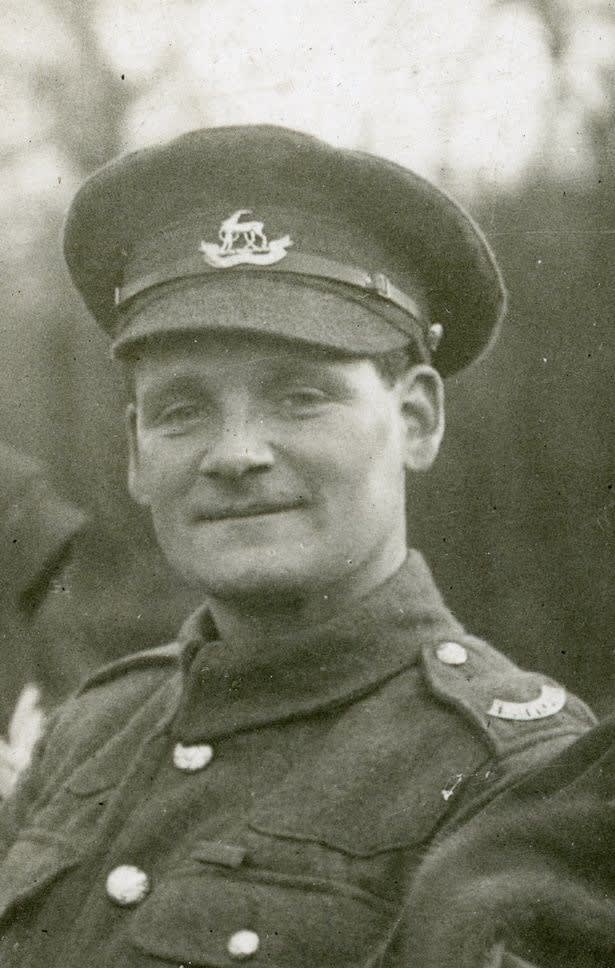
Corporal, British Army
Support & adopt this hero ↓
Yes. I checked the current draft carefully against the surviving medal-group evidence, the London Gazette, IWM material, the Fusilier Museum account, MOD medal guidance, and more recent research on the ownership of Hutt's medals. The existing biography is fundamentally strong, but it is longer than it needs to be and sometimes reads like a medal-reference article rather than the story of Arthur Hutt. It also repeats the same medal facts several times. Pasted text For publication, I would tighten the narrative, make the opening considerably stronger, keep the verified uncertainty around his 1916 service, give the VC action much more narrative force, and incorporate the complete eight-award group naturally rather than creating a separate medals section. One other important point: only the Victoria Cross has an individual gallantry citation. The 1914-15 Star, British War Medal, Victory Medal, Defence Medal, Coronation Medals and Territorial Efficiency Medal are entitlement or commemorative awards, so we should cite documentary evidence for them rather than pretend they have individual award citations. I would publish the following version. Arthur Hutt VC: The Coventry Private Who Took Command Under Fire at Passchendaele When every officer and non-commissioned officer in his platoon had become a casualty, Private Arthur Hutt did not wait for someone else to take command. He stepped forward, led the surviving men on, attacked a German strongpoint alone, helped force dozens of enemy soldiers to surrender, covered his platoon's withdrawal, and then repeatedly went back into danger to rescue wounded comrades. For his actions on 4 October 1917, this Coventry factory worker and Territorial soldier received the Victoria Cross. Arthur Hutt VC became one of the most remarkable soldiers produced by Coventry during the First World War, but his story was larger than a single day of extraordinary courage. From the Territorial Force before 1914 to home-defence service during the Second World War, his life reflected more than four decades of military service, public duty and association with the Royal Warwickshire Regiment. Arthur Hutt was born at Earlsdon, Coventry, on 12 February 1889, the son of Samuel and Jane Hutt. He attended Holy Trinity School and later worked at the Courtaulds artificial silk works at Foleshill. When Courtaulds helped raise a company for the local Territorial Force, Hutt enlisted in the 7th Battalion, Royal Warwickshire Regiment in 1909. He married Alice Lenton in Coventry in 1913. Their daughter, Victoria Constance, was born in 1920. victoriacrossonline.co.uk When Britain entered the First World War in August 1914, Hutt was attending the battalion's annual camp at Rhyl in North Wales. The unit was embodied for war service, and on 22 March 1915 Hutt sailed from Southampton for Le Havre with the Royal Warwickshires. His arrival in France in 1915 placed him within the qualifying period for the 1914-15 Star, later one of the medals in his surviving group. Ministry of Defence guidance confirms that the star was awarded for service in a theatre of war between 5 August 1914 and 31 December 1915 to personnel who had not qualified for the earlier 1914 Star. victoriacrossonline.co.uk There is an important gap in Hutt's wartime record. He returned to Britain in the spring of 1916 and resumed civilian work for a period, but his complete service papers have not survived and the precise reason for his return cannot presently be established. Later research records that he was recalled in September 1916. This uncertainty should remain part of his biography rather than being filled by speculation. victoriacrossonline.co.uk By the autumn of 1917 Hutt was again serving with the 1/7th Battalion, Royal Warwickshire Regiment, in the 48th Division during the Third Battle of Ypres. On 4 October, during the attack before St Julien, the battalion advanced towards an objective known as Tweed House. Hutt was then a Private, not yet a Corporal. As the advance continued, every officer and non-commissioned officer in his platoon was hit. With the recognised chain of command gone, Hutt assumed control and led the platoon forward. The Fusilier Museum, Bury A strong German position on the platoon's right then checked the advance. Hutt acted immediately. He ran forward alone, shot the officer and three men occupying the post, and his attack caused approximately forty to fifty enemy soldiers to surrender. When he later recognised that his party had advanced too far, he organised a withdrawal and personally covered it by firing on the enemy. He then carried a badly wounded comrade back to shelter. The Fusilier Museum, Bury That might have been enough to establish his courage, but Hutt went back. After organising and consolidating the position, he learned that more wounded British soldiers remained exposed ahead of the line and were in danger of capture. With no stretcher-bearers available, Hutt went out under heavy fire and brought back four more wounded men. The Fusilier Museum records that he remained at his post until the position was relieved during the night of 7 to 8 October. The Fusilier Museum, Bury His conduct resulted in the award of the Victoria Cross. The official award was published in the Supplement to The London Gazette, Issue 30400, dated 23 November 1917, with Hutt appearing among that issue's Victoria Cross recipients. The official record characterised his conduct as showing "most conspicuous bravery and initiative in attack." The award citation documented not one isolated act, but a sequence of leadership, offensive action, controlled withdrawal and repeated rescue under fire. The Gazette Hutt returned to Coventry in January 1918 to a civic reception. By then he had been promoted to Corporal, an important distinction because his Victoria Cross action had been performed while he was still a Private. On 16 January 1918, King George V presented him with the Victoria Cross at Buckingham Palace. He was discharged from military service in early 1919 and returned to civilian life in Coventry. victoriacrossonline.co.uk The First World War had left Hutt with much more than the Victoria Cross. His documented medal group includes the 1914-15 Star, British War Medal 1914-20 and Victory Medal 1914-19, recording his overseas wartime service. MOD guidance confirms the relationship between those campaign awards, while the surviving Hutt group provides recipient-specific evidence that all three were actually awarded to him. GOV.UK His association with Britain's Territorial forces was also recognised by the Territorial Efficiency Medal, reflecting the longer story of service that had begun before the First World War. In 1937 he received the King George VI Coronation Medal, another award preserved in his documented group. Hutt remained active within the Royal Warwickshire veteran community, attended gatherings of Victoria Cross recipients, and maintained links with former servicemen between the wars. victoriacrossonline.co.uk Then, as Britain moved towards another world war, Hutt volunteered again. In November 1938 he joined the Auxiliary Fire Service. He was serving with it when the Second World War began and later joined the Home Guard. By 1941 he is recorded as a Lieutenant in the 13th Warwickshire (Coventry) Battalion, Home Guard. His qualifying wartime home service is represented in his medal group by the Defence Medal 1939-45, an award for which Home Guard service was an officially recognised qualifying category. victoriacrossonline.co.uk Hutt therefore served his country in two very different wars. In 1917 he had fought through the mud and fire of the Ypres battlefield. More than twenty years later, he was again in uniform helping defend the country at home. He lived to receive one final royal commemorative distinction, the Queen Elizabeth II Coronation Medal 1953. His complete documented group therefore comprises eight honours: the Victoria Cross, 1914-15 Star, British War Medal 1914-20, Victory Medal 1914-19, Defence Medal 1939-45, King George VI Coronation Medal 1937, Queen Elizabeth II Coronation Medal 1953, and Territorial Efficiency Medal. No additional clasp, bar or other medal has been verified as part of his final entitlement. victoriacrossonline.co.uk Arthur Hutt died in Coventry on 14 April 1954, aged 65. More than 350 people reportedly attended his funeral, among them fellow Victoria Cross recipients William Beesley, Arthur Procter and Henry Tandey. He was cremated at Canley Crematorium, and his ashes were scattered in Coventry's War Memorial Park. A permanent memorial to him was dedicated there the following year, ensuring that the city in which his life began would continue to remember what he had done. victoriacrossonline.co.uk His medal group has had a history of its own. For many years it remained with the family and was at one stage displayed on loan at Coventry's Herbert Art Gallery. More recent reporting records that Worcestershire Medal Service Ltd acquired the Arthur Hutt VC medal group in 2023, placing one of Coventry's most significant military medal groups in specialist private ownership. Lord Ashcroft Arthur Hutt's Victoria Cross is sometimes reduced to the image of one man attacking an enemy position. The full story is more powerful. On 4 October 1917 he became a platoon commander because there was nobody else left to command. He attacked because his men could not advance. He ordered a withdrawal when continuing forward became dangerous. Then, after reaching relative safety, he repeatedly went back for men who had not. That combination of courage, judgement and responsibility is why Arthur Hutt VC, Corporal of the Royal Warwickshire Regiment and Coventry Victoria Cross recipient, remains remembered more than a century later. His Victoria Cross records one extraordinary day. His complete medal group records something broader: a lifetime of service that began with Britain's Territorial citizen soldiers before the First World War and continued through the defence of his country in the Second.
Become the named supporter for this profile and edit the tribute biography and portrait (Owner account required). Proceeds help keep the archive online.
$25 USD / year — annual sponsorship renewal. Keeps the page online and, where enabled, the family anniversary remembrance emails active.