★
Loading archive…
Loading archive…
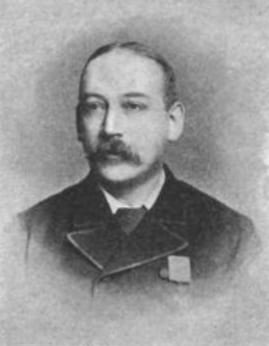
At just seventeen years of age, Arthur Mayo displayed extraordinary courage in the face of enemy fire, leading a charge against two artillery guns during the Indian Mutiny. His remarkable bravery at Dacca, Bengal, earned him the Victoria Cross and secured his place among the youngest recipients of Britain's highest award for gallantry.
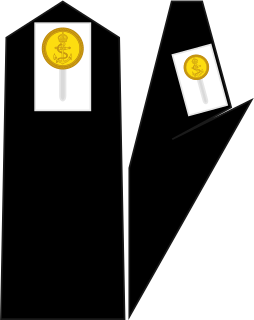
Born on 18 May 1840 at St Giles, Oxford, England, Arthur Mayo was educated at Berkhamsted School in Hertfordshire. He entered the Honourable East India Company's Indian Navy as a Midshipman on 19 February 1857 and served aboard the steam frigate Punjaub. During the Indian Mutiny, he joined No. 4 Detachment of the Indian Naval Brigade under Lieutenant T. E. Lewis.
On 22 November 1857, at Dacca, now Dhaka in Bangladesh, Mayo took part in an engagement against mutineers of the 73rd Native Infantry and Bengal Artillery. When his detachment was ordered to charge two six-pounder guns delivering heavy fire, Mayo led the assault, advancing nearly twenty yards ahead of his comrades. His conspicuous courage was recognised in the official Victoria Cross citation, published in The London Gazette on 25 February 1862, issue 22601, page 958. His service during the Indian Mutiny was also recognised by the Indian Mutiny Medal 1857-58, without a clasp.
Mayo demonstrated his courage again during the February 1859 expedition into the Abor Hills of northeastern India. During an assault on a defended stockade, he was struck in the hand by a poisoned arrow but continued leading his men until the position was captured. His conduct earned further recognition in the despatches of Lieutenant-Colonel S. F. Hannay, commanding the expedition.
After being invalided home in 1860, Mayo pursued his education at Magdalen Hall, Oxford, graduating with a Bachelor of Arts degree in 1865. He was ordained a deacon in 1866 and served as an assistant curate at St Peter's Church, Plymouth. On 5 November 1867, he was received into the Roman Catholic Church. He had married Ellen Horser in 1865, and his later life took him to Torquay, Malta and eventually Boscombe.
Arthur Mayo died on 18 May 1920, his eightieth birthday, at Boscombe, Dorset. He was buried in the East Cemetery, Boscombe. His extraordinary courage at Dacca and his continued service in the Abor Hills expedition remain enduring chapters in the history of the Honourable East India Company's Indian Navy and the Victoria Cross.
Become the named supporter for this profile and edit the tribute biography and portrait (Owner account required). Proceeds help keep the archive online.
$25 USD / year — annual sponsorship renewal. Keeps the page online and, where enabled, the family anniversary remembrance emails active.