★
Loading archive…
Loading archive…

Captain, British Army
Support & adopt this hero ↓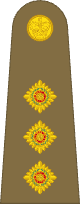
Four days before the guns of the First World War fell silent, Captain Arthur Moore Lascelles VC MC was killed in action in France. By then, the former medical student and South African mounted soldier had survived severe wounds, led men across open ground under machine-gun fire, earned both the Military Cross and Victoria Cross, and returned to the battlefield even after being wounded repeatedly. His story is not simply one of medals. It is the story of a soldier who repeatedly placed himself where the danger was greatest.
Arthur Moore Lascelles was born at Streatham, London, on 12 October 1880. He studied medicine before taking a dramatically different path in 1902, when he emigrated to South Africa and joined the Cape Mounted Rifles as a trooper. By the outbreak of the First World War he was serving with the 1st South African Mounted Rifles, taking part in operations in German South West Africa. After that campaign he returned to Britain and, in December 1915, received a commission as a Second Lieutenant in the 3rd Battalion, Durham Light Infantry.
The Western Front quickly tested him. Serving with the 14th Battalion, Durham Light Infantry, Lascelles was badly wounded in 1916, but returned to active service. Then, on 15 June 1917 near Loos, he led approximately forty men in a daylight trench raid. Taking advantage of mist, the raiding party entered the German position, inflicted casualties, captured prisoners and withdrew without losing a man. Accounts of the action record that Lascelles displayed exceptional coolness, personally supervised the withdrawal and was the last man to leave the enemy trench. His conduct was praised for his "great courage, endurance and initiative."
That action brought Lascelles the Military Cross. His award was formally published in the London Gazette on 1 January 1918, where he appears as Second Lieutenant, temporary Lieutenant and Acting Captain Arthur Moore Lascelles of the Durham Light Infantry, Special Reserve.
Yet the action that would place his name permanently among the most celebrated soldiers of the First World War was still to come.
On 3 December 1917, during the Battle of Cambrai, Lascelles was commanding his company near Masnières, France, when the position came under a devastating German bombardment followed by a powerful infantry assault. He was wounded, but refused to leave his men or allow the injury to interrupt the defence. Instead, he continued moving among them, encouraging them and organising the position until the first attack was beaten back.
Then the situation became desperate.
A renewed German attack overran the trench and captured several of Lascelles's men. With only twelve men remaining, he climbed onto the parapet and led them directly forward under intense machine-gun fire. The tiny group drove back more than sixty enemy soldiers and recovered the position. Even after receiving further wounds, Lascelles continued reorganising the defence. When another German attack eventually overwhelmed the trench and captured him, he subsequently escaped. His official Victoria Cross citation described his conduct as an example of extraordinary determination and gallantry that inspired those around him.
For that action, Acting Captain Arthur Moore Lascelles was awarded the Victoria Cross, Britain's highest decoration for gallantry in the presence of the enemy. The award was announced in the London Gazette on 11 January 1918. His citation specifically recognised his bravery, initiative and devotion to duty, including his refusal to abandon the defence despite being wounded and his remarkable counterattack with only twelve men.
On 23 March 1918, King George V personally presented Lascelles with the Victoria Cross at Buckingham Palace. It could easily have marked the end of his combat service. He had already been wounded several times and had nothing left to prove. Instead, while still recovering, he returned to France and rejoined the Durham Light Infantry.
That decision gave the final chapter of his life its tragic force.
On 7 November 1918, with the Armistice only four days away, Arthur Moore Lascelles was killed in action in France. He was 38 years old. He left behind his wife, Sophia, whom he had married in South Africa, and a military record stretching from mounted service in South Africa to some of the most brutal fighting on the Western Front. He was buried in France, and his name remains commemorated in Durham and on several memorials connected with his life and service.
Lascelles's complete surviving medal group tells the same story in miniature. Alongside his Victoria Cross and Military Cross are the 1914-15 Star, British War Medal and Victory Medal, reflecting his First World War service from the South African campaign through to the Western Front. The Victoria Cross and George Cross Association records all five awards, while his medals form part of the historic Durham Light Infantry collection.
More than a century later, Captain Arthur Moore Lascelles VC MC remains one of the Durham Light Infantry's most remarkable Victoria Cross recipients. What makes his story compelling is not a single moment at Masnières, but the pattern that came before and after it: a wounded officer returning to danger, a commander refusing treatment while his men still needed him, twelve soldiers following him against a vastly larger force, and finally a decorated veteran returning once more to the front only to fall within days of peace.
His Victoria Cross citation recorded an "inspiring example to all." Few phrases describe Arthur Moore Lascelles more fittingly.
Become the named supporter for this profile and edit the tribute biography and portrait (Owner account required). Proceeds help keep the archive online.
$25 USD / year — annual sponsorship renewal. Keeps the page online and, where enabled, the family anniversary remembrance emails active.