★
Loading archive…
Loading archive…
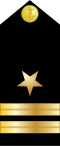
Lieutenant August Ohmsen was a German-born United States Navy sailor and officer whose long naval career stretched from the nineteenth-century steam Navy into the First World War era. He is remembered above all for his extraordinary lifesaving conduct during the sinking of USS Tallapoosa on the night of August 21, 1884, an action for which he received the Medal of Honor.
At the time of the disaster Ohmsen was serving as a Master-at-Arms. Decades later, after advancing through the warrant-officer grades and returning to wartime service from the retired list, he reached the rank of Lieutenant, his highest verified rank.
His final verified medal record for this project is:
Medal of Honor — No Device
Early Life
August Ohmsen was born on March 15, 1854, in Lübeck, Germany.
The surviving official records identify him simply as August Ohmsen, with no verified middle name or initial. This is important because later databases sometimes expand historical names without documentary authority; in Ohmsen's case, the official Navy and Medal of Honor records preserve the simple two-part form.
At some point before the 1880s he entered the United States naval service and established himself as a professional sailor.
By 1884 he had risen to the responsible enlisted position of Master-at-Arms.
In the nineteenth-century Navy, a Master-at-Arms was more than a routine sailor. The rating carried responsibility for maintaining discipline and order among the ship's company and often required considerable trust and authority aboard ship.
That responsibility became critically important aboard USS Tallapoosa.
USS Tallapoosa
USS Tallapoosa was a veteran steam-powered vessel that had served the United States Navy since the Civil War era.
By the 1880s she was functioning primarily as a transport and dispatch vessel.
On the night of August 21, 1884, Tallapoosa was operating in waters off the Massachusetts coast when disaster struck.
The vessel collided with the schooner J. S. Lowell and began sinking.
The collision created an immediate emergency.
Men were sleeping below decks.
Water was rising rapidly.
In such circumstances, darkness, confusion and the speed at which the ship was flooding made it possible for sailors below decks to be trapped before they could escape.
It was in this situation that Master-at-Arms August Ohmsen performed the act that defined his naval career.
Medal of Honor Action — August 21, 1884
Ohmsen's first concern was the men still below.
Instead of immediately seeking safety for himself, he remained on the berth deck as water entered the vessel.
He moved through the flooding compartment while calling and physically searching for sailors who were still asleep in their hammocks.
The water continued to rise.
According to his official Medal of Honor citation, Ohmsen remained below until it had reached approximately waist depth.
He moved through the water with his arms extended, rousing the sleeping men and ensuring that they understood that the ship was sinking.
This was an especially dangerous task.
The longer Ohmsen remained below, the greater the possibility that rising water, collapsing equipment, darkness, or the rapid loss of the ship could prevent him from reaching the upper deck.
Yet he continued until the berth deck had been cleared.
Only then did he go above.
Launching the Boats
Reaching the deck did not end Ohmsen's work.
He immediately turned to the evacuation.
He helped lower the first cutter, one of the ship's boats that could carry survivors away from the sinking vessel.
He then assisted with the dinghy.
After it was launched, Ohmsen himself took charge of the dinghy.
His Medal of Honor action therefore consisted of two connected phases:
First, he remained inside a sinking ship to help wake and evacuate trapped sailors.
Then, after reaching the upper deck, he continued helping organize the physical escape from the vessel.
The act was not combat heroism in the modern sense.
No enemy was present.
There was no exchange of gunfire.
Its danger came from the rapidly sinking ship and the possibility of being trapped below deck.
Ohmsen deliberately remained in that danger because other sailors were still at risk.
The Medal of Honor
For his actions aboard USS Tallapoosa, August Ohmsen was awarded the Medal of Honor.
His project entry is:
Medal of Honor — No Device
The award was recorded in General Order No. 326, dated October 18, 1884.
It is important to understand the historical context of the Medal of Honor at that time.
The Navy Medal of Honor had been authorized during the American Civil War. Congress first authorized the Navy decoration on December 21, 1861, and subsequent legislation expanded the circumstances under which it could be awarded.
During the nineteenth century, the Navy Medal of Honor could recognize not only gallantry in combat but also extraordinary heroism performed “in the line of his profession.”
That historical standard explains why sailors such as Ohmsen could receive the Medal of Honor for extraordinary lifesaving conduct in a non-combat naval disaster.
The modern Medal of Honor eventually became associated almost exclusively with extraordinary combat valor, but that was not yet the governing standard in 1884.
Ohmsen's award therefore belongs to an earlier and historically distinct period of Medal of Honor history.
His heroism was nevertheless direct and personal: he knowingly remained inside a sinking vessel while other sailors escaped, then continued assisting the evacuation.
Continuing Navy Career
The Tallapoosa disaster did not bring Ohmsen's naval career to an end.
He continued serving in the United States Navy for many years after receiving the Medal of Honor.
His later advancement is particularly significant because he moved from the enlisted ranks into the Navy's warrant-officer structure.
Official Navy records show that he became a Boatswain on June 24, 1897.
A Boatswain was a warrant officer responsible for major aspects of seamanship, deck operations, anchors, boats, rigging, and related shipboard work.
For a former Master-at-Arms to advance into the warrant-officer corps reflected substantial experience and professional standing within the Navy.
Promotion to Chief Boatswain
On April 27, 1904, Ohmsen advanced to Chief Boatswain.
This promotion is documented in the Congressional Record.
The rank represented another important step in a naval career that had begun in the enlisted force.
By this point, approximately twenty years had passed since the sinking of Tallapoosa.
Ohmsen was no longer remembered merely as the Master-at-Arms who had saved sailors during a shipwreck; he had become an experienced senior warrant officer.
USS Franklin / Shore Duty
A 1907 Navy register places Chief Boatswain August Ohmsen on duty associated with USS Franklin.
At this point in his career he was serving within the Navy's shore and receiving-ship system rather than as a young enlisted sailor at sea.
His continued assignment in senior boatswain duties demonstrates that his career after the Medal of Honor remained substantial and professional.
The decoration did not simply end his progression.
He continued to serve and advance.
Retirement from Active Navy Service
Ohmsen eventually retired from active naval service on November 25, 1910.
By then he had spent decades associated with the Navy.
His career had carried him from an enlisted Master-at-Arms through the warrant ranks of Boatswain and Chief Boatswain.
For many sailors of his generation, retirement would have marked the end of military service.
For Ohmsen it did not.
A world war would bring him back.
Return During World War I
When the United States became involved in the First World War, the Navy expanded rapidly.
Experienced retired officers and warrant officers represented an important reservoir of trained personnel.
Ohmsen was among those drawn back into wartime service.
Congressional records confirm that Chief Boatswain August Ohmsen, on the retired list, was appointed Lieutenant on the retired list for temporary service effective July 1, 1918.
This is the key evidence supporting his final database rank.
Therefore his rank history must be preserved carefully:
Medal of Honor action rank — Master-at-Arms
Later warrant rank — Boatswain
Senior warrant rank — Chief Boatswain
Highest verified rank — Lieutenant
Ohmsen's First World War service did not transform his 1884 Medal of Honor action into a wartime combat award.
The two parts of his career are historically separate.
His Medal of Honor belonged to the Interim 1871–1899 era, while his later temporary Lieutenant appointment came during the First World War.
There is also no verified evidence in the present project record that Ohmsen personally fought in a First World War combat theater.
Accordingly, his wartime service should be described as naval service during World War I, not as frontline combat service.
Highest Rank — Lieutenant
The Congressional appointment of 1918 establishes Lieutenant as Ohmsen's highest verified rank.
This distinction is important because Medal of Honor databases often display the recipient's rank at the time of the heroic action.
In Ohmsen's case those are not the same.
When he earned the Medal of Honor in 1884, he was:
Master-at-Arms
By the end of his documented naval career, his highest rank was:
Lieutenant
For the VictoriaCross.ca database, where the project has been using highest verified rank for the principal Rank field, the correct final entry is therefore:
Lieutenant
Medal Record
The only award currently supported to the project's recipient-specific verification standard is the Medal of Honor.
That does not mean that Ohmsen could never have qualified for other service or campaign medals.
His long career overlapped periods in which several U.S. Navy service decorations existed.
However, the client SOP requires proof of actual personal entitlement rather than assuming awards solely from dates of service.
For that reason, no additional medal should be placed on his final ribbon rack unless a recipient-specific medal roll, service record, award document or equivalent authoritative record establishes it.
Accordingly, the project should not presently add a Spanish Campaign Medal, World War I Victory Medal, Navy Good Conduct Medal, Sampson Medal, or another campaign/service decoration merely because his service chronology makes one appear possible.
His locked medal rack remains:
Medal of Honor — No Device
Life in Retirement
After his final period of Navy service, Ohmsen lived in Portsmouth, Virginia, a community closely connected with the naval establishment at Hampton Roads.
A 1931 Navy directory still lists the retired Lieutenant August Ohmsen in Portsmouth.
His address at that time was recorded as:
318 North Elm Avenue, Park View, Portsmouth, Virginia
This provides useful evidence that Portsmouth was not merely his place of death but part of his long post-service life.
By this time he was an elderly retired Navy officer whose career linked two very different eras of American naval history.
He had entered the Navy during the age of steam-powered wooden warships.
He had earned the Medal of Honor in a nineteenth-century naval disaster.
He later became a warrant officer and Chief Boatswain during the period when the United States Navy was transforming into a modern steel fleet.
Finally, he returned to service in the First World War era as a Lieutenant.
Death
August Ohmsen died in Portsmouth, Virginia, on February 13, 1938.
He was 83 years old, approaching his eighty-fourth birthday.
His death came more than fifty-three years after the action aboard USS Tallapoosa.
A surviving Portsmouth Catholic burial record records his interment in February 1938 and identifies him as Lieutenant August Ohmsen, preserving the highest rank he had reached in naval service.
Burial
Ohmsen was buried at:
St. Paul's Catholic Cemetery Portsmouth, Virginia
His burial record places the interment on February 17, 1938.
The Congressional Medal of Honor Society also identifies St. Paul's Catholic Cemetery as his burial place.
Thus, the final chapter of his life remained tied to Portsmouth, a city whose history was deeply connected with the United States Navy.
Legacy
August Ohmsen's story is fundamentally one of professional naval service and responsibility in crisis.
He did not receive the Medal of Honor for destroying an enemy position.
He did not earn it through an attack under gunfire.
Instead, he earned it because, when his ship was sinking and water was rising around him, he remained below deck while fellow sailors were still in danger.
As Master-at-Arms, he had responsibility for the men aboard his ship.
On the night of August 21, 1884, he fulfilled that responsibility at direct personal risk.
He moved through waist-deep water searching for sleeping sailors.
He helped clear the berth deck.
He went topside only after doing what he could below.
Then he helped launch the ship's boats and took charge of the dinghy.
The United States Navy recognized that conduct with its highest decoration.
Yet the action aboard Tallapoosa represented only one moment in a much longer career.
Ohmsen remained in the Navy, became a Boatswain, advanced to Chief Boatswain, retired after decades of service, and then returned during World War I.
By 1918 the former nineteenth-century Master-at-Arms had become Lieutenant August Ohmsen.
His career therefore connected three different identities:
the enlisted sailor who saved shipmates,
the experienced warrant officer who spent years in professional naval service,
and the retired officer recalled during a global war.
More than half a century after the sinking of USS Tallapoosa, he died still remembered as a Medal of Honor recipient and retired United States Navy Lieutenant.
His legacy rests not on combat conquest, but on a simple and enduring principle of naval leadership:
when others were trapped aboard a sinking ship, August Ohmsen stayed behind to help them escape.
Final Project Record
Full Name: August Ohmsen Country: United States Branch: United States Navy Highest Verified Rank: Lieutenant Medal of Honor Action Rank: Master-at-Arms Unit / Ship: USS Tallapoosa Medal of Honor Action Date: August 21, 1884 Action Place: off Woods Hole, Massachusetts Award Status: Non-posthumous General Order: No. 326 — October 18, 1884 Later Rank: Boatswain — June 24, 1897 Chief Boatswain: April 27, 1904 Retired: November 25, 1910 Temporary Lieutenant: effective July 1, 1918 World War I Service: Yes Combat Service in WWI: Not verified Born: March 15, 1854 — Lübeck, Germany Died: February 13, 1938 — Portsmouth, Virginia Buried: St. Paul's Catholic Cemetery, Portsmouth, Virginia
Final Verified Medal: Medal of Honor — No Device
Verification note — not part of biography
CMOHS confirms Ohmsen's March 15, 1854 birth in Lübeck, highest rank Lieutenant, Master-at-Arms rank at the Medal of Honor action, August 21, 1884 action date, USS Tallapoosa, death on February 13, 1938 and burial in Portsmouth. The DoD Navy roster independently records August Ohmsen, no middle initial, Master-at-Arms.
The official Army Medal of Honor record confirms General Order No. 326, October 18, 1884, and the exact lifesaving conduct aboard Tallapoosa. NHHC independently lists Ohmsen among the Navy's 1871–1898 Medal of Honor recipients.
Official Navy historical records give his Boatswain appointment as June 24, 1897; the 1904 Congressional Record confirms advancement to Chief Boatswain from April 27, 1904. The 1931 Navy Register confirms his March 15, 1854 birth, June 24, 1897 warrant date and November 25, 1910 retirement date.
The Congressional Record confirms that retired Chief Boatswain August Ohmsen was appointed Lieutenant for temporary service effective July 1, 1918. NHHC's official Medal of Honor history also explains why nineteenth-century Navy recipients could receive the medal for extraordinary non-combat heroism in the line of their profession, which is essential context for Ohmsen's 1884 award.
Become the named supporter for this profile and edit the tribute biography and portrait (Owner account required). Proceeds help keep the archive online.
$25 USD / year — annual sponsorship renewal. Keeps the page online and, where enabled, the family anniversary remembrance emails active.