★
Loading archive…
Loading archive…

Captain, U.S. Army
Support & adopt this hero ↓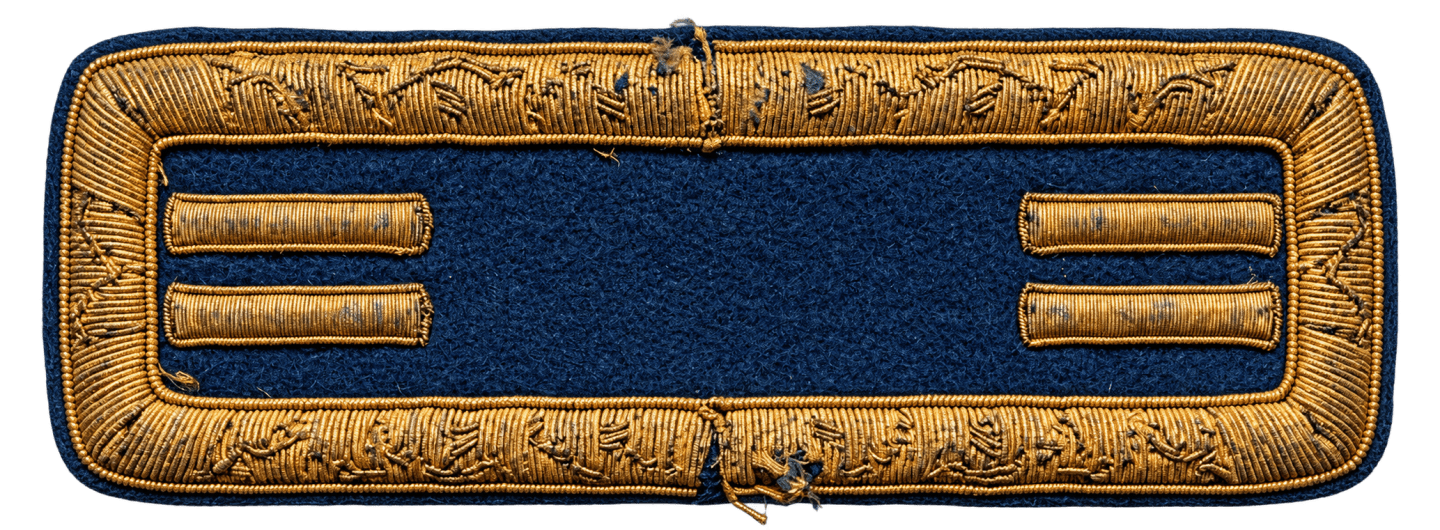
He Lost an Arm but Refused to Leave the War
Axel Hayford Reed was born on March 13, 1835, in Hartford, Maine, and became a distinguished Union Army soldier whose extraordinary courage during the American Civil War earned him the Medal of Honor. Serving with Company K of the 2nd Minnesota Volunteer Infantry, Reed demonstrated remarkable determination during the battles of Chickamauga and Missionary Ridge in 1863. Although severely wounded and eventually losing his right arm, he refused to leave military service and continued serving until the end of the war.
Reed was the youngest of seven children born to Sampson Reed and Huldah Bisbee Reed. His mother died when he was seven years old, and he spent much of his childhood working on his father's farm in Maine. At nineteen, he left home to seek opportunities in the American West. He traveled to Minnesota, arriving in the territory in 1855, and eventually settled in the developing community of Glencoe.
In Glencoe, Reed worked in brickmaking and became involved in the town's early development. His work provided him with an opportunity to establish himself economically before the outbreak of the Civil War.
When the conflict began in 1861, Reed volunteered for Union military service. In August of that year, he joined Company K of the 2nd Minnesota Volunteer Infantry Regiment. The regiment subsequently participated in military operations across the Western Theater, including campaigns in Kentucky, Tennessee, and Georgia.
By September 1863, Reed held the rank of sergeant. His regiment was serving with Union forces commanded by Major General William S. Rosecrans during the Chickamauga Campaign in northern Georgia.
Earlier that summer, Reed had been placed under military arrest after publicly criticizing the distribution of military rations. He was removed from active duty and ordered to remain in the rear of his regiment without weapons.
When the Battle of Chickamauga began on September 19, 1863, Reed was still under arrest. Confederate troops commanded by General Braxton Bragg had engaged Union forces in a major battle that would continue for two days.
Despite his disciplinary status, Reed voluntarily left his position in the rear and moved toward the fighting. He obtained a rifle from a wounded soldier and joined his comrades on the battlefield.
For two days, Reed fought alongside Union soldiers under dangerous combat conditions. His decision to enter the fighting while officially under arrest became one of the remarkable incidents of his military career.
Following the battle, Major General George H. Thomas recognized Reed's conduct and ordered his release from arrest. His actions at Chickamauga restored him to active military duty and later became part of the official recognition for which he received the Medal of Honor.
Reed's second major act of heroism occurred on November 25, 1863, during the Battle of Missionary Ridge near Chattanooga, Tennessee.
Union forces had launched an attack against Confederate positions established along the ridge. The Confederate defenses occupied elevated ground, requiring Union soldiers to advance uphill against entrenched opponents.
During the assault, Reed assumed command of Company K in the absence of a commissioned officer. He led his men forward against the Confederate defenses, participating in the advance that carried Union troops into the enemy's fortified positions.
Reed was among the first soldiers to enter the Confederate works. During the fighting, he suffered a devastating wound when a bullet struck his right arm, shattering the bone above the elbow.
The injury left him seriously wounded on the battlefield. After the fighting, he received assistance from another soldier and eventually reached medical care in Chattanooga.
His right arm had to be amputated.
For many soldiers, such a severe injury would have ended their military careers. Reed, however, declined the opportunity to receive a disability discharge and remained determined to continue serving in the Union Army.
Following his recovery, he returned to military duty despite the permanent loss of his arm.
His military career continued to develop. On August 17, 1864, Reed was promoted to second lieutenant, and on February 18, 1865, he advanced to first lieutenant. His continued service included participation in the later Union campaigns associated with Major General William T. Sherman, including operations through Georgia and the Carolinas.
Reed remained in the Army until the conclusion of the Civil War. He was mustered out at Fort Snelling, Minnesota, on July 18, 1865, as a first lieutenant. His highest recorded rank was captain, a title by which he was also widely known in later life.
His wartime achievements were formally recognized decades after the conflict ended.
On April 2, 1898, Axel Hayford Reed received the Medal of Honor for his extraordinary conduct at Chickamauga and Missionary Ridge in 1863.
The decoration recognized two distinct acts of courage. At Chickamauga, he had voluntarily entered battle despite being under military arrest, obtained a rifle, and fought alongside his comrades. At Missionary Ridge, he had commanded his company during the assault on Confederate defenses, suffered a severe wound, and subsequently refused to abandon military service despite losing an arm.
Reed's Medal of Honor recognized not only his battlefield courage but also his continued military service following a life-changing injury. More than three decades separated his actions from their formal recognition.
After the war, Reed returned to Glencoe, Minnesota, where he became a prominent businessman and community leader.
Together with a former Army comrade, he acquired a mercantile business that developed into a successful general merchandise and grain-trading enterprise. His commercial activities contributed to Glencoe's growth during the decades following the Civil War.
Reed also became involved in transportation, banking, agriculture, and publishing. He helped advance railroad development in the region and played an important role in establishing banking services in Glencoe. Between 1878 and 1889, he published the Glencoe Enterprise newspaper.
His interests extended into public service. Reed was elected to the Minnesota House of Representatives and served during the 1870 legislative session. He also participated in local government and remained active in agricultural development, including wheat farming and fruit cultivation.
In 1869, Reed married Hannah Morrison. The couple raised four children, although one daughter died during childhood.
Despite the permanent effects of his wartime injury, Reed maintained an active professional and public life for more than fifty years after the Civil War. His work in business, agriculture, and civic affairs helped shape the development of Glencoe and the surrounding region.
He also maintained connections with fellow veterans and organizations dedicated to preserving the history of Union military service.
Axel Hayford Reed died on January 21, 1917, in Glencoe, Minnesota, at the age of eighty-one. He was buried at Mount Auburn Cemetery in Glencoe.
His life combined extraordinary military service with decades of civic and economic involvement in Minnesota. From a sergeant who voluntarily entered battle while under arrest to a wounded officer who refused to leave the Army after losing an arm, Reed demonstrated courage during two significant engagements of the American Civil War.
His Medal of Honor preserves the memory of his actions at Chickamauga and Missionary Ridge, while his contributions to Glencoe reflect the lasting influence of his life beyond military service. Axel Hayford Reed remains remembered as a Union veteran, Medal of Honor recipient, and influential figure in Minnesota's nineteenth-century history.
Become the named supporter for this profile and edit the tribute biography and portrait (Owner account required). Proceeds help keep the archive online.
$25 USD / year — annual sponsorship renewal. Keeps the page online and, where enabled, the family anniversary remembrance emails active.