★
Loading archive…
Loading archive…
He Kept His Gun Firing Under Deadly Enemy Fire
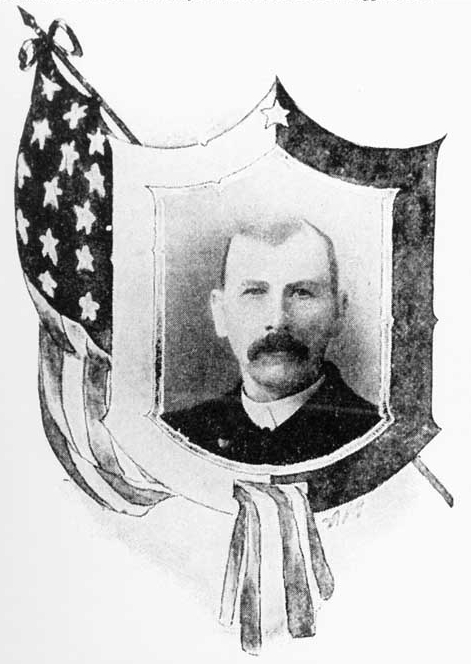
Bartholomew Diggins was born in Ireland in the nineteenth century and immigrated to the United States as a young child. He later served in the United States Navy during the American Civil War, earning the Medal of Honor for extraordinary courage aboard USS Hartford during the Battle of Mobile Bay on August 5, 1864. His determination to remain at his gun while Confederate fire struck the vessel and caused casualties among its crew secured his place among the distinguished naval servicemen of the Civil War.
Diggins immigrated to the United States with his family in 1848, when he was approximately five years old. He grew up in America during a period of increasing political and sectional tension that eventually led to the outbreak of the Civil War in April 1861.
In January 1862, Diggins enlisted in the United States Navy, identifying Baltimore, Maryland, as his place of birth in his enlistment information. Maryland was also the state to which his Medal of Honor service was officially accredited.
He entered naval service at a time when the Union was expanding its maritime operations against Confederate ports, coastal fortifications, and naval vessels. The Union blockade had become an important component of the federal government's strategy to restrict Confederate trade and military supplies.
During the war, Diggins served aboard USS Hartford, a steam-powered sloop-of-war that became the flagship of Rear Admiral David Glasgow Farragut. The vessel participated in major Union naval operations along the Confederate coastline and the Gulf of Mexico.
Diggins served aboard Hartford during engagements in 1862, 1863, and 1864. His wartime service exposed him repeatedly to dangerous combat conditions, and historical documentation associated with his Medal of Honor records that he was wounded four times during his naval career.
By August 1864, Diggins held the rating of ordinary seaman aboard USS Hartford. His most important military action occurred during the Union operation against Mobile Bay, Alabama.
Mobile Bay was one of the Confederacy's remaining strategically important Gulf Coast ports. Its entrance was defended by Fort Morgan, Fort Gaines, Confederate naval vessels, and underwater mines, presenting formidable obstacles to a Union attack.
Rear Admiral Farragut organized a major naval offensive intended to overcome these defenses and establish Union control of the bay. His attacking force included wooden warships and ironclad monitors, which advanced toward the fortified entrance on the morning of August 5, 1864.
USS Hartford carried Farragut and his command staff into battle. Diggins was among the sailors responsible for operating the vessel's artillery as the fleet approached the Confederate defenses.
The battle began under intense enemy fire. Confederate coastal batteries opened fire against the Union formation, while enemy naval vessels prepared to resist the approaching warships.
During the advance, the Union ironclad USS Tecumseh struck a Confederate underwater mine and sank. The loss created additional danger and confusion as the remaining Union vessels attempted to continue their movement through the defended entrance.
Farragut pressed forward, directing his ships into Mobile Bay despite the threat of mines, Confederate artillery, and enemy warships.
USS Hartford came under heavy fire during the engagement. Confederate shells struck the ship, damaging its structure and causing casualties among the crew. Enemy projectiles swept the decks as Union sailors attempted to maintain their fighting positions.
It was during this dangerous period that Bartholomew Diggins performed the act for which he would later receive the Medal of Honor.
Serving as a gun loader, Diggins remained at his assigned position despite the destructive fire directed against USS Hartford.
His responsibility required him to continue supplying ammunition to his gun, allowing the weapon to remain in operation while the battle continued.
Although the ship sustained damage and several men were lost, Diggins maintained his position throughout the furious engagement. He continued performing his duties under enemy fire as the Union fleet fought against Confederate fortifications, gunboats, and the powerful ironclad CSS Tennessee.
The fighting lasted approximately two hours and involved sustained artillery exchanges at close range.
Despite the danger surrounding him, Diggins remained steadfast at his gun. His conduct demonstrated the determination required of sailors whose responsibilities were essential to keeping a warship operational during combat.
The Union fleet eventually overwhelmed the Confederate naval resistance. CSS Tennessee, commanded by Admiral Franklin Buchanan, was forced to surrender after sustained fighting against Union warships.
The battle also inflicted serious damage on Confederate defenses around Fort Morgan. Union operations continued after the naval victory, and the remaining Confederate forts guarding Mobile Bay surrendered later that month.
The capture of Mobile Bay was a major strategic success for the Union. It closed an important Confederate maritime route and strengthened the federal blockade of the Gulf Coast.
Diggins's courage during the engagement attracted official recognition. His performance as a gun loader was specifically acknowledged for the determination he displayed while USS Hartford was exposed to intense enemy fire.
His Medal of Honor citation recognized that he remained at his post despite the damage inflicted on his ship and the casualties suffered by its crew.
The citation emphasized his steadfast conduct throughout the battle, which ended with the surrender of CSS Tennessee and the damaging of Confederate batteries at Fort Morgan.
On November 12, 1891, Bartholomew Diggins was awarded the Navy Medal of Honor under General Order No. 391.
The decoration recognized his gallantry and meritorious conduct during the Battle of Mobile Bay on August 5, 1864. His commanding gun-division officer had commended him by name, and the surviving documentation also recognized his creditable service during Hartford's engagements in 1862, 1863, and 1864.
The Medal of Honor had originated during the Civil War, when Congress established the Navy decoration to recognize exceptional gallantry among enlisted naval personnel and Marines.
Diggins received the award more than twenty-seven years after the battle. The recognition formally preserved his individual contribution to a naval victory that had become one of the defining engagements of the Union Navy.
After the Civil War, Diggins returned to civilian life and eventually established himself in Washington, D.C.
In 1870, he married Mary H. Wallace. The couple had four children, and Diggins devoted much of his postwar life to his family and professional responsibilities.
He later worked as captain of the watch at the State, War and Navy Department Building in Washington, D.C. He held this position for nearly twenty-five years, maintaining a long association with the federal government after his military service had ended.
His employment connected him with the administrative center of the United States government during a period of considerable national growth and institutional change.
Diggins lived into the twentieth century, surviving more than five decades after his Medal of Honor action at Mobile Bay.
He died in February 1917 in Key West, Florida, and was buried at Arlington National Cemetery in Arlington, Virginia.
His final resting place in Section 13 commemorates his service as a United States Navy ordinary seaman and Medal of Honor recipient.
Bartholomew Diggins's legacy rests on his courage aboard USS Hartford during one of the Civil War's most consequential naval battles. While Confederate fire struck the ship and inflicted casualties among the crew, he continued performing his duties as a gun loader throughout the engagement.
His actions illustrate the importance of individual determination and disciplined service during naval combat. Although he did not command a ship or direct the fleet, his steadfast performance contributed to the fighting effectiveness of Farragut's flagship.
The Navy Medal of Honor awarded to him in 1891 remains the lasting recognition of his gallantry during the Battle of Mobile Bay.
Bartholomew Diggins is remembered as an Irish-born American sailor whose courage under enemy fire earned him the Medal of Honor and a permanent place in the history of the United States Navy.
Become the named supporter for this profile and edit the tribute biography and portrait (Owner account required). Proceeds help keep the archive online.
$25 USD / year — annual sponsorship renewal. Keeps the page online and, where enabled, the family anniversary remembrance emails active.