★
Loading archive…
Loading archive…
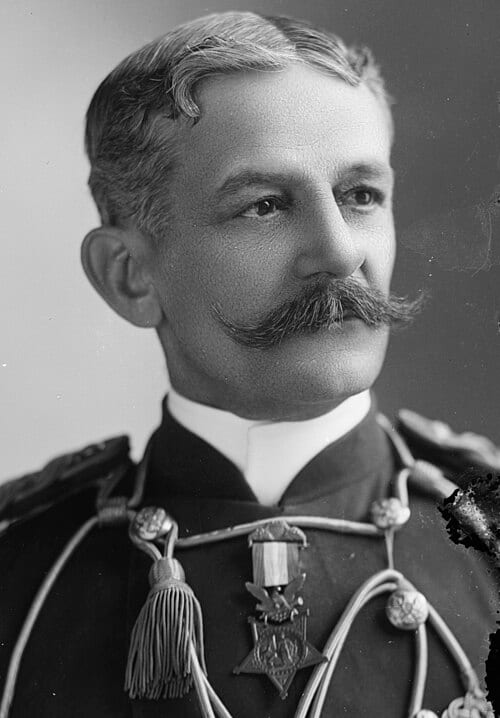
Colonel, U.S. Army
Support & adopt this hero ↓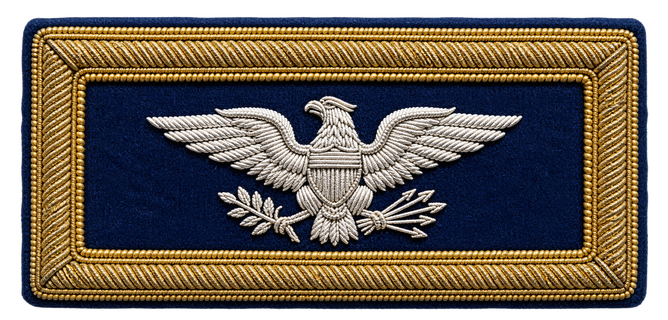
Full Name: Benjamin Harrison Cheever Jr. Branch: United States Army Highest Verified Rank: Colonel Rank at Medal of Honor Action: First Lieutenant Unit at Medal of Honor Action: 6th U.S. Cavalry Born: June 7, 1850 — Washington, D.C. Died: October 21, 1930 — Atlantic City, New Jersey Buried: Arlington National Cemetery, Arlington, Virginia Principal Decorations: Medal of Honor; Indian Campaign Medal
Benjamin Harrison Cheever Jr. was a career United States Army cavalry officer whose military service stretched across the closing decades of the nineteenth century and into the early twentieth century. Born in Washington, D.C., on June 7, 1850, he entered an Army that was increasingly occupied with mounted operations across the American West. His career would eventually encompass frontier cavalry service, the Indian Campaigns, wartime staff duty during the Spanish-American War period, and senior service in several cavalry regiments. He ultimately attained the rank of colonel on the retired list.
Early Army Career and the 6th U.S. Cavalry
Cheever began his commissioned career in the cavalry and became closely associated with the 6th U.S. Cavalry, one of the Regular Army's mounted regiments. He was appointed a second lieutenant in 1876 and later advanced to first lieutenant. These years placed him in the professional cavalry establishment at a time when mounted troops were frequently assigned to widely separated frontier posts and deployed on field operations over difficult terrain.
By the late 1880s and early 1890s, Cheever had accumulated many years of cavalry experience. The event that permanently established his place in American military history occurred while he was serving as a First Lieutenant in the 6th U.S. Cavalry. The Department of Defense, the U.S. Army, and the Congressional Medal of Honor Society all identify him in that rank and organization for his celebrated action in South Dakota.
White River, South Dakota — January 1, 1891
On January 1, 1891, Cheever was operating with the 6th U.S. Cavalry at White River, South Dakota, during the Army's campaign against the Sioux. The winter conditions made movement particularly difficult: the White River was partly frozen when Cheever participated in the action for which he would receive the nation's highest military decoration.
During the engagement, another element of the regiment—Troop K, 6th U.S. Cavalry—required assistance. Cheever placed himself at the head of the movement across the partly frozen river and led the advance that brought effective support to the troop. The official citation is concise, concentrating not on exaggerated battlefield claims but on his leadership of that hazardous advance. This is important to preserve in his biography: the documentary record honors a specific act of leadership under operational danger rather than an unsupported casualty count or embellished narrative.
Medal of Honor
For his conduct at White River, Cheever received the Medal of Honor, issued on April 25, 1891. He was not a posthumous recipient; the decoration was awarded during his lifetime. The Congressional Medal of Honor Society records his action date as January 1, 1891, his rank as First Lieutenant, his unit as the 6th U.S. Cavalry, and his later highest rank as Colonel.
The Medal of Honor itself had originated during the American Civil War. Congress authorized an Army Medal of Honor in 1862, and in 1863 eligibility was extended to commissioned officers. Over time it developed into the United States' highest decoration for military valor. Cheever's 1891 award therefore belonged to an established but still evolving nineteenth-century system of recognizing exceptional military conduct.
Cheever's award is historically significant because the official recognition is tied to a clearly documented place, date, rank, regiment and act. He was a serving cavalry officer who personally headed an advance across a difficult natural obstacle to reinforce fellow soldiers during an active operation. The Medal of Honor became the central decoration associated with his military legacy.
Indian Campaign Medal and Its Historical Context
Cheever's service at White River also falls within the qualifying historical framework of the Indian Campaign Medal. Unlike the Medal of Honor, which recognized a particular act of valor, the Indian Campaign Medal was a campaign-service medal intended to recognize qualifying Army service during specified operations of the Indian Wars.
The medal did not yet exist at the time of Cheever's 1891 action. It was established later by War Department General Orders No. 12 in 1907 and applied retrospectively to qualifying service. Army regulations specifically include service against the Sioux in South Dakota between November 1890 and January 1891 among the authorized campaigns. Cheever's officially documented service at White River on January 1, 1891 falls directly within that campaign period.
This distinction is important when presenting his decorations. The Medal of Honor commemorated Cheever's individual valor and leadership during the White River action; the Indian Campaign Medal represented the broader campaign service in which that action occurred. The two therefore recognize different aspects of the same period of Cheever's Army career.
Promotion to Captain
Cheever continued in the Regular Army after receiving the Medal of Honor. In 1893, official congressional records show First Lieutenant Benjamin H. Cheever of the 6th Cavalry being promoted to Captain. His continued advancement indicates that his career did not end with his famous 1891 action; he remained a professional cavalry officer and assumed greater responsibilities as his service progressed.
Spanish-American War Era and Inspector-General Service
A major change in Cheever's duties occurred during the mobilization for the Spanish-American War in 1898. While holding his Regular Army rank of captain, he was appointed in the United States Volunteer Army as an Inspector General with the rank of Major. Congressional records specifically list Captain Benjamin H. Cheever, 6th U.S. Cavalry, among the officers appointed inspectors general at that grade.
Later in 1898, contemporary records list Major Benjamin H. Cheever as the Inspector General on the staff of the Second Division, commanded by Major General Francis V. Greene. This assignment represented a very different form of responsibility from his earlier frontier cavalry service. An inspector general was concerned with the condition, administration, discipline, readiness and functioning of military organizations—a staff role requiring experience and professional judgment.
His service during this period therefore demonstrates the breadth of his Army career. Cheever had progressed from junior mounted officer and field participant to an experienced officer entrusted with higher-level organizational responsibilities during a major wartime mobilization.
Major and Senior Cavalry Officer
Cheever subsequently returned to the peacetime Regular Army promotion system. On September 13, 1902, he was promoted from Captain, 6th Cavalry, to Major of Cavalry. Congressional confirmation records specifically identify him among the Army's cavalry promotions for that date.
Although his promotion initially involved assignment in the cavalry establishment outside his original regiment, contemporary cavalry records soon again list Major Benjamin H. Cheever with the 6th U.S. Cavalry. The cavalry journal's officer roster for 1903–1904 places him among the regiment's majors, evidence that the 6th Cavalry remained an important part of his professional identity long after the White River action.
By early 1909 Cheever was serving as a Major in the 2nd Cavalry. On August 7, 1909, he was promoted to Lieutenant Colonel, one of the senior field-officer grades in the Regular Army. Congressional records confirm the promotion from Major to Lieutenant Colonel.
Retirement and Highest Rank
Cheever's active Army career concluded after more than three decades of commissioned service. Congressional records state that Lieutenant Colonel Benjamin H. Cheever retired from active service on September 30, 1910. At that stage he was associated with the Third Cavalry in official records.
His historical record did not end at lieutenant colonel, however. He was subsequently carried as a Colonel on the retired list, which is why Colonel is the correct highest verified rank for the website profile, while First Lieutenant remains the correct rank at his Medal of Honor action. The Congressional Medal of Honor Society likewise records his highest rank as Colonel.
This distinction is essential to his profile: Cheever was not a colonel when he crossed White River in 1891. At that moment he was a First Lieutenant. Colonel represents the highest rank ultimately associated with his completed military career.
Later Life, Death, and Burial
After leaving active service, Cheever lived for another two decades. He died on October 21, 1930, at the age of eighty. Contemporary and institutional records place his later life in the Atlantic City area of New Jersey, and the Congressional Medal of Honor Society records his death at Atlantic City.
Benjamin Harrison Cheever Jr. was buried at Arlington National Cemetery in Arlington, Virginia, where his grave is recorded in Section 1, Grave 421. His burial at Arlington places his final resting place among those of generations of American servicemen and other Medal of Honor recipients.
Legacy
Cheever's military life extended far beyond a single celebrated moment. He entered the cavalry as a junior officer in the nineteenth-century Regular Army, served through the later Indian Campaigns, demonstrated conspicuous leadership at White River, received the Medal of Honor, advanced to captain, served as a volunteer inspector general during the Spanish-American War era, became a major and lieutenant colonel in the Regular Army, and ultimately held the rank of colonel on the retired list.
His two principal campaign and valor recognitions tell complementary parts of that story. The Indian Campaign Medal represents his documented participation in the Sioux campaign in South Dakota, while the Medal of Honor preserves the exceptional individual action that occurred within that campaign. His Medal of Honor action on January 1, 1891—leading the advance across the partly frozen White River to aid Troop K—remains the defining documented episode of a military career that spanned more than thirty years.
Become the named supporter for this profile and edit the tribute biography and portrait (Owner account required). Proceeds help keep the archive online.
$25 USD / year — annual sponsorship renewal. Keeps the page online and, where enabled, the family anniversary remembrance emails active.