★
Loading archive…
Loading archive…
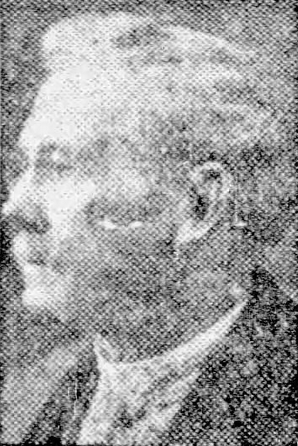
Benjamin H. Jellison was an American soldier of the United States Army whose Civil War service carried him from the early campaigns of the Army of the Potomac to one of the most famous battlefields in American history. Serving with Company C, 19th Massachusetts Volunteer Infantry, he rose from private to sergeant and became a recipient of the Medal of Honor for his actions during the Battle of Gettysburg. His wartime record also included multiple wounds, reenlistment, and continued military service after the Civil War, eventually attaining the rank of captain in the Massachusetts militia.
Early Life and Entry into Military Service
Benjamin H. Jellison was born on December 29, 1845, in Newburyport, Massachusetts. He entered military service while still in his teens, enlisting on July 26, 1861, only a few months after the outbreak of the American Civil War.
He joined Company C of the 19th Massachusetts Volunteer Infantry as a private. The regiment was composed largely of men from eastern Massachusetts and became part of the Union Army's Army of the Potomac, serving in some of the hardest-fought campaigns in the Eastern Theater.
For Jellison, military service quickly became a prolonged experience of marching, combat, casualties, and repeated exposure to battlefield danger.
Early Civil War Service and First Wound
During the Peninsula Campaign of 1862, the 19th Massachusetts participated in operations around Richmond and the fighting associated with the Seven Days Battles.
On June 25, 1862, Jellison was wounded in the face during combat operations that formed part of the regiment's fighting and withdrawal from the Fair Oaks area toward Harrison's Landing.
The wound did not end his military career. He returned to active service and continued with the regiment as it moved through subsequent campaigns of the Army of the Potomac.
The 19th Massachusetts would fight in a succession of major engagements, including the campaigns surrounding Antietam and Fredericksburg, before reaching Pennsylvania in the summer of 1863.
Gettysburg and the Regimental Colors
Jellison's defining military experience came during the Battle of Gettysburg, fought from July 1 to July 3, 1863.
The 19th Massachusetts belonged to the Union II Corps and was heavily engaged during the battle. Regimental accounts record an important episode involving Jellison during the fighting of July 2.
When the regiment's color sergeant was shot down and the flag fell, Jellison immediately recovered the colors. Carrying a regimental flag in Civil War combat was an exceptionally dangerous responsibility. Colors served as a visual rallying point around which soldiers maintained formation amid smoke, noise, confusion, and casualties, making the men who carried them conspicuous targets.
Jellison continued carrying the colors and was elevated to sergeant.
His role with the colors carried directly into the climactic fighting of the following day.
July 3, 1863 — Pickett's Charge
On July 3, 1863, Confederate forces launched the massive assault on the Union center traditionally known as Pickett's Charge.
The 19th Massachusetts occupied part of the Union defensive position on Cemetery Ridge. Before the infantry assault reached the Union lines, the area endured a prolonged Confederate artillery bombardment. Regimental accounts describe Jellison remaining with the colors while artillery fire struck around the unit.
When the Confederate infantry reached the Union position, the fighting became extremely close.
During this struggle, Jellison captured the battle flag of the 57th Virginia Infantry, Confederate States Army. He also assisted in taking Confederate prisoners.
The capture of an enemy regimental color had major significance during the Civil War. A regiment's flag represented its identity and served a practical battlefield purpose. Capturing one normally required entering extremely dangerous close-range combat near an enemy color guard, whose duty was to protect the flag.
Jellison's actions during this fighting became the basis for his highest military decoration.
Medal of Honor
For his conduct at Gettysburg on July 3, 1863, Sergeant Benjamin H. Jellison was awarded the Medal of Honor.
His official recognition centered on two specific accomplishments:
the capture of the flag of the 57th Virginia Infantry and his assistance in taking prisoners.
The Medal of Honor itself had only recently been established when Jellison performed his Gettysburg action. During the Civil War, the United States did not yet possess the extensive system of military decorations that exists today. Congress authorized the Army Medal of Honor in 1862, and President Abraham Lincoln signed the measure into law. The original concept was to recognize enlisted soldiers who distinguished themselves through extraordinary gallantry and soldierly conduct during the Civil War. Eligibility was expanded to commissioned officers in 1863.
Thus, Jellison received his decoration during the Medal of Honor's earliest historical period.
His Medal of Honor was issued on December 1, 1864. During December 1864, Jellison was among soldiers formally recognized by Major General George G. Meade during a II Corps ceremony near Petersburg, Virginia.
His recognition was not posthumous. Jellison personally received the honor while still a serving soldier.
The original Civil War-era Medal of Honor differed in appearance from the modern Army Medal of Honor. Its design reflected the symbolism of the Union during the Civil War and belonged to the first generation of America's highest military decoration.
Reenlistment and Continued Combat
Gettysburg did not mark the end of Jellison's service.
On December 21, 1863, he reenlisted, demonstrating his intention to continue military service despite his earlier wound and the severe fighting he had already experienced.
The following year brought another major series of battles. During Lieutenant General Ulysses S. Grant's 1864 Overland Campaign, the 19th Massachusetts again endured intense combat.
On June 3, 1864, during the Battle of Cold Harbor, Jellison was wounded for a second documented time. This time he suffered a severe wound to the left knee during the Union assault against strongly entrenched Confederate positions.
His service record therefore shows that he had survived at least two documented combat wounds—one in 1862 and another in 1864—in addition to his close-range fighting at Gettysburg.
Despite these experiences, his military record ultimately carried him through to the closing period of the war.
Jellison was mustered out as a sergeant on June 30, 1865, as the 19th Massachusetts concluded its wartime service.
Postwar Massachusetts Militia Service
Jellison's military life did not end with the Civil War.
Beginning in the postwar period, he entered the Massachusetts militia, eventually building another lengthy record of service. He rose through the ranks and ultimately became a Captain.
His later captaincy must be distinguished from his Civil War rank: his Medal of Honor action occurred while serving with the U.S. Army's 19th Massachusetts Infantry, and his established Civil War rank for the Gettysburg action was Sergeant. Captain was the higher rank he attained later in his Massachusetts militia career.
Jellison became closely associated with Company F of the Eighth Regiment, Massachusetts militia, based in Haverhill. He eventually commanded the company for nearly a decade.
Under Captain Jellison, the company participated in state military duties and important public events. In 1889, he commanded the company when the regiment traveled to Washington for the inauguration of President Benjamin Harrison.
Later that year, Company F was deployed during the devastating Lynn fire of November 1889, where the unit performed patrol and public-order duties.
In 1890, Jellison's company also took part in Haverhill's 250th-anniversary observances, including ceremonial and escort duties.
After nearly ten years in command, Captain Jellison left the company in February 1893. Contemporary regimental history credited his leadership with improving both the organizational and financial condition of the unit.
Later Public Life
Jellison remained connected with public service after leaving active militia command.
By the beginning of the twentieth century, Massachusetts records document him working as a messenger to the Massachusetts Senate, extending his connection with the Commonwealth beyond his years of military service.
His Medal of Honor also eventually became part of Massachusetts's historical heritage.
In 1921, Jellison personally gave his original Medal of Honor to the Commonwealth of Massachusetts. The medal became part of the historical collection of the Massachusetts State House and has been displayed in Doric Hall.
The survival of his original decoration provides a direct physical connection between Jellison, the Battle of Gettysburg, and the earliest period of Medal of Honor history.
Death and Legacy
Benjamin H. Jellison died on April 5, 1924, in Reading, Massachusetts, at the age of seventy-eight.
He was buried at Elmwood Cemetery in Haverhill, Massachusetts.
Jellison's military legacy rests principally on the events of Gettysburg. Beginning his Civil War career as a private, surviving serious battlefield wounds, assuming responsibility for his regiment's colors under fire, and entering the close combat that accompanied the repulse of the Confederate assault on July 3, he emerged from Gettysburg as one of the soldiers whose actions were formally recognized with the nation's highest military decoration.
His later service adds another dimension to that record. Rather than ending his association with military life in 1865, Jellison continued serving Massachusetts for decades, ultimately commanding militia troops as a captain.
Today, his career is remembered through the history of the 19th Massachusetts Volunteer Infantry, the Gettysburg battlefield, his surviving Medal of Honor, and the official record of his actions on July 3, 1863.
Verified Award Used for This Biography
Medal of Honor — No Device
Become the named supporter for this profile and edit the tribute biography and portrait (Owner account required). Proceeds help keep the archive online.
$25 USD / year — annual sponsorship renewal. Keeps the page online and, where enabled, the family anniversary remembrance emails active.