★
Loading archive…
Loading archive…
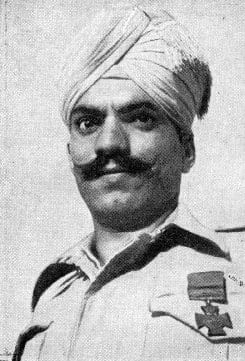
Subedar Major and Honorary Captain, Indian Army
Support & adopt this hero ↓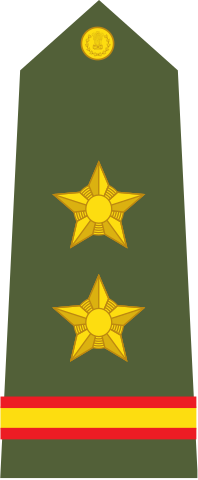
Wounded by bullets and struck by grenades, he refused to turn back. With his platoon pinned down by devastating Japanese machine-gun fire, one Indian soldier made a decision that would become part of the history of the Victoria Cross. That soldier was Bhandari Ram, a farmer's son from India whose extraordinary courage in the Burma Campaign earned him the British Empire's highest award for gallantry.
Born on 24 July 1919 in the Bilaspur region of India, Bhandari Ram came from a humble farming background. He enlisted in the British Indian Army on his 22nd birthday and served with the 16th Battalion, 10th Baluch Regiment during the Second World War. His military journey would take him to the brutal battlefields of Burma, where Indian soldiers faced determined Japanese resistance in some of the most challenging conditions of the war.
On 22 November 1944, in the East Mayu area of Arakan, Japanese machine-gun fire stopped his platoon's advance along a narrow ridge. Recognising that his men could not advance while the enemy weapon remained active, Bhandari Ram took matters into his own hands. Despite being wounded in the shoulder and leg, he crawled forward under intense enemy fire towards the machine-gun position. Grenades exploded around him, inflicting further wounds to his face and chest, but he continued his advance. Reaching close enough to the enemy position, he threw a grenade into it, successfully silencing the machine gun and allowing his platoon to capture the position. Only after completing this extraordinary act did he accept medical treatment.
His conspicuous bravery and determination earned him the Victoria Cross, with his award officially gazetted on 8 February 1945. His actions remain a powerful example of the courage, initiative and self-sacrifice displayed by Indian soldiers during the Burma Campaign of the Second World War.
Following the partition of India, Bhandari Ram continued his military career in the Indian Army, transferring to the Dogra Regiment in 1948. He served during the difficult early years of independent India, including the fighting in Jammu and Kashmir, and continued his professional military service through the subsequent decades. His dedication extended far beyond his celebrated wartime action. Rising through the ranks, he eventually became a Subedar Major and received honorary commissioned ranks, including Honorary Lieutenant and Honorary Captain in 1969.
In recognition of his distinguished military service, he was also awarded the Param Vishisht Seva Medal, one of India's prestigious awards for exceptional service. His honours included the 1953 Coronation Medal and the Queen Elizabeth II Silver Jubilee Medal of 1977, reflecting the international recognition he received during his lifetime.
After nearly three decades of military service, Bhandari Ram retired from the Indian Army in November 1969. He remained connected with the Victoria Cross community and was remembered as one of the Indian recipients whose courage had helped shape the legacy of the Burma Campaign.
Bhandari Ram died on 19 May 2002, leaving behind a remarkable legacy of bravery, discipline and lifelong service. His story is not simply about a soldier who won the Victoria Cross. It is about a man who continued to serve his country long after the battlefield had fallen silent. From the hills of Arakan to the ranks of the independent Indian Army, Bhandari Ram demonstrated that true courage is not measured by a single moment, but by a lifetime of commitment to duty and country.
Become the named supporter for this profile and edit the tribute biography and portrait (Owner account required). Proceeds help keep the archive online.
$25 USD / year — annual sponsorship renewal. Keeps the page online and, where enabled, the family anniversary remembrance emails active.