★
Loading archive…
Loading archive…
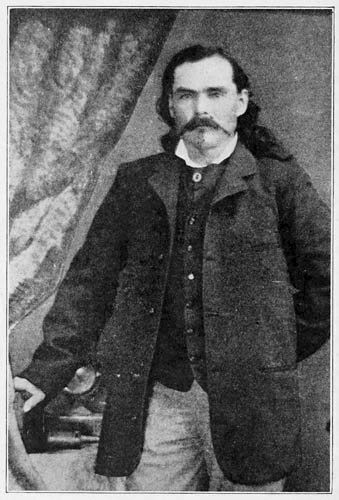
Not Applicable (Civilian), U.S. Army
Support & adopt this hero ↓The Civilian Scout Who Earned the Medal of Honor at Buffalo Wallow
Six men faced overwhelming odds on the Texas frontier. One would lose his life, and the courage of the survivors would become part of American military history. Among them was William “Billy” Dixon, a civilian scout whose extraordinary actions earned him the Medal of Honor.
Born on September 25, 1850, in Ohio County, Virginia (now West Virginia), William Dixon was orphaned at a young age and grew up amid the hardships of frontier life. Working as a freight driver, buffalo hunter, and scout, he developed exceptional marksmanship and an intimate knowledge of the Great Plains. These abilities would eventually place him at the centre of two remarkable episodes in the history of the American West.
In June 1874, Dixon participated in the Second Battle of Adobe Walls, where a small group of buffalo hunters and settlers defended a trading post against a force of Native American warriors. His legendary long-distance rifle shot became one of the most famous stories of the American frontier, although its exact distance and circumstances remain disputed.
But Dixon's greatest test of courage was still ahead.
On September 12, 1874, during the Red River War, Dixon was serving as a civilian scout with the U.S. Army under Colonel Nelson A. Miles. While carrying military dispatches with fellow scout Amos Chapman and four cavalrymen, the party was surrounded by approximately 125 Comanche and Kiowa warriors near the Washita River in Texas.
Outnumbered, wounded, and exposed to relentless gunfire, the men fought from a shallow depression known as a buffalo wallow. Despite being wounded himself, Dixon repeatedly risked his life to reach Chapman, whose knee had been shattered by a bullet. He eventually carried his injured companion to safety under enemy fire. The defenders held their position through the day, enduring intense heat, thirst, and mounting injuries. Private George W. Smith died from his wounds, but the other five survived.
For his extraordinary bravery during the Buffalo Wallow Fight, Dixon received the United States Medal of Honor in 1874. His official citation reads:
“Gallantry in action.”
Colonel Miles personally praised Dixon's courage, skill, and determination. His heroism made him one of the very few civilians in American history to receive the nation's highest military decoration.
Dixon continued serving as a frontier scout, participating in the rescue of the German sisters in November 1874 and later guiding the 1877 Nolan expedition, where his knowledge of the terrain helped soldiers find desperately needed water. He subsequently became a rancher, postmaster, and local lawman in the Texas Panhandle.
Yet Dixon's Medal of Honor carried an unusual legacy. It was revoked following the 1916–1917 review of military decorations because he had been a civilian scout rather than an enlisted soldier. In June 1989, more than seventy years after his death, his Medal of Honor recognition was officially restored.
William “Billy” Dixon died on March 9, 1913. His story remains inseparable from the turbulent history of the American frontier, its conflicts, and the remarkable endurance of those who lived through them.
From the legendary rifle shot at Adobe Walls to his desperate stand at Buffalo Wallow, Billy Dixon's life reminds us that courage is measured not by rank or uniform, but by what a person does when survival seems impossible.
Become the named supporter for this profile and edit the tribute biography and portrait (Owner account required). Proceeds help keep the archive online.
$25 USD / year — annual sponsorship renewal. Keeps the page online and, where enabled, the family anniversary remembrance emails active.