★
Loading archive…
Loading archive…
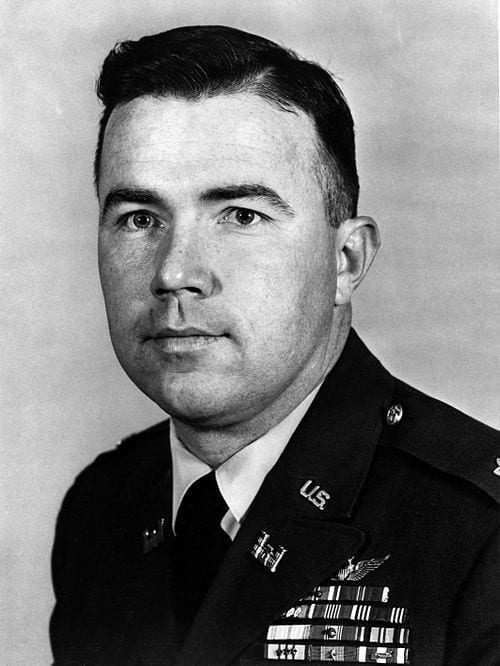
Colonel, U.S. Army
Support & adopt this hero ↓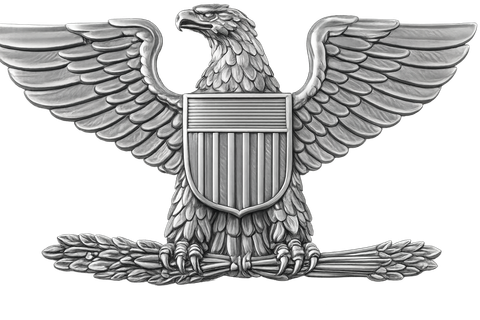
On 14 November 1965, as American soldiers fought desperately for survival at Landing Zone X-Ray in Vietnam's Ia Drang Valley, one helicopter pilot repeatedly flew into a storm of enemy fire when others could no longer make the journey. His helicopter carried no weapons. His mission was to deliver ammunition, evacuate the wounded and keep an isolated force alive. That pilot was Major Bruce Perry Crandall, a United States Army aviator whose extraordinary courage would earn him the Medal of Honor and establish his place among the most distinguished helicopter pilots in American military history.
Born on 17 February 1933 in Olympia, Washington, Bruce Crandall entered the United States Army in 1953. He developed a career in military aviation, mastering both fixed-wing aircraft and helicopters. His early assignments took him across Alaska, Libya and Central and South America, where he participated in military mapping operations and aviation development. He also served with the 11th Air Assault Division, contributing to the development of helicopter-based air assault tactics that would become increasingly important in modern warfare. In 1965, he deployed to the Dominican Republic during Operation Power Pack before being assigned to Vietnam.
Crandall's defining moment came during the Battle of Ia Drang on 14 November 1965. As commander of Company A, 229th Assault Helicopter Battalion, 1st Cavalry Division (Airmobile), he led helicopter operations supporting American infantry at Landing Zone X-Ray. When intense North Vietnamese fire made the landing zone increasingly dangerous, normal resupply and medical evacuation operations were severely disrupted. Crandall nevertheless continued flying his unarmed UH-1 Huey into the contested landing zone. Carrying ammunition and essential supplies into the surrounded position, he also brought wounded soldiers out, repeatedly exposing himself and his crew to devastating enemy fire. Working alongside fellow aviator Ed Freeman and other helicopter crews, his determination helped sustain the American force during one of the most critical phases of the battle. His actions that day became an extraordinary example of courage, leadership and devotion to fellow soldiers.
The Battle of Ia Drang was not the only occasion on which Crandall demonstrated exceptional bravery. During Operation Masher in January 1966, he undertook two hazardous helicopter rescue missions through dense jungle terrain, descending through the tree canopy under enemy fire to evacuate 12 wounded soldiers. These missions demonstrated the remarkable skill and determination required of Army helicopter pilots operating in some of the most dangerous conditions of the Vietnam War.
Crandall subsequently returned to Vietnam for a second combat tour in 1967. He flew Huey gunship missions in support of cavalry operations, continuing to place himself in danger while supporting troops on the ground. Across his two Vietnam tours, he flew more than 900 combat missions. In January 1968, his helicopter was shot down during a rescue operation, leaving him with a broken back and other serious injuries. After spending approximately five months in hospital, he continued his military career, demonstrating the same resilience that had defined his service in combat.
For his extraordinary heroism during the Battle of Ia Drang, Crandall was awarded the Medal of Honor, the United States military's highest decoration for valor. President George W. Bush presented the medal to him at the White House on 26 February 2007, more than four decades after the events that established his extraordinary reputation. His recognition reflected not only his courage under fire but also his determination to risk his own life to save the soldiers who depended upon him.
Following his recovery, Crandall continued serving in engineering, aviation-related and advisory assignments, including service in Thailand, the United States and Venezuela. He retired from active military service in 1977 with the rank of Lieutenant Colonel. In recognition of his distinguished career and lasting contributions, he was subsequently promoted to Colonel in 2010. His military legacy extended beyond his combat record. He became an enduring example of the vital role played by Army aviation in modern warfare and the extraordinary responsibilities carried by helicopter pilots supporting troops in combat.
Colonel Bruce P. Crandall died on 31 May 2026, aged 93. His life remains inseparable from the story of the Battle of Ia Drang and the courage of the helicopter crews who repeatedly flew into danger to rescue their fellow soldiers. Remembered as a Medal of Honor recipient, decorated Vietnam War veteran and pioneering Army aviator, Crandall embodied a powerful principle of military service: courage is not simply the willingness to face danger, but the determination to return when others are depending on you. His repeated flights into Landing Zone X-Ray remain one of the most remarkable acts of aviation heroism in American military history.
Become the named supporter for this profile and edit the tribute biography and portrait (Owner account required). Proceeds help keep the archive online.
$25 USD / year — annual sponsorship renewal. Keeps the page online and, where enabled, the family anniversary remembrance emails active.