★
Loading archive…
Loading archive…
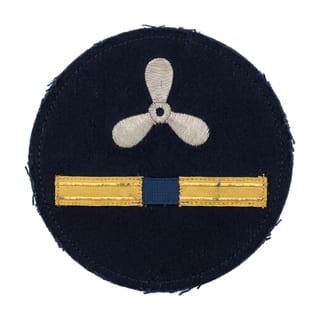
Burke Hanford was born on December 17, 1872, in Toledo, Ohio. He entered the United States Navy and developed his career in the engineering branch of the service, eventually qualifying as a machinist. By 1900 he was serving as a Machinist First Class aboard USS Newark, a protected cruiser operating with the United States Asiatic Squadron. His technical specialty placed him within the ship’s engineering organization, responsible for the machinery and mechanical systems that were essential to naval operations. Although his Medal of Honor action occurred while he held the rating of Machinist First Class, Hanford later advanced to Chief Machinist, the highest verified rank associated with his naval career. In 1900, Hanford and USS Newark became involved in the international crisis in China known as the Boxer Rebellion. The uprising threatened foreign nationals, diplomats, missionaries, and international interests, while communications between the coast and the foreign legations at Peking were increasingly endangered. Several nations assembled naval and military forces in an attempt to protect their citizens and reach the besieged diplomatic community. American sailors and Marines from ships in Chinese waters were among those committed to the relief operations. Hanford joined a detachment from USS Newark that served with the multinational relief force under British Vice Admiral Sir Edward Seymour. The expedition left the Tientsin area in June 1900 with the intention of reaching Peking. It soon encountered increasingly determined resistance, damaged railway lines, disrupted communications, and serious logistical difficulties. The attempted advance developed into a series of engagements in which sailors and Marines often fought on land as infantry despite coming from naval vessels. Hanford’s Medal of Honor service covered four specifically documented combat dates: June 13, 20, 21, and 22, 1900. These were not four different wars or separate campaigns, but four engagements within the same Seymour Relief Expedition. The official Navy record states that Hanford served with the Allied relief expedition in China on those dates and distinguished himself by meritorious conduct in the presence of the enemy. The surviving citation does not provide a detailed description of every individual act he performed, so his history should not be expanded with unsupported battlefield incidents. What is firmly established is that his conduct during these repeated engagements was considered sufficiently distinguished to warrant the United States’ highest military decoration. The circumstances were unusual for a Navy machinist. Hanford’s professional specialty centered on engineering and machinery, yet during the China Relief Expedition he served ashore as part of a naval fighting force. This combination explains his database classification. Historically, his branch remains the United States Navy, while Engineering is the most accurate combat-specialty modifier because Machinist was his established naval profession. His participation in land fighting does not convert his specialty to infantry or make him a naval surface commander. The Seymour Expedition ultimately failed to reach Peking and was forced into a difficult withdrawal. Allied forces fought repeatedly while attempting to maintain themselves against opposition and disrupted lines of communication. Hanford’s four Medal of Honor engagement dates fall within this intense phase of the operation. His record therefore reflects both naval service and direct ground combat during one of the most significant international military operations of the Boxer Rebellion. Recognition for Hanford’s actions came the following year. General Order No. 55, dated July 19, 1901, formally recognized numerous Navy and Marine Corps personnel for distinguished conduct during operations in the Philippines and China. Burke Hanford was among the sailors awarded the Medal of Honor for his conduct during the Seymour expedition. He was specifically identified as Machinist First Class, United States Navy, and his actions of June 13, 20, 21, and 22, 1900 formed the basis of the award. For the database, Hanford’s Medal of Honor is correctly represented as Medal of Honor 1862–1912 Navy — 1901. This historical designation is important because the Navy Medal of Honor used during this period belongs to the earlier pre-1913 era rather than one of the later Navy designs. No separate clasp, star, bar, or other device has been verified for Hanford’s Medal of Honor, so the decoration should appear without additional attachments. Hanford’s second verified service medal is the China Relief Expedition Medal. This decoration was formally authorized by the Navy in 1908 to recognize qualifying Navy and Marine Corps service during the China operations of 1900–1901. Regulations authorized the medal for personnel who served ashore with the Peking Relief Expedition during the qualifying period or who were attached to specifically listed vessels in Chinese waters. USS Newark was explicitly included as a qualifying ship for service from May 27 through July 22, 1900. Hanford’s entitlement to the China Relief Expedition Medal is particularly strong because his individual Medal of Honor record independently establishes that he was serving with USS Newark and participating directly in the China relief operations during June 1900. His documented combat dates fall completely within Newark’s official qualifying period. Therefore, the medal does not need to be inferred merely from general wartime service. The historical award year used in the database is 1908, representing the year in which the Navy authorized the medal; this should not be confused with a specifically documented date on which Hanford personally received his individual medal. The China Relief Expedition Medal also has an interesting design history. The original Navy ribbon used a yellow-and-black color pattern. In 1915, the ribbon colors were changed to yellow and blue so that the Navy version corresponded more closely with the Army medal for similar service. Early examples of the medal also showed differences in the date appearing on the medal itself because the original die was replaced. These design changes do not represent additional awards or devices for Hanford; they are part of the historical development of the decoration itself. Hanford continued his naval career after the Boxer Rebellion and eventually attained the rank of Chief Machinist. This was a significant advancement from the Machinist First Class rating he held during the Medal of Honor action. His profile should therefore preserve both facts separately: Machinist First Class was his rank during the June 1900 heroic actions, while Chief Machinist was his highest verified later rank. This distinction prevents his later promotion from being incorrectly applied retroactively to the Medal of Honor citation. Burke Hanford survived the conflict and lived for more than a quarter century after the events in China. He died on April 11, 1928, and was buried at Greenwood Memorial Park in San Diego, California. He was not a posthumous Medal of Honor recipient; the decoration had been awarded during his lifetime. Hanford’s military legacy is rooted in the unusual role played by U.S. Navy sailors during the Boxer Rebellion. Although trained as a machinist and assigned to a warship, he went ashore with an international relief force and repeatedly faced enemy forces during the difficult Seymour Expedition. His conduct on June 13, 20, 21, and 22, 1900 earned him the Medal of Honor, while the same documented China service later established his entitlement to the China Relief Expedition Medal. His database medal record therefore consists of two decorations: Medal of Honor 1862–1912 Navy — 1901 and China Relief Expedition Medal — 1908. Together they represent two different aspects of the same period of service: the Medal of Honor recognized Hanford’s distinguished individual conduct in the presence of the enemy, while the China Relief Expedition Medal recognized his qualifying participation in the broader United States naval campaign in China.
Become the named supporter for this profile and edit the tribute biography and portrait (Owner account required). Proceeds help keep the archive online.
$25 USD / year — annual sponsorship renewal. Keeps the page online and, where enabled, the family anniversary remembrance emails active.