★
Loading archive…
Loading archive…
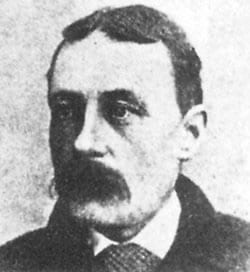
Lieutenant Colonel, British Army
Support & adopt this hero ↓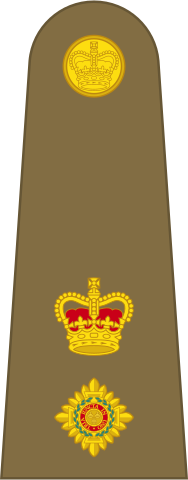
Three Journeys Through a Dangerous Surf: The Extraordinary Courage of Campbell Mellis Douglas VC
On 7 May 1867, in the dangerous waters off Little Andaman Island, Assistant Surgeon Campbell Mellis Douglas and four soldiers of the 2nd Battalion, 24th Regiment of Foot, faced a rescue mission that could easily have cost them their lives. When a party of British servicemen became stranded ashore during a perilous expedition, Douglas took charge of a small boat and led repeated attempts through treacherous surf. After the first attempt was forced to turn back, he returned twice more, successfully bringing the stranded men to safety. The official Victoria Cross citation, published in The London Gazette on 17 December 1867, praised his extraordinary composure, courage and seamanship. It recorded that seventeen officers and men were saved from what might otherwise have been a deadly situation. For this remarkable act of lifesaving bravery, Douglas received the Victoria Cross and the Royal Humane Society's Silver Medal.
Born on 5 August 1840 on Grosse Île, Québec, Canada, Douglas pursued a distinguished medical education, studying at St. John's College and Laval University before attending the Edinburgh School of Medicine, where he received his Doctor of Medicine degree in 1861. He joined the British Medical Service in 1862 and served with the 2nd Battalion, 24th Regiment of Foot, in Burma. His military medical career continued through service on the North-West Frontier in India, eventually bringing him to the rank of Lieutenant Colonel. After retiring from the British military in 1882, he settled in Lakefield, Ontario, where he established a medical practice.
Yet Douglas's service to others was far from over. In 1885, he returned to medical service during the North-West Rebellion in Canada, commanding No. 1 Field Hospital at Saskatoon and helping care for soldiers wounded at Fish Creek and Batoche. He contributed to the medical support and evacuation of casualties during the campaign. In recognition of his service, he received the North-West Canada Medal, 1885.
Douglas eventually returned to England in 1894 and died in Hollington, Somerset, in 1909. His legacy is remarkable not simply for the Victoria Cross, but for a lifetime devoted to courage, medical service and the preservation of human life. From the dangerous waters of Little Andaman to the battlefields of the Canadian West, Campbell Mellis Douglas demonstrated that true heroism can be found wherever lives depend upon another person's courage and compassion.
Become the named supporter for this profile and edit the tribute biography and portrait (Owner account required). Proceeds help keep the archive online.
$25 USD / year — annual sponsorship renewal. Keeps the page online and, where enabled, the family anniversary remembrance emails active.