★
Loading archive…
Loading archive…
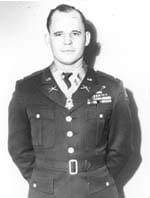
Major, U.S. Army
Support & adopt this hero ↓
When his platoon faltered under devastating enemy fire, Carl Henry Dodd moved forward, rallied his men and charged directly into the enemy positions. His extraordinary leadership and personal courage helped turn a faltering assault into victory and earned him the Medal of Honor, the United States military's highest decoration.
Born on 21 April 1925 in Coats, Kentucky, Dodd enlisted in the U.S. Army in 1943. After being discharged as a sergeant in March 1946, he reenlisted approximately six months later. During the Korean War, he served with Company E, 2nd Battalion, 5th Infantry Regiment, 24th Infantry Division. On 7 August 1950, near Chindong-ni, his platoon was overrun and its leader went missing. Dodd reorganized the twelve remaining soldiers, reoccupied their position and held against enemy attacks. When two men were discovered missing, he exposed himself to intense machine-gun and small-arms fire to bring them to safety. His Silver Star citation specifically recognized his gallantry, inspiring leadership and determination to ensure the evacuation of his fellow soldiers. He was also awarded the Bronze Star Medal for his Korean War service.
Following his battlefield commission, Dodd led 2nd Platoon in the assault on Hill 256 near Subuk, Korea, on 30 and 31 January 1951. His official Medal of Honor citation, published in Department of the Army General Orders No. 37 on 4 June 1951, describes how he reorganized his faltering platoon, single-handedly charged an enemy machine-gun position, led his men across a narrow ridge and destroyed an enemy mortar position with his last grenade. At daybreak, he once again advanced ahead of his troops through dense fog, leading the final assault until the remaining defenders were eliminated and Hill 256 was secured. His extraordinary courage and leadership inspired his men to overcome a formidable enemy defence. President Harry S. Truman presented him with the Medal of Honor on 19 May 1951.
Dodd continued his military career and retired from the United States Army as a Major on 30 June 1965, completing 21 years of service. He then spent several years working for the Department of Agriculture. He died in Lexington, Kentucky, on 13 October 1996, and was laid to rest at Cumberland Memorial Gardens near Corbin, Kentucky. His legacy remains a powerful example of battlefield leadership, selfless courage and a soldier's unwavering commitment to the men serving beside him.
Become the named supporter for this profile and edit the tribute biography and portrait (Owner account required). Proceeds help keep the archive online.
$25 USD / year — annual sponsorship renewal. Keeps the page online and, where enabled, the family anniversary remembrance emails active.