★
Loading archive…
Loading archive…
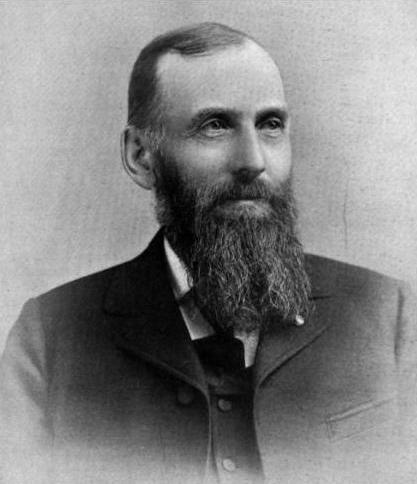
Cassius Peck was born on March 3, 1842, in Brookfield, Vermont. He grew up in rural Vermont and came of age just as the United States descended into civil war. When the conflict began, Peck joined the Union cause and entered the United States Army, becoming a member of Company F, 1st United States Sharpshooters—one of the Civil War's most distinctive specialist infantry organizations. Congressional Medal of Honor Society The 1st U.S. Sharpshooters had been organized under Colonel Hiram Berdan and was composed of men selected for their exceptional marksmanship. Unlike ordinary infantry regiments, sharpshooters were frequently used for skirmishing, reconnaissance, screening movements, and engaging officers or artillery crews at extended ranges. Company F was largely associated with Vermont, and Peck's service placed him among soldiers expected to operate with unusual independence and accuracy on the battlefield. Peck entered the war as a Private, although surviving regimental history indicates that by the September 1862 action that later earned him the Medal of Honor he may already have been functioning as a Corporal. The official Medal of Honor records nevertheless list his action rank as Private. His later verified advancement reached Sergeant, which is why the project database correctly uses Sergeant as his highest rank while preserving the official Medal of Honor rank separately. Congressional Medal of Honor Society The defining moment of Peck's military career came during the final phase of the Maryland Campaign of 1862. On September 17, Union and Confederate armies had fought the enormous Battle of Antietam near Sharpsburg, Maryland. Although tactically inconclusive, the battle forced General Robert E. Lee to abandon his first major invasion of the North and begin withdrawing his Army of Northern Virginia across the Potomac River. Union forces attempted to follow Lee's retreat. This pursuit produced the fighting commonly known as the Battle of Shepherdstown, fought along and south of the Potomac River on September 19–20, 1862. The National Park Service specifically identifies Cassius Peck of the 1st U.S. Sharpshooters as one of the Medal of Honor recipients associated with this fighting. Park Planning On September 19, 1862, the sharpshooters crossed the Potomac in pursuit of Confederate troops. The crossing itself was dangerous. A history of Company F describes the soldiers moving through water while exposed to Confederate rifle fire, at times having to hold their cartridge boxes above the water as they advanced. Once across the river, the sharpshooters pushed Confederate skirmishers away from the immediate crossing area and moved forward to establish an advanced position. Hape News It was during this movement that Cassius Peck distinguished himself. The official U.S. Army Medal of Honor citation states that Peck took command of whatever soldiers he could gather, attacked a Confederate battery, and captured it. The citation credits the captured battery with four guns. It further records that, during a reconnaissance, Peck overtook and personally captured a Confederate soldier. These two actions formed the basis of his Medal of Honor. U.S. Army The surviving regimental narrative provides another view of the same episode. It describes a party under Corporal Cassius Peck discovering a small Confederate detachment that had remained behind with artillery. Peck's group drove the enemy away, captured the guns, and took a prisoner. That account identifies two guns rather than four. The discrepancy probably reflects differences between the immediate unit narrative and the later official award record; for the Medal of Honor profile, the Army's official citation remains the controlling award source. Hape News The location itself also requires careful historical wording. The official Army record describes the action as occurring near Blackburn's Ford, Virginia. At the time of the battle, West Virginia had not yet been admitted as a separate state; that occurred in 1863. Modern institutional records may therefore describe the same geographical area as West Virginia. The safest historical wording is that Peck's action occurred near Blackburn's Ford during the Shepherdstown fighting, in territory then part of Virginia and now within West Virginia. U.S. Army Peck's conduct was particularly notable because he did not simply follow an established attack led by a senior officer. His citation emphasizes initiative: he gathered available soldiers, assumed control, and acted against the Confederate position. This quality suited the specialized nature of sharpshooter service, where small groups often operated ahead of the main body and had to make rapid decisions without constant direct supervision. His Medal of Honor action came only two days after Antietam, during a moment when the Union Army was trying to determine whether Lee's retreat could be turned into a decisive defeat. The fighting at Shepherdstown ultimately convinced both sides that the Maryland Campaign was effectively over. Lee continued south, while Union forces did not mount the aggressive pursuit that some in Washington had hoped for. The campaign nevertheless had enormous political consequences, helping create the strategic circumstances in which President Abraham Lincoln issued the Preliminary Emancipation Proclamation. Park Planning Peck continued serving after the 1862 campaign. His wartime career ultimately brought promotion through the enlisted ranks, and Medal of Honor records identify Sergeant as his highest rank. He remained associated with the 1st U.S. Sharpshooters, whose men participated in some of the Army of the Potomac's most demanding campaigns and regularly served on the skirmish line ahead of conventional infantry formations. Congressional Medal of Honor Society Recognition of Peck's gallantry did not come immediately. Nearly thirty years passed before the United States formally awarded him the nation's highest military decoration. On October 12, 1892, Cassius Peck received the Medal of Honor for his conduct on September 19, 1862. The award was made during his lifetime and was therefore not posthumous. Congressional Medal of Honor Society Because his Medal of Honor was presented in 1892, the correct historical project ribbon is: Medal of Honor 1862–1895 Army — No device No V device, clasp, star, or other attachment should be added to Peck's Medal of Honor unless separate recipient-specific evidence establishes one. After the Civil War, Peck returned to Vermont and became active in civilian and public life. Local historical records identify him as a farmer and prominent member of his community. He also entered politics, serving in the Vermont legislature and later in the Vermont Senate. His public service reflected the broader pattern of Civil War veterans who carried the leadership experience gained during wartime into state and local government. Brookfield Historical Society, VT Peck remained deeply connected with veteran and civic organizations. Brookfield historical records associate him with the Grand Army of the Republic, the major national organization of Union veterans, as well as the Masons, the Eastern Star, the Grange, and his local church. He was also appointed by the governor of Vermont to help select and place a Vermont monument on the Gettysburg battlefield, showing his continuing involvement in preserving Civil War memory. Brookfield Historical Society, VT His family life also became an important part of his postwar years. Peck married, raised a large family, and remained closely connected to Vermont for the rest of his life. Eventually he moved from Brookfield to Burlington, but his identity remained strongly associated with the community in which he had been born and with the Vermont soldiers alongside whom he had served. Cassius Peck died on July 12, 1913, in Burlington, Vermont, at the age of seventy-one. He was buried in Brookfield New Cemetery in Brookfield, Vermont, returning in death to the town where his life had begun. Congressional Medal of Honor Society His legacy is rooted in a short but decisive episode during the aftermath of Antietam. As Union forces crossed the Potomac in pursuit of Lee's retreating army, Peck found himself in a fluid battlefield situation without the structure of a conventional large-scale assault. He gathered available soldiers, assumed command, attacked the Confederate position, helped secure enemy artillery, and captured an opposing soldier during reconnaissance. Those actions eventually earned him the Medal of Honor and secured his place among the most distinguished members of the 1st U.S. Sharpshooters.
Become the named supporter for this profile and edit the tribute biography and portrait (Owner account required). Proceeds help keep the archive online.
$25 USD / year — annual sponsorship renewal. Keeps the page online and, where enabled, the family anniversary remembrance emails active.