★
Loading archive…
Loading archive…

First Lieutenant, U.S. Army
Support & adopt this hero ↓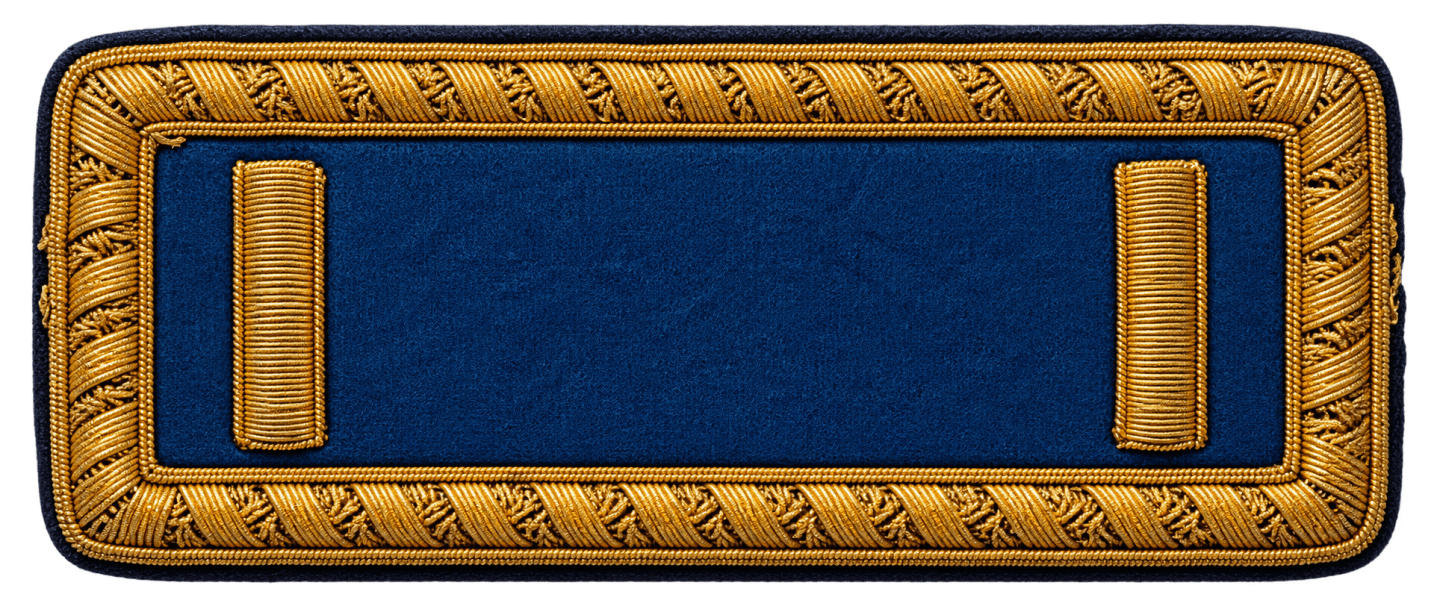
He Saved the Colors at Antietam Despite Three Wounds
Charles B. Tanner was born on November 25, 1842, in Philadelphia, Pennsylvania. He became a Union Army officer and Medal of Honor recipient whose extraordinary courage during the Battle of Antietam earned him national recognition. On September 17, 1862, while serving as a Second Lieutenant in Company H of the 1st Delaware Volunteer Infantry, Tanner recovered his regiment's battle flag from dangerously close to Confederate positions after the entire color guard had been killed or wounded. He accomplished the rescue despite suffering three wounds during the fighting.
Tanner entered military service in Wilmington, Delaware, during the opening months of the American Civil War. In 1861, he enlisted in Company E of the 1st Delaware Infantry, initially organized for a short period of federal service under Captain Robert Milligan.
When the regiment was reorganized for longer service, Tanner joined Company H as a Sergeant. His leadership abilities brought him further advancement, and he was promoted to Sergeant Major in January 1862.
On April 1, 1862, Tanner received a commission as Second Lieutenant in Company H.
The 1st Delaware Infantry served with the Union Army of the Potomac during the campaigns in Virginia and Maryland. Its soldiers participated in operations intended to confront Confederate forces and defend the Union.
In September 1862, Confederate General Robert E. Lee advanced into Maryland following his victories in Virginia. Union forces under Major General George B. McClellan moved to intercept the Confederate army.
The two armies met near Sharpsburg, Maryland, on September 17, 1862, in what became the Battle of Antietam.
The engagement developed into the bloodiest single day of fighting in American military history. Union and Confederate troops fought across cornfields, wooded areas, farm lanes, and defensive positions, suffering enormous casualties.
The 1st Delaware Infantry advanced as part of Brigadier General Max Weber's Brigade in Major General William H. French's Division of the Union II Corps.
Its soldiers moved toward a Confederate defensive position along a sunken farm road that later became known as Bloody Lane.
The Confederate troops occupied strong positions behind the road's embankments and improvised defenses. As the Delaware soldiers advanced, they encountered intense musketry and artillery fire.
The regiment suffered severe casualties during its attempt to approach the Confederate line.
Its officers and color guard were particularly exposed. Regimental flags served as important rallying points during Civil War battles, helping soldiers maintain their formations amid smoke, noise, and confusion.
At Antietam, the 1st Delaware's color guard was devastated. All nine members were either killed or wounded, and the regimental colors fell dangerously close to the Confederate position.
It was during this critical moment that Second Lieutenant Charles B. Tanner performed the action for which he would receive the Medal of Honor.
Despite the danger, Tanner moved forward to recover the fallen flag.
The colors were lying within approximately twenty yards of the Confederate line, where enemy soldiers continued firing upon the Union troops.
Tanner reached the flag while exposed to hostile fire.
During the attempt, he was wounded three times.
In his later account of the engagement, Tanner described reaching the shattered flagstaff and finding the colors pierced by bullets and stained with the blood of fallen comrades.
One of his wounds injured his arm, forcing him to secure the flag with his other hand as he withdrew.
Despite his injuries, Tanner successfully carried the regimental colors away from the exposed position.
His actions prevented the flag from being lost to Confederate forces during one of the most destructive engagements experienced by the 1st Delaware Infantry.
A regimental history published after the war confirmed that both of the regiment's flags were recovered from the battlefield. One was carried away by Tanner, while Sergeant Allen Tatem of the color guard recovered the other.
Tanner's courage became an enduring part of the regiment's history.
The Battle of Antietam continued throughout September 17, with both armies suffering extensive losses. Although the engagement did not produce a complete tactical victory for either side, Lee subsequently withdrew his army from Maryland.
The Confederate withdrawal ended the invasion and provided President Abraham Lincoln with the opportunity to announce the Preliminary Emancipation Proclamation.
For Tanner, however, the battle had immediate personal consequences. His three wounds required medical attention, and he spent time recovering after the engagement.
Despite his injuries, he continued his military career.
On October 1, 1862, Tanner was promoted to First Lieutenant, the highest rank recorded during his Army service.
He subsequently returned to active operations with the 1st Delaware Infantry as the Army of the Potomac continued fighting in Virginia.
During the Battle of Chancellorsville in May 1863, Tanner served with the regiment and was commended for his conduct. Accounts of his wartime service describe his assistance to wounded soldiers during the fighting.
The following July, the 1st Delaware Infantry participated in the Battle of Gettysburg, Pennsylvania. Tanner served as acting regimental adjutant during the campaign and suffered another wound that required hospitalization.
His injuries eventually interrupted his military service, and he resigned his commission in September 1863.
Tanner later returned to the Union Army, serving as a First Lieutenant with the 69th Pennsylvania Infantry during the final year of the Civil War.
His later service included operations around Petersburg, Virginia, where he sustained a wound to his knee.
After the war, Tanner returned to civilian life and settled in Pennsylvania. He married and established a family.
His postwar career included service as postmaster of Kennett Square, Pennsylvania. He later moved to Washington, D.C., where he worked as a clerk in the United States War Department.
Throughout these years, his extraordinary conduct at Antietam remained part of his military record.
More than twenty-seven years after the battle, his courage received formal national recognition.
On December 13, 1889, Charles B. Tanner was awarded the Army Medal of Honor for his actions at Antietam on September 17, 1862.
The decoration recognized his determination in recovering the regimental colors after all nine members of the color guard had been killed or wounded, despite suffering three wounds himself.
The Medal of Honor had been established during the Civil War to recognize exceptional military gallantry. Tanner received the decoration during his lifetime, allowing his courage to be acknowledged decades after the engagement.
His award secured his place among the soldiers whose bravery at Antietam received the nation's highest military decoration for valor.
Charles B. Tanner died on December 16, 1911, at the age of sixty-nine.
He was buried at Greenfield Cemetery in Hempstead, New York.
His military legacy remains closely associated with the fighting along the Sunken Road at Antietam.
On September 17, 1862, as the 1st Delaware Infantry suffered devastating losses, Tanner advanced toward the Confederate line to rescue the regiment's fallen colors.
He was wounded three times but succeeded in bringing the flag to safety.
The act demonstrated extraordinary courage during one of the Civil War's most fiercely contested engagements.
Charles B. Tanner is remembered as a Union Army officer whose determination to preserve his regiment's colors, even while severely wounded, earned him the Medal of Honor and a lasting place in American military history.
Become the named supporter for this profile and edit the tribute biography and portrait (Owner account required). Proceeds help keep the archive online.
$25 USD / year — annual sponsorship renewal. Keeps the page online and, where enabled, the family anniversary remembrance emails active.