★
Loading archive…
Loading archive…
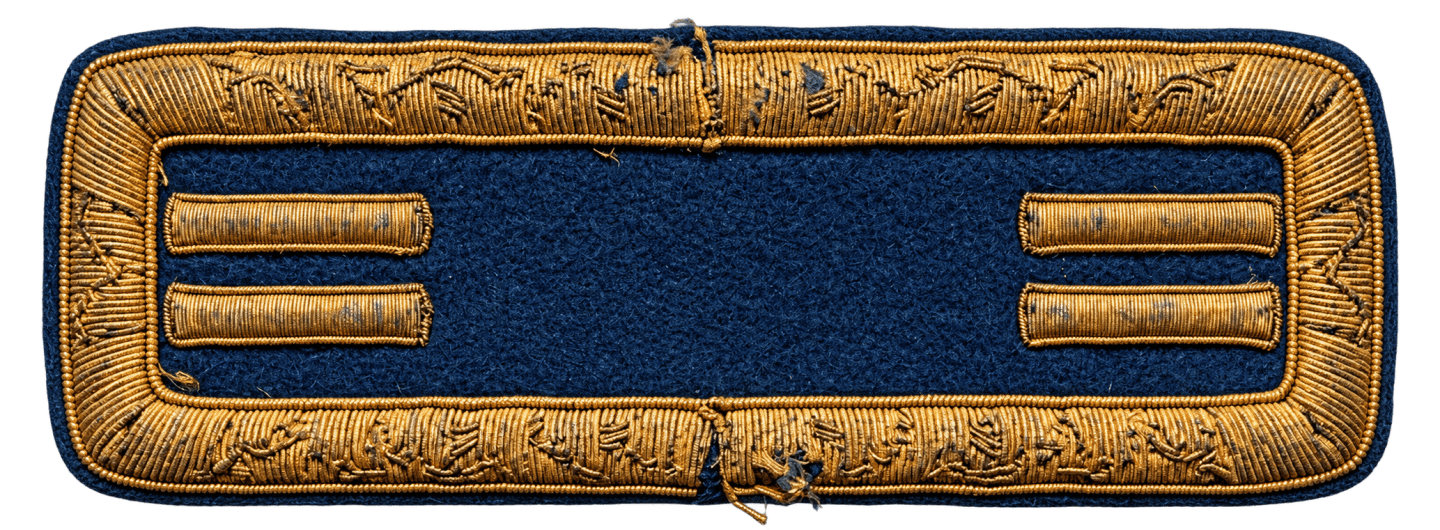
Charles E. Brown was born on December 11, 1841, in Schuylkill County, Pennsylvania. He grew up in the Schuylkill Haven area and was still a young man when the American Civil War began in 1861. Like thousands of Pennsylvanians who answered the Union call, Brown entered military service and became a member of Company C, 50th Pennsylvania Infantry, a regiment whose long wartime service would take its soldiers through several of the most demanding campaigns of the conflict. Brown entered service in 1861 and served with Company C as the regiment was organized in Pennsylvania. The 50th Pennsylvania Infantry was formally organized at Harrisburg in October 1861 and was soon sent south as part of the Union war effort. Its early service included the expedition to Port Royal, South Carolina. During that movement the regiment experienced the dangers of military transportation as well as combat service, including the wreck of the transport Winfield Scott off the North Carolina coast. The regiment subsequently operated along the South Carolina coast before being transferred north to the Army of the Potomac. By this period Brown had developed from a young enlisted soldier into an experienced infantryman. He eventually held the rank of Corporal and continued advancing as his Civil War service progressed. The 50th Pennsylvania became associated with the IX Corps and participated in some of the major campaigns of the Eastern Theater. Its documented unit service included the Northern Virginia Campaign, operations connected with Second Bull Run, the Maryland Campaign, South Mountain and Antietam. Brown's long association with Company C placed his military career within this demanding sequence of Union campaigning. The Battle of Antietam in September 1862 was one of the bloodiest single days in American military history. The 50th Pennsylvania fought as part of the Union forces around Antietam Creek. The surviving records identify Brown with the regiment during this period, by which time he had gained significant experience in infantry service. The 50th Pennsylvania later fought at Fredericksburg before being transferred west. The regiment served in campaigns connected with Kentucky and Mississippi and participated in operations associated with the Vicksburg campaign. These movements meant that the 50th Pennsylvania was not confined to a single theater; it experienced service in the Carolinas, Virginia, Maryland, Kentucky, Mississippi and eventually Virginia again. By the beginning of 1864 Brown had reenlisted for continued service. The regiment thereafter became known as the 50th Pennsylvania Veteran Volunteer Infantry. Brown remained with Company C as the veteran regiment returned to heavy combat in Virginia. During the spring and summer of 1864, the 50th Pennsylvania participated in the intense campaigns associated with Lieutenant General Ulysses S. Grant's drive against the Army of Northern Virginia. The regiment's documented service included the Wilderness, Spotsylvania Court House, the North Anna operations, Cold Harbor and the movement toward Petersburg. These battles subjected the regiment to repeated casualties and created opportunities for experienced enlisted soldiers such as Brown to assume increasing responsibility. By August 1864 Charles Brown had reached the rank of Sergeant. It was at this rank that he performed the act that permanently established his place in American military history. The action occurred on August 19, 1864, during fighting along the Weldon Railroad south of Petersburg, Virginia. The engagement is generally associated with the Battle of Globe Tavern, part of the Union effort to seize and destroy the Weldon Railroad, an important Confederate supply route linking Petersburg with the south. Control of the railroad was strategically important. Petersburg was the transportation hub supplying Richmond and General Robert E. Lee's army. Cutting the Weldon Railroad would increase pressure on the Confederate defenses by forcing supplies to be transported over increasingly difficult routes. The fighting around Globe Tavern became confused and violent. Confederate forces launched attacks against the Union positions, producing close-range infantry combat in which formations became disrupted and soldiers frequently fought at very short distances. During this battle Sergeant Charles E. Brown confronted soldiers of the 47th Virginia Infantry. In the course of the fighting, Brown captured the Confederate regiment's battle flag. The official Medal of Honor citation describes his achievement simply as the capture of the flag of the 47th Virginia Infantry, Confederate States Army. Although the wording is brief, the action carried enormous significance in Civil War combat. Regimental colors were much more than ceremonial objects. On a nineteenth-century battlefield, flags helped soldiers locate and align with their units through smoke, noise and confusion. The color bearer stood in a highly exposed position and enemy troops frequently concentrated their attention on the colors. Capturing an enemy flag therefore usually required a soldier to move into an extremely dangerous area of the battlefield. The loss of a regiment's colors could also carry a serious psychological effect. Flags embodied a unit's identity and honor, so their capture was considered one of the most conspicuous battlefield achievements a soldier could perform. Brown's capture of the 47th Virginia Infantry's colors on August 19, 1864, was therefore recognized as an exceptional act of courage. His deed occurred during an important Union success in securing control of part of the Weldon Railroad and tightening the military pressure around Petersburg. Unlike many Civil War Medal of Honor recipients whose recognition came decades after the conflict, Brown received his decoration while the war was still being fought. His Medal of Honor was issued on December 1, 1864, only a little more than three months after his action at Weldon Railroad. The Medal of Honor itself had been established during the Civil War. The Army version was authorized by Congress in 1862 and became the United States' highest military decoration. During the Civil War, capturing an enemy flag was one of the battlefield actions frequently recognized because of the extraordinary danger involved and the tactical and symbolic importance of regimental colors. For Charles Brown, the Medal of Honor was awarded specifically for his capture of the 47th Virginia Infantry's flag. His verified decoration is therefore: Medal of Honor 1862–1895 Army — no device or clasp. No additional star, clasp, bar or other device is associated with Brown's Medal of Honor. Under the project's recipient-specific evidence standard, a separate Civil War Campaign Medal should not be added merely because Brown unquestionably served during the Civil War. Qualifying service is not the same as documented individual entitlement, and no sufficiently strong recipient-specific evidence has been established for adding that later campaign medal to his final rack. Brown's military career did not end with his Medal of Honor action. His battlefield experience and leadership resulted in further advancement. After serving as a Sergeant, he was commissioned as a First Lieutenant on November 26, 1864. His promotion continued shortly afterward. On January 15, 1865, Charles E. Brown attained the rank of Captain. This is why Captain, rather than Sergeant, is the correct highest verified rank for his database profile, even though his Medal of Honor action was performed while he was a Sergeant. As an officer, Brown continued serving with Company C during the final months of the Civil War. The 50th Pennsylvania remained involved in the operations surrounding Petersburg and Richmond. The regiment's later service included the closing stages of the Petersburg Campaign as Union armies steadily tightened their hold on Confederate positions. By the spring of 1865, Confederate resistance around Petersburg collapsed. Richmond and Petersburg were evacuated, and Lee's Army of Northern Virginia retreated westward before surrendering at Appomattox Court House on April 9, 1865. Brown survived the war and remained in military service during the immediate postwar period. He was finally mustered out on July 30, 1865, at Georgetown, District of Columbia. He therefore completed approximately four years of Civil War-era military service, beginning as a young enlisted soldier and leaving the Army as a Captain and Medal of Honor recipient. After returning to civilian life, Brown again became associated with the Schuylkill Haven community. His civilian occupations were connected in part with the transportation work familiar to the region. Historical accounts indicate that he worked in boating, including operations connected with the Schuylkill Canal and later waterways between New York and Connecticut. Brown also remained strongly connected to his wartime comrades. He participated in veterans' organizations and activities associated with the survivors of the 50th Pennsylvania Infantry. Decades after the war, he was still commonly addressed as Captain Charles E. Brown, reflecting the highest rank he had attained during his military career. He took part in regimental reunions and commemorative activities, helping preserve the history of Company C and the 50th Pennsylvania Veteran Volunteer Infantry. Like many Civil War veterans, his postwar identity remained closely connected with the men with whom he had served. Brown lived long enough to witness extraordinary changes in the United States. When he enlisted in 1861, the nation was divided by civil war. By the final years of his life, the United States had become a major industrial and international power and had entered World War I. Even in old age, Brown's attachment to military service remained strong. Accounts from his later life describe him as retaining pride in his Civil War service and maintaining ties with veteran organizations and surviving members of his regiment. Charles E. Brown died on February 20, 1919, in Schuylkill Haven, Pennsylvania. He was seventy-seven years old. He was buried at Union Cemetery in Schuylkill Haven, where his burial preserves the memory of one of the community's most distinguished Civil War veterans. His life represented a remarkable progression through the enlisted and commissioned ranks of the Union Army. He entered Civil War service as a young Pennsylvanian, developed into an experienced infantryman, became a Corporal and Sergeant, performed the Medal of Honor action at Weldon Railroad, and later rose through First Lieutenant to Captain. The defining moment of his military career remained August 19, 1864. During the Battle of Globe Tavern and the struggle for the Weldon Railroad, Sergeant Charles E. Brown captured the colors of the 47th Virginia Infantry. For that action the United States awarded him the Medal of Honor on December 1, 1864. His final medal record is therefore intentionally concise: Medal of Honor 1862–1895 Army, with no verified device or clasp and no additional campaign medal added without recipient-specific evidence. Charles E. Brown is remembered today as a United States Army officer, veteran of the 50th Pennsylvania Infantry, and Medal of Honor recipient whose courage during the Petersburg Campaign earned him the nation's highest military decoration. From his early service as an enlisted soldier through his promotion to Captain and his long postwar life in Pennsylvania, his career stands as an enduring example of the citizen-soldiers who carried the Union Army through four years of Civil War.
Become the named supporter for this profile and edit the tribute biography and portrait (Owner account required). Proceeds help keep the archive online.
$25 USD / year — annual sponsorship renewal. Keeps the page online and, where enabled, the family anniversary remembrance emails active.