★
Loading archive…
Loading archive…
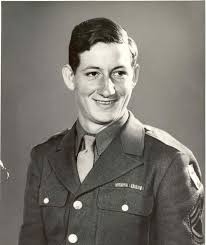
Technical Sergeant, U.S. Army
Support & adopt this hero ↓
What kind of courage does it take to stand alone against an advancing enemy when every weapon begins to fail? For Charles E. “Commando” Kelly, the answer came during the desperate fighting at Altavilla, Italy, in September 1943. Armed with extraordinary determination and refusing to abandon his comrades, this Pittsburgh-born American soldier became one of World War II's most celebrated heroes and earned the Medal of Honor for an astonishing series of actions under enemy fire.
Born on 23 September 1920 in Pittsburgh, Pennsylvania, Charles E. Kelly grew up in a working-class neighborhood before enlisting in the United States Army in 1942. Serving with Company L, 3rd Battalion, 143rd Infantry Regiment, 36th Infantry Division, he entered combat during the Allied invasion of mainland Italy. His courage, aggressive fighting spirit, and willingness to accept dangerous assignments earned him the unforgettable nickname “Commando Kelly,” while fellow soldiers also called him the “One-Man Army.”
On 13 September 1943, during the Battle of Salerno, Corporal Kelly repeatedly volunteered for missions that placed him directly in the path of German fire. He helped locate and neutralize enemy machine-gun positions, crossed terrain exposed to sniper, mortar, and artillery attacks to determine who controlled Hill 315, and assisted in destroying two additional machine-gun nests. These actions demonstrated remarkable initiative, but his greatest test was still ahead.
When German forces attacked a storehouse on his regiment's exposed flank, Kelly remained at his position throughout the night. The following morning, he fought from an open window, firing one automatic rifle until it overheated and jammed, then continuing with another until that weapon also failed. With the enemy closing in, he turned 60-mm mortar shells into improvised grenades, killing at least five German soldiers. Even when withdrawal became unavoidable, Kelly volunteered to remain behind. Firing a rocket launcher from the window, he covered his comrades' escape before successfully returning to his unit.
For these extraordinary actions, Kelly received the Medal of Honor under War Department General Orders No. 13, dated 18 February 1944. His official citation recognized his repeated voluntary missions, destruction of enemy positions, remarkable defensive stand, and determination to protect his fellow soldiers. It praised his “fighting determination and intrepidity in battle,” recognizing courage that went far beyond the ordinary demands of duty.
Kelly continued fighting through the Italian campaign, including the brutal battles around San Pietro and Cassino, and eventually attained the rank of Technical Sergeant. Historical accounts also credit him with two Silver Stars and two Bronze Star Medals, reflecting additional recognition of his wartime service. British and French military honors were also reported, although the individual citations and precise details of those foreign awards have not been conclusively established.
His return to Pittsburgh in 1944 brought cheering crowds, public celebrations, and national recognition. Yet the peace he had fought for proved difficult to navigate. Despite his extraordinary military reputation, Kelly faced financial hardship, personal loss, and struggles adjusting to civilian life. He later worked as a self-employed house painter, far removed from the public acclaim that had greeted his return.
Charles E. Kelly died on 11 January 1985, aged 64, and was laid to rest at Highwood Cemetery in Pittsburgh. His legacy reaches beyond the Medal of Honor and the extraordinary story of a soldier who held back an enemy assault. “Commando Kelly” represents the courage of ordinary Americans confronted with extraordinary circumstances, and the enduring responsibility to remember not only their heroism in battle but also the sacrifices they carried home.
Become the named supporter for this profile and edit the tribute biography and portrait (Owner account required). Proceeds help keep the archive online.
$25 USD / year — annual sponsorship renewal. Keeps the page online and, where enabled, the family anniversary remembrance emails active.