★
Loading archive…
Loading archive…

Major-General (Lewa Pasha, Egyptian Police), Indian Army
Support & adopt this hero ↓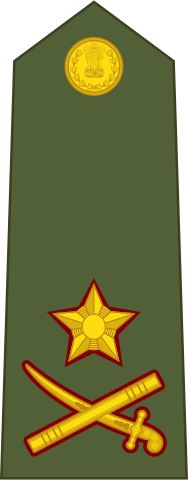
He led a bold charge through the rebel line to win the fight
Charles George Baker (December 8, 1830–February 19, 1906) led an unusually varied life of service across the Indian subcontinent, the Ottoman Empire and Egypt. Born in Noakhali, Bengal, he first went to sea and served with the Peninsular and Oriental Steam Navigation Company. In 1854, when the passenger steamer Douro was wrecked near the Paracel Islands, Baker and a small volunteer party made a perilous open-boat voyage to seek help; their effort enabled the passengers and crew to be rescued.
Baker entered the Bengal Military Police in 1856 and became its cavalry commandant. During the Indian Rebellion, his mounted force joined the campaign in Bihar. At Suhejnee, near Peroo, on September 27, 1858, he used a deliberate withdrawal to draw a much larger rebel force out from cover, then wheeled his cavalry and charged through its line. The charge broke the enemy formation; Baker’s riders pursued across difficult, waterlogged ground before collecting their wounded and returning to camp. He received the Victoria Cross for this action.
Baker continued in Indian service after the rebellion, including the 1861 Sikkim expedition. Later he served in the Ottoman gendarmerie during the Russo-Turkish War, where he was captured by Russian forces, and then worked in Egypt’s police administration. He eventually led the Egyptian police and retired with the title and rank of Lewa Pasha and major-general. He returned to England and died in Dorset in 1906.
### Victoria Cross citation
“For gallant conduct on the occasion of an attack on the rebels at Suhejnee, near Peroo, on the 27th September, 1858, which is thus described in this officer’s own words: ‘The enemy advanced. Without exchanging a shot, I at once retired slowly, followed up steadily by the rebel line for 100 yards clear of village or jungle, when, suddenly wheeling about my divisions into line, with a hearty cheer, we charged into and through the centre of the enemy’s line, Lieutenant Broughton, with his detachment, immediately following up the movement, with excellent effect, from his position upon the enemy’s left. The rebel right wing, of about 300 men, broke at once, but the centre and left, observing the great labour of the horses in crossing the heavy ground, stood, and receiving the charge with repeated volleys, were cut down, or broke only a few yards ahead of the cavalry. From this moment, the pursuit was limited to the strongest and best horses of the force, numbering some 60 of all ranks, who, dashing into and swimming a deep and wide nullah, followed the flying enemy through the village of Russowlee, and its sugar-cane khets, over two miles of swamp, and 500 yards into the thick jungles near Peroo, when, both men and horses being completely exhausted, I sounded the halt and assembly, and, collected my wounded, returned to camp at Munjhaen about 6 P.M.’”
Become the named supporter for this profile and edit the tribute biography and portrait (Owner account required). Proceeds help keep the archive online.
$25 USD / year — annual sponsorship renewal. Keeps the page online and, where enabled, the family anniversary remembrance emails active.