★
Loading archive…
Loading archive…
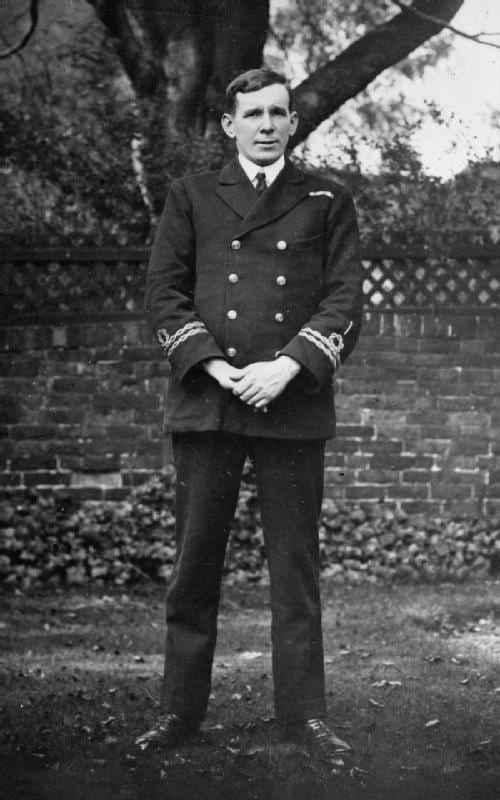
What does courage look like when a warship is burning, ammunition is exploding, and an enemy submarine is closing in? For Lieutenant Charles George Bonner, a Victoria Cross recipient and Royal Naval Reserve officer, it meant remaining at his fighting station in one of the most extraordinary naval encounters of the First World War.
Born on 29 December 1884 in Shuttington, Warwickshire, Charles George Bonner trained aboard HMS Conway before beginning a career in the Merchant Navy. His professional experience at sea ultimately led him into the Royal Naval Reserve. During the First World War, he served aboard Britain's secretive Q-ships, armed vessels disguised as vulnerable merchantmen to lure German submarines into battle.
Bonner first distinguished himself on 7 June 1917 aboard HMS Pargust, commanded by Gordon Campbell. During an action against the German submarine UC-29 in the Atlantic approaches off Ireland, Bonner was responsible for two guns and performed his duties with exceptional efficiency. Pargust succeeded in sinking the submarine, and Bonner's distinguished service earned him the Distinguished Service Cross. His award was officially announced in The London Gazette on 20 July 1917, issue 30194, page 7424, under honours for services in action with enemy submarines.
But an even greater test of courage awaited him.
On 8 August 1917, Bonner was serving as First Lieutenant aboard HMS Dunraven, another Q-ship under Captain Campbell's command. In the Bay of Biscay, the disguised vessel encountered German submarine UC-71. As the enemy opened fire, Dunraven maintained the appearance of a vulnerable merchant ship, attempting to draw the submarine within range of her concealed guns.
Shells struck the ship and ignited fires near her ammunition stores. A violent explosion threw Bonner from his control position, but he returned to the concealed gun position with the crew. Surrounded by flames, smoke and the imminent danger of further explosions, the men remained hidden rather than reveal their ship's true identity. When the ammunition finally exploded, the concealed position was devastated.
Even after suffering wounds, Bonner continued to assist others during the ordeal. HMS Dunraven was torpedoed and badly damaged, and despite efforts to save her, she subsequently sank. The crew's remarkable discipline and courage became one of the most celebrated episodes of Britain's First World War Q-ship campaign.
For his extraordinary conduct, Bonner received the Victoria Cross, Britain's highest decoration for gallantry in the presence of the enemy. His award was announced in The London Gazette, issue 30363, with the Admiralty's detailed account of the engagement later published on 20 November 1918. Petty Officer Ernest Herbert Pitcher also received the Victoria Cross for the same action.
Bonner's First World War service was additionally recognised by the 1914–15 Star, British War Medal and Victory Medal. In 1937, he was also entitled to the King George VI Coronation Medal as a surviving Victoria Cross recipient.
After the war, Bonner returned to civilian seafaring, becoming a Merchant Navy captain and working in maritime salvage. He remained closely associated with the sea throughout his life and died in Edinburgh on 7 February 1951, aged 66.
Charles George Bonner's legacy is not defined simply by the medals he received, but by the courage he displayed when remaining concealed meant accepting the possibility of death. His actions aboard HMS Pargust and HMS Dunraven stand as enduring examples of British naval gallantry, disciplined leadership and extraordinary determination against overwhelming danger.
Become the named supporter for this profile and edit the tribute biography and portrait (Owner account required). Proceeds help keep the archive online.
$25 USD / year — annual sponsorship renewal. Keeps the page online and, where enabled, the family anniversary remembrance emails active.