★
Loading archive…
Loading archive…
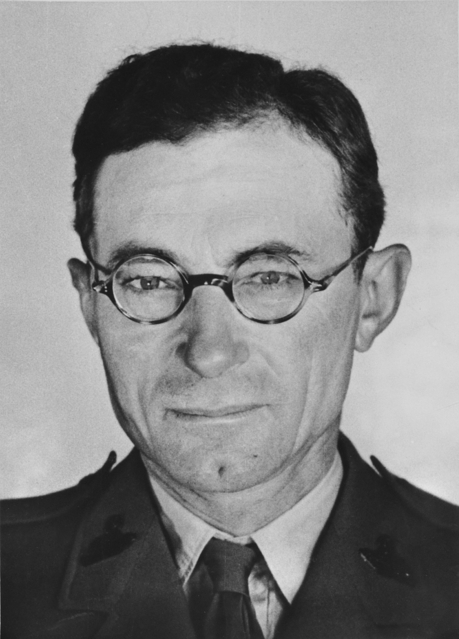
Lieutenant colonel, British Army
Support & adopt this hero ↓
Few commanders have been asked to lead men through four days of encirclement, air attack, roadblocks and relentless ground fighting while refusing to abandon their wounded. Lieutenant Colonel Charles Groves Wright Anderson VC, MC did exactly that in Malaya in January 1942. A veteran of two world wars, commander of the Australian 2/19th Infantry Battalion, prisoner of war on the Burma-Thailand Railway, farmer and later federal parliamentarian, Anderson became the highest-ranking Australian soldier to receive the Victoria Cross and the first Australian soldier awarded the VC for action against Japanese forces during the Second World War.
Charles Groves Wright Anderson was born at Newlands, Cape Town, South Africa, on 12 February 1897 and spent much of his childhood near Nairobi in Kenya. His first war began when he was still a teenager. He joined the Kenya Defence Force in November 1914, later served as a gunner with the Calcutta Volunteer Battery, and on 13 October 1916 was commissioned into the King's African Rifles. Fighting in the East African campaign gave Anderson experience in difficult bush and jungle conditions that would prove significant more than two decades later. During fighting at Nhamacurra in Portuguese East Africa in July 1918, he displayed the leadership for which he was awarded the Military Cross. The Supplement to the London Gazette of 7 February 1919 listed Temporary Lieutenant Charles Groves Wright Anderson among those awarded the Military Cross for distinguished service during military operations in East Africa, with the awards dated 1 January 1919. Unlike his later Victoria Cross, the Gazette entry did not publish a detailed individual narrative citation for the MC.
After the First World War, Anderson returned to farming in Kenya and remained connected with military service. He married Australian Edith Marian Tout in Nairobi in 1931 and later settled with his family near Young, New South Wales. With another world war approaching, Anderson joined the Australian Citizen Military Forces in March 1939 as a captain in the 56th Battalion, Riverina Regiment. He was promoted to major and in 1940 transferred to the Australian Imperial Force as second-in-command of the newly formed 2/19th Battalion, part of the 8th Division. The battalion sailed for Malaya in February 1941, and on 1 August 1941 Anderson became its commanding officer with the rank of lieutenant colonel.
Then came Muar and Parit Sulong, the battle that made Charles Anderson's name inseparable from Australian military history. In January 1942, Japanese forces were driving rapidly through Malaya toward Singapore. Anderson's battalion entered the fighting around Bakri and Muar in support of badly pressed British and Indian forces. When the headquarters of the 45th Indian Brigade was struck and its senior leadership incapacitated, Anderson assumed wider command. His force soon found itself cut off. What followed was a desperate fighting withdrawal through Japanese positions toward Parit Sulong. Anderson repeatedly placed himself at the centre of the action, directing his men, attacking enemy positions and attempting to carry his wounded with him.
His Victoria Cross citation recorded extraordinary details. Anderson's force destroyed ten enemy tanks. After being cut off, it resisted repeated attacks from the ground and air and fought through enemy lines for many miles. Anderson personally led an attack against Japanese troops holding a bridge and helped destroy four guns. Most significantly, the citation recorded that throughout the fighting he protected his wounded and refused to leave them while there remained a possibility of bringing them out. The official citation concluded that during four days of battle Anderson set a magnificent example of "brave leadership, determination and outstanding courage." His award was announced in the London Gazette on 13 February 1942, which formally recorded the King's approval of the Victoria Cross for Lieutenant Colonel Charles Groves Wright Anderson, MC, Australian Military Forces.
The victory was measured in survival rather than territory. At Parit Sulong, Anderson finally faced an impossible position. His exhausted column was blocked, heavily wounded men could no longer be moved, and relief could not break through. Those still capable of travelling were ordered to destroy equipment and attempt to escape through the jungle. Anderson reached Allied lines, but many wounded Australian and Indian soldiers left behind were subsequently murdered by Japanese troops in what became known as the Parit Sulong massacre. Within weeks, Singapore itself surrendered. On 15 February 1942, Anderson became a prisoner of war.
Captivity revealed another kind of courage. Anderson spent more than three years as a Japanese prisoner of war and became closely associated with A Force and the group remembered as Anderson Force. His men were subjected to disease, hunger, brutal discipline and forced labour, including work connected with the Burma-Thailand Railway. Accounts preserved by the Australian War Memorial describe Anderson risking punishment and beatings as he pressed for better treatment of the prisoners under his responsibility. The battlefield commander who had refused to abandon his wounded at Muar continued trying to protect his men behind barbed wire. He was liberated in August 1945 and returned to Australia later that year.
Anderson's service did not end with his release. His Victoria Cross was formally presented by the Governor-General in Sydney on 8 January 1947. Two years later he entered federal politics, winning the seat of Hume for the Country Party in 1949. Although defeated in 1951, he regained the seat in 1955 and remained in the House of Representatives until 1961. He also continued his connection with the Army through honorary appointments. In 1959 he returned to the River Kwai region as an Australian representative for commemorations at the war graves, revisiting the landscape associated with some of the darkest years of his life.
The ribbon rack worn by Charles Groves Wright Anderson VC, MC tells the story of two world wars and decades of recognised service. His verified group comprises the Victoria Cross, Military Cross, 1914-15 Star, British War Medal 1914-1920, Victory Medal, 1939-45 Star, Pacific Star, Defence Medal, War Medal 1939-1945, Australia Service Medal 1939-1945, Queen Elizabeth II Coronation Medal and Queen Elizabeth II Silver Jubilee Medal. The Australian War Memorial preserves Anderson's Victoria Cross, Military Cross and service medals in its national collection, with his VC displayed in the Hall of Valour.
Charles Groves Wright Anderson died in Canberra on 11 November 1988, Remembrance Day, aged 91, and was farewelled with full military honours. His life had stretched from the East African campaign of the First World War to the jungles of Malaya, from the nightmare of Japanese captivity to the Australian Parliament. Yet his defining moment remains those four desperate days near Muar and Parit Sulong in January 1942. Surrounded, outnumbered and responsible for wounded men who could barely be moved, Anderson continued to lead from the front. His Victoria Cross was not awarded for one isolated act of bravery. It recognised sustained courage, command and responsibility when almost every advantage belonged to the enemy.
Become the named supporter for this profile and edit the tribute biography and portrait (Owner account required). Proceeds help keep the archive online.
$25 USD / year — annual sponsorship renewal. Keeps the page online and, where enabled, the family anniversary remembrance emails active.