★
Loading archive…
Loading archive…
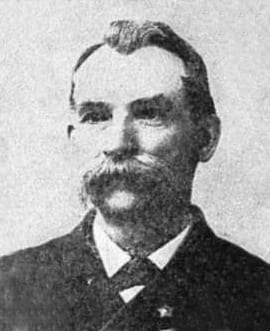
Sergeant, U.S. Army
Support & adopt this hero ↓
Medal of Honor Hero of Spotsylvania and Petersburg
How far can a soldier advance after being wounded, when every step brings him closer to death? Sergeant Charles H. Tracy answered that question twice during the American Civil War, demonstrating extraordinary courage and selflessness in two separate battles that would earn him the United States Medal of Honor.
Born in 1833 in Jewett City, Connecticut, Tracy worked as a machinist before entering Union service. On 6 August 1862, he enlisted for three years at Springfield, Massachusetts, and was mustered into Company A, 37th Massachusetts Volunteer Infantry. Initially serving as a Private, he was promoted to Sergeant shortly after enlistment. His regiment served with the Army of the Potomac and later with the Army of the Shenandoah.
Tracy participated in numerous engagements throughout the Eastern Theater. His service included Fredericksburg, Gettysburg, Mine Run, the Wilderness, Spotsylvania, Cold Harbor, Petersburg and the Shenandoah Valley Campaign. He was also detailed to duty at the Boston Harbor conscript camp from July to October 1863 and subsequently served with the Pioneer Corps for approximately ten months.
On 12 May 1864, during the Battle of Spotsylvania Court House, Tracy risked his life to help carry a wounded and helpless officer to safety under enemy fire. His courage would be tested again on 2 April 1865 during the assault on Petersburg. Advancing with the pioneers, he helped remove two lines of chevaux-de-frise, formidable sharpened obstacles protecting the Confederate positions. Despite being wounded, Tracy continued forward. He reached the third line, where he was severely wounded again, ultimately losing his right leg through amputation above the knee.
His official Medal of Honor citation records both acts:
"At the risk of his own life, at Spotsylvania, 12 May 1864, assisted in carrying to a place of safety a wounded and helpless officer. On 2 April 1865, advanced with the pioneers, and, under heavy fire, assisted in removing 2 lines of chevaux-de-frise; was twice wounded but advanced to the third line, where he was again severely wounded, losing a leg."
For these extraordinary acts of gallantry, Tracy received the Medal of Honor on 19 November 1897. As a living Civil War veteran when the Civil War Campaign Medal was established in 1907, he also fell within its qualifying service criteria.
Following his discharge due to his wounds on 4 July 1865, Tracy returned to Chicopee, Massachusetts. He became an active member of the Grand Army of the Republic and served as Commander of GAR Post 103. He died on 13 September 1911 and was buried at Fairview Cemetery in Chicopee.
Charles H. Tracy's story represents the courage and sacrifice of the Union soldiers who endured the devastating battles of the American Civil War. From rescuing a wounded officer at Spotsylvania to advancing through deadly defensive obstacles at Petersburg despite devastating injuries, his actions remain a powerful example of military gallantry and devotion to fellow soldiers.
Become the named supporter for this profile and edit the tribute biography and portrait (Owner account required). Proceeds help keep the archive online.
$25 USD / year — annual sponsorship renewal. Keeps the page online and, where enabled, the family anniversary remembrance emails active.