★
Loading archive…
Loading archive…
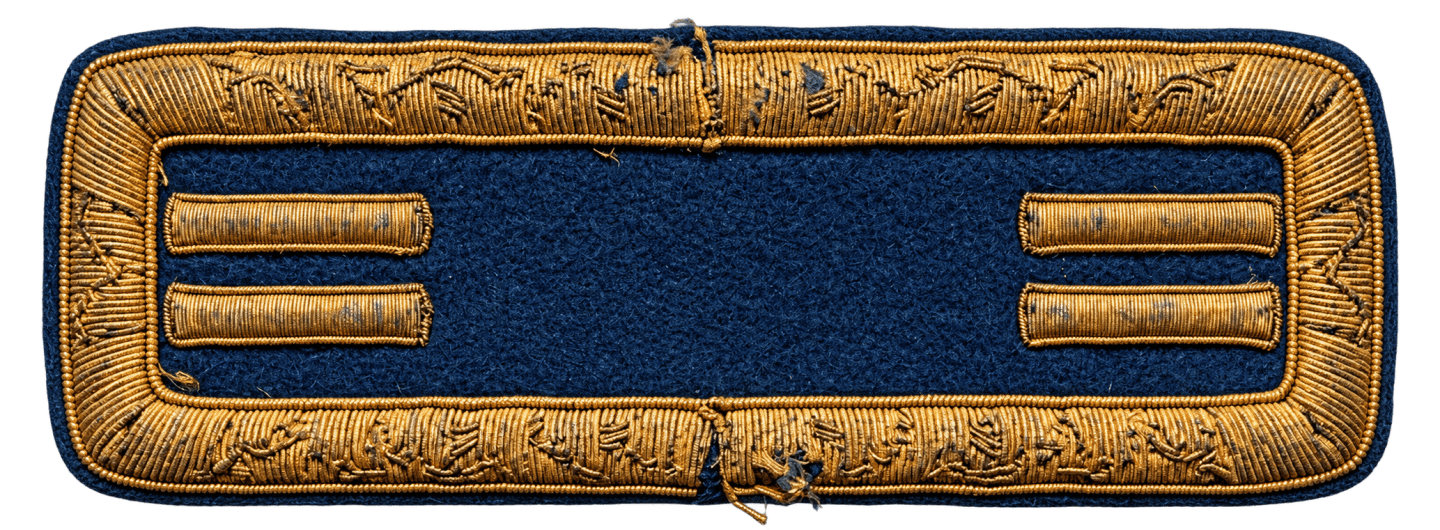
Charles L. Barrell was a Union Army officer and Medal of Honor recipient whose Civil War service became closely associated with the 102nd United States Colored Infantry and the final Union operations in South Carolina. Born on August 1, 1842, in Conquest, Cayuga County, New York, Barrell later became associated with Michigan, the state to which his military service was officially credited. The Congressional Medal of Honor Society records him as entering service from Leighton, Allegan County, Michigan. His military career ultimately carried him from the turmoil of the Civil War to recognition with the United States’ highest decoration for military valor. Congressional Medal of Honor Society Barrell served in the United States Army during a transformative period in American military history. His wartime unit, eventually designated the 102nd United States Colored Infantry, had originally been organized in Detroit as the 1st Michigan Colored Infantry. The regiment was mustered into Federal service in February 1864 and was redesignated the 102nd U.S. Colored Infantry on May 23, 1864. Its enlisted ranks were composed primarily of African American soldiers, while its commissioned officer corps included men such as Barrell. The formation was part of the broader United States Colored Troops system through which Black soldiers played an increasingly important role in the Union war effort. National Park Service The 102nd USCT was sent south and performed a wide range of duties rather than remaining in one fixed garrison. National Park Service records show that the regiment served at Port Royal and Beaufort, South Carolina, then moved to Jacksonville, Florida, where it conducted picket duty and participated in operations along the Florida Central Railroad. It later returned to South Carolina, performed outpost duties, and became involved in operations around the Charleston and Savannah corridor. These assignments placed the regiment in an environment of patrols, raids, guard duty, skirmishing, and expeditionary warfare rather than in a single continuous front-line battle. National Park Service By the final months of the Civil War, Barrell was serving as a First Lieutenant in Company C, 102nd U.S. Colored Infantry. This is the rank under which his Medal of Honor action is officially recorded. His later highest verified rank was Captain, and that later rank is therefore appropriate for the project’s main Rank field, while First Lieutenant must remain identified as his rank at the time of the heroic action. Congressional Medal of Honor Society In early 1865, the 102nd USCT continued operations in the Department of the South. The regiment advanced toward Charleston and then moved through Savannah and Georgetown. In April it participated in Potter’s Expedition from Georgetown toward Camden, South Carolina, one of the closing campaigns of the war. National Park Service records place elements of the 102nd USCT in the expedition between April 5 and April 29, 1865, with the regiment associated with actions at Statesburg, Camden, Boykin’s Mills, Bradford Springs, Dingle’s Mills, Singleton’s Plantation, and Beech Creek. National Park Service It was during these operations near Camden in April 1865 that First Lieutenant Charles L. Barrell performed the service for which he would eventually receive the Medal of Honor. His surviving official citation is unusually concise. Rather than describing a conventional charge, hand-to-hand fight, or capture of an enemy flag, it recognizes Barrell for undertaking hazardous service by marching through enemy-controlled country to bring relief to his command. Congressional Medal of Honor Society That wording is important. Barrell’s act of heroism involved accepting the dangers of moving through territory where Confederate forces were still active at a time when communication and movement between separated Union elements could be extremely difficult. The citation does not provide enough evidence to reconstruct every mile of his route or specify precisely what form the “relief” took, so those details should not be invented. What is firmly established is that Barrell voluntarily carried out a dangerous movement through hostile country for the benefit of his command, and that this service was judged sufficiently distinguished to merit the Medal of Honor. Congressional Medal of Honor Society The timing makes his action particularly significant. By April 1865 the Confederacy was collapsing in Virginia, but armed Confederate forces remained active throughout parts of the Carolinas. The 102nd USCT was still campaigning when news of the larger Confederate collapse was spreading. The regiment occupied Camden on April 17, fought or participated in further operations during the following days, and remained on active duty even after the principal Confederate armies had begun surrendering. National Park Service Barrell’s service also belonged to the larger story of African American military participation in the Civil War. The 102nd U.S. Colored Infantry and other USCT regiments demonstrated that Black soldiers could perform every essential military duty expected of Union troops—from garrison work and field operations to raids and direct combat. The National Park Service notes that United States Colored Troops rendered important service in numerous late-war engagements, including operations in South Carolina such as Boykin’s Mills. Barrell served as an officer within that larger wartime institution. National Park Service After the Camden campaign, the 102nd USCT continued serving in South Carolina. The regiment moved back toward Charleston, later operated around Summerville, Branchville, Orangeburg, and Winsboro, and remained on occupation and provost duty through the summer of 1865. It was finally mustered out on September 30, 1865. The regiment’s continued service after the end of major Confederate resistance illustrates how Union military responsibilities did not immediately end with battlefield victory. National Park Service Medal of Honor The defining military decoration of Charles L. Barrell’s career was the Medal of Honor, the highest United States award for military valor. His verified Medal of Honor record is: Decoration: Medal of Honor Branch: United States Army Rank at Action: First Lieutenant Unit: Company C, 102nd U.S. Colored Infantry Action Date: April 1865 Action Location: Near Camden, South Carolina Presentation Date: May 14, 1891 Posthumous: No Highest Verified Rank: Captain Congressional Medal of Honor Society The Medal of Honor itself was created during the Civil War. The Navy version was authorized first, followed by the Army Medal of Honor in 1862. During the nineteenth century the criteria and administrative process surrounding the decoration were different from the modern system, and many Civil War recipients received their medals years—or even decades—after the actions being recognized. Barrell was one of those delayed recipients: approximately twenty-six years separated his April 1865 action from the formal presentation of his Medal on May 14, 1891. Congressional Medal of Honor Society For the historical ribbon system used in your database, Barrell’s Medal of Honor should therefore be represented as: Medal of Honor 1862–1895 Army ✅ This is historically appropriate because his Medal was presented in 1891, before the Army changed the Medal of Honor ribbon in 1896. No additional clasp, star, or other device has been verified for Barrell’s Medal of Honor. Congressional Medal of Honor Society It is also important that the award was not posthumous. Barrell survived the war and lived for more than two decades after receiving the Medal of Honor. His official Medal of Honor record preserves both his wartime identity as a First Lieutenant and his later highest rank of Captain, ensuring that those two stages of his service are not confused. Congressional Medal of Honor Society Postwar Life After the Civil War, Barrell returned to civilian life in Michigan. Surviving county marriage records show that Charles L. Barrell of Leighton married Ella M. Graves in Grand Rapids on February 1, 1866. This places him back in civilian Michigan society only a few months after the 102nd USCT completed its wartime service. MiGenWeb The surviving easily accessible institutional record is much more detailed about his military career than about his later civilian occupations, so his postwar life should not be padded with unverified claims. What can be established securely is that he remained associated with Michigan, lived long enough to receive his Medal of Honor in 1891, and was remembered there as one of the state’s Civil War Medal of Honor recipients. Michigan’s Medal of Honor memorial tradition continues to list him among the state’s decorated servicemen. Historical Marker Database Charles L. Barrell died on April 18, 1914, in Ann Arbor, Michigan, at the age of seventy-one. He was buried at Hooker Cemetery in Wayland, Michigan. Both the Congressional Medal of Honor Society and Medal of Honor burial research confirm that burial location. Congressional Medal of Honor Society His grave eventually received special recognition as the resting place of a Medal of Honor recipient. Veterans’ historical organizations worked to preserve his memory, and a Medal of Honor headstone was formally dedicated at Hooker Cemetery in 1999, ensuring that the significance of his Civil War service was visibly marked for later generations. Sons of Union Veterans of the Civil War Charles L. Barrell’s legacy is distinctive because his Medal of Honor was not awarded for a famous frontal assault or the capture of an enemy standard. Instead, it recognized a dangerous military mission undertaken through hostile territory for the benefit of his command. As a First Lieutenant of Company C, 102nd United States Colored Infantry, Barrell carried out that mission during the final Union operations near Camden in April 1865. He later reached the rank of Captain, survived the war, and lived until 1914.
Become the named supporter for this profile and edit the tribute biography and portrait (Owner account required). Proceeds help keep the archive online.
$25 USD / year — annual sponsorship renewal. Keeps the page online and, where enabled, the family anniversary remembrance emails active.