★
Loading archive…
Loading archive…

Captain, British Army
Support & adopt this hero ↓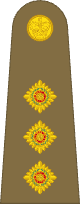
At just 29 years old, Captain Charles Antony Lyell, 2nd Baron Lyell, VC , led a handful of Scots Guardsmen directly against a German machine gun and an 88 mm gun in Tunisia. He did not survive the attack, but his courage silenced both positions and allowed his company to continue its advance. It was the final act in several days of exceptional leadership that earned him one of the highest awards for gallantry in the British and Commonwealth forces, the Victoria Cross .
Charles Antony Lyell was born in Chelsea, London, on 14 June 1913 , the son of the Hon. Charles Henry Lyell and Rosalind Margaret Watney. His father died in 1918, and Charles succeeded his grandfather as 2nd Baron Lyell in 1926. He was educated at Eton College before matriculating at Christ Church, Oxford, in 1932 and graduating in 1936. Before the Second World War he was closely associated with the family estate at Kinnordy near Kirriemuir, Angus, and served as a county councillor. On 4 July 1938 he married Sophie Mary Trafford. They had one son, who would later succeed him as the 3rd Baron Lyell.
Lyell served as an officer of the Scots Guards , service number 57781 , and during the Second World War was with the 1st Battalion, Scots Guards . His official Army status is confirmed in The London Gazette, which recorded Lieutenant The Lord Lyell, 57781, Scots Guards, transferring from the Supplementary Reserve and becoming War Substantive Captain with effect from 25 January 1943 .
For much of the early war the 1st Battalion remained in Britain. Apart from its participation in the Norwegian campaign in 1940, the battalion stayed at home until late February 1943, when it embarked for North Africa. By then the campaign in Tunisia was approaching its climax. The battalion joined the 24th Guards Brigade and entered difficult fighting in the rocky hills west of Tunis, where strongly prepared German positions, exposed approaches, intense heat and shortages of water imposed severe strain on the attacking troops.
It was during this fighting that Lyell's leadership became extraordinary. From 22 to 27 April 1943 , he commanded his company through repeated actions under heavy enemy fire. On 22 April he led his men down a slope under mortar fire to repel a German counter-attack. The following day he again led them forward under fire to capture and consolidate important high ground. Despite shelling, heat and water shortages, he maintained the fighting spirit of his company and personally operated radio communications from an exposed position to direct effective artillery fire against enemy armour, vehicles and infantry positions. These actions formed an important part of the official citation for his Victoria Cross.
The decisive moment came on 27 April 1943 near Dj Bou Arada, Tunisia . Lyell's company was held up by a German defensive position containing a heavy machine gun and an 88 mm gun in separate pits. Realising that the advance could not continue while the position remained active, Lyell gathered the only men immediately available, a sergeant, a lance-corporal and two guardsmen, and led them forward himself.
Lyell moved ahead of the others and reached the machine-gun position first, destroying its crew with a hand grenade. His sergeant was killed and the two guardsmen were wounded, leaving the lance-corporal to provide covering fire. Lyell did not stop. He continued alone toward the 88 mm gun, worked around its flank and reached the pit before the crew could bring the weapon fully into action. He attacked at close quarters and killed several members of the gun crew before he was overwhelmed and killed. The surviving Germans abandoned the position, both weapons had been silenced, and Lyell's company was able to resume its advance and capture its objective.
His gallantry was recognised with the posthumous award of the Victoria Cross . The award was announced in The London Gazette on 12 August 1943, Issue 36129, page 3625 . The official citation emphasised not only Lyell's final assault, but also his leadership, courage and self-sacrifice throughout the fighting from 22 to 27 April. The Scots Guards record that his actions enabled his company to complete a task that had an important bearing on the success of both the battalion and the brigade.
In addition to the Victoria Cross, the VC and GC Association records Lyell's Second World War awards as the 1939–1945 Star, Africa Star and War Medal 1939–1945 . His Victoria Cross was presented to his widow by King George VI at Buckingham Palace in February 1944 .
Captain Charles Antony Lyell was killed on 27 April 1943 , aged 29. He is buried in Massicault War Cemetery, Tunisia, Plot V.H.5 , and is commemorated by the Scots Guards, Christ Church, Oxford, Eton College and memorials connected with Kirriemuir and Angus. His only son succeeded him as the 3rd Baron Lyell .
Lyell's Victoria Cross was not the result of a single impulsive act. His citation records nearly a week of determined leadership under fire, culminating in a deliberate attack against two weapons that had stopped his company's advance. He knew the danger, went forward first, and continued after most of his small party had become casualties. His final action remains one of the most striking examples of Scots Guards gallantry during the Tunisian campaign and secured Captain Charles Antony Lyell VC a permanent place in the history of the Victoria Cross.
Become the named supporter for this profile and edit the tribute biography and portrait (Owner account required). Proceeds help keep the archive online.
$25 USD / year — annual sponsorship renewal. Keeps the page online and, where enabled, the family anniversary remembrance emails active.