★
Loading archive…
Loading archive…
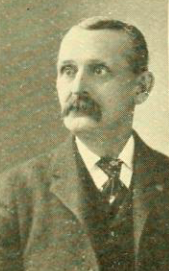
Second Lieutenant, U.S. Army
Support & adopt this hero ↓
The Private Who Captured an Enemy Flag at Five Forks
Charles Nelson Gardner was a Union Army soldier and Medal of Honor recipient whose bravery at the Battle of Five Forks, Virginia, on April 1, 1865, earned him one of the nation's highest military distinctions. Serving as a Private in Company E of the 32nd Massachusetts Infantry, Gardner captured a Confederate battle flag during the fighting. His action took place during the final days of the American Civil War, as Union forces advanced against the Confederate defenses protecting Petersburg and Richmond.
Gardner was born on March 29, 1845, in South Scituate, Massachusetts, a community later incorporated into the town of Norwell. He grew up during a period of mounting national division over slavery and the future of the Union. When the Civil War began in 1861, he was sixteen years old.
On August 4, 1862, Gardner enlisted as a Private in Company G of the 18th Massachusetts Volunteer Infantry. He was seventeen at the time. His enlistment marked the beginning of nearly three years of military service during the American Civil War.
The 18th Massachusetts Infantry served with Union forces in the eastern theater, participating in campaigns against the Confederate Army of Northern Virginia. Gardner's early service placed him within a regiment that operated during some of the war's most demanding campaigns.
Military records show that Gardner was discharged on February 7, 1864, and reenlisted the following day. He continued serving as the Union Army pursued its efforts to defeat Confederate forces in Virginia.
On October 21, 1864, Gardner transferred to Company E of the 32nd Massachusetts Volunteer Infantry. The regiment was serving with Union forces during the prolonged operations around Petersburg, Virginia.
By the spring of 1865, the Union Army had maintained pressure against Petersburg for many months. The city was a crucial railroad and supply center for Confederate forces defending Richmond. Its capture would threaten the ability of General Robert E. Lee's Army of Northern Virginia to remain in its entrenched positions.
On April 1, 1865, Union troops under Major General Philip H. Sheridan and Major General Gouverneur K. Warren attacked Confederate forces near the road junction at Five Forks, southwest of Petersburg.
The Battle of Five Forks brought together Union infantry and cavalry in an effort to defeat Confederate troops defending this strategically important position. The junction was connected to routes vital to the Confederate army's remaining supply and withdrawal options.
Gardner participated in the battle as a Private in Company E of the 32nd Massachusetts Infantry.
During the fighting, he captured an enemy flag.
His Medal of Honor citation records the action in three words: "Capture of flag."
Although the citation does not describe the exact circumstances of the seizure or identify the Confederate regiment to which the flag belonged, it establishes Gardner's individual accomplishment during the engagement.
Regimental battle flags had considerable importance during the Civil War. They identified military units and served as visible points around which soldiers could assemble and maintain their formations amid the confusion of combat.
For that reason, the capture of an opposing regiment's colors was regarded as a significant battlefield achievement. Gardner's action at Five Forks received formal recognition for the courage it demonstrated.
The battle ended in a decisive Union victory. Confederate forces were driven from their positions, and the result contributed to the collapse of the defensive system protecting Petersburg.
On April 2, 1865, Union forces launched a major assault against the remaining Confederate lines. Petersburg and Richmond were subsequently evacuated, and the Confederate army began its retreat westward.
Only eight days after Gardner's recognized action, General Robert E. Lee surrendered the Army of Northern Virginia to Lieutenant General Ulysses S. Grant at Appomattox Court House on April 9, 1865.
Gardner's capture of an enemy flag therefore occurred during one of the final decisive campaigns of the war in Virginia.
His bravery was formally recognized with the Medal of Honor. The Congressional Medal of Honor Society records May 10, 1865, as his presentation date, less than six weeks after the battle.
At the time of the action, Gardner held the rank of Private. His subsequent military record identifies Second Lieutenant as the highest rank he attained.
Massachusetts military records show that he was commissioned as a Second Lieutenant with a date of rank of April 1, 1865, the same date as the Battle of Five Forks. The Medal of Honor citation nevertheless identifies him as a Private during the action for which he was recognized.
Gardner remained in military service during the final period of the war's demobilization. His service records include a discharge on June 7, 1865, followed by an assignment to Company D on June 8. He was finally mustered out on June 29, 1865.
After leaving the Army, Gardner returned to civilian life in Massachusetts. His wartime experiences remained part of his personal history, and documents associated with his service survived long after his death.
His military papers include a diary covering 1864 and 1865, correspondence related to his Medal of Honor, discharge documents, photographs, and material connected with Civil War veterans' activities.
Gardner also remained involved in public life. He served in the Massachusetts House of Representatives during the 1901–1902 legislative session, decades after his military service had ended.
His participation in state government formed a later chapter in a life first marked by his service as a young Union soldier.
Charles Nelson Gardner died on February 22, 1919, at the age of 73. He was buried at Washington Street Cemetery in Norwell, Massachusetts.
His surviving military records and personal memorabilia are preserved in the Massachusetts Archives, providing documentary evidence of his enlistment, military assignments, Medal of Honor recognition, and later life.
Gardner's military legacy is centered on the Battle of Five Forks, where he captured an enemy flag while serving as a Private in the 32nd Massachusetts Infantry. His achievement occurred at a critical stage of the Appomattox Campaign, shortly before the final collapse of Confederate military resistance in Virginia.
His later advancement to Second Lieutenant and subsequent service in the Massachusetts legislature form additional parts of his documented life.
Charles Nelson Gardner remains remembered for the courage he demonstrated on April 1, 1865, when his capture of an enemy flag earned him the Medal of Honor and secured his place among the recognized soldiers of the American Civil War.
Become the named supporter for this profile and edit the tribute biography and portrait (Owner account required). Proceeds help keep the archive online.
$25 USD / year — annual sponsorship renewal. Keeps the page online and, where enabled, the family anniversary remembrance emails active.