★
Loading archive…
Loading archive…
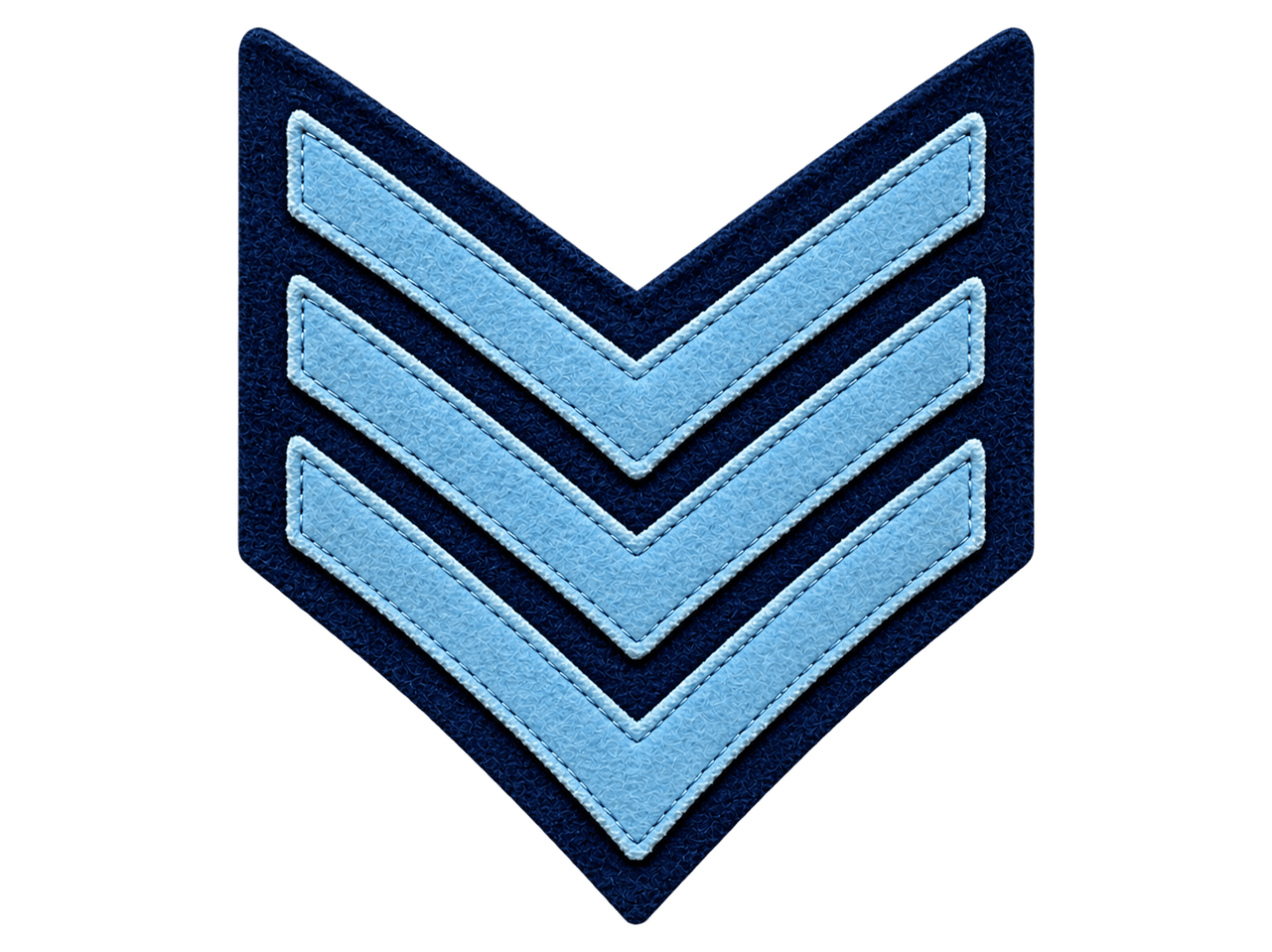
Charles Titus was born on January 1, 1838, in Millstone, Somerset County, New Jersey. He later became one of the Union cavalrymen whose service stretched across almost the entire American Civil War, eventually earning the Medal of Honor during the final days of the conflict. His military career took him from an enlisted cavalryman through promotion to Sergeant and ultimately to the highest verified rank of Quartermaster Sergeant. Congressional Medal of Honor Society Titus entered United States Army service at New Brunswick, New Jersey, on August 28, 1861, enlisting for three years in what became the 1st New Jersey Cavalry. He was assigned to Company H. The regiment had been organized in New Jersey during August 1861 and initially entered Federal service as a cavalry organization operating with the Army of the Potomac. Suvcw Cavalry service during the Civil War was demanding and varied. Mounted troops were expected to scout ahead of armies, conduct reconnaissance, protect flanks and supply routes, carry messages, raid enemy communications, screen troop movements, and when necessary fight both mounted and dismounted. Titus therefore entered a branch whose soldiers frequently operated at considerable distance from the main infantry formations. His advancement began relatively early. Titus was promoted to Corporal on December 20, 1861. Less than a year later, on August 20, 1862, he was promoted to Sergeant of Company H. These promotions show that his responsibilities increased steadily as he gained experience within the regiment. Suvcw During the period in which Titus served, the 1st New Jersey Cavalry developed an extensive combat record. The regiment participated in operations in Virginia beginning in 1862, including the Shenandoah Valley and Northern Virginia campaigns. Its official National Park Service history lists service connected with Cross Keys, Cedar Mountain, the Northern Virginia Campaign and numerous cavalry operations along the Rappahannock. National Park Service The regiment was also part of the Union cavalry organization during the Fredericksburg Campaign. At Fredericksburg in December 1862, the 1st New Jersey Cavalry served in the cavalry attached to the Left Grand Division of the Army of the Potomac. National Park Service By 1863 the regiment was an established part of the Army of the Potomac's mounted arm. The 1st New Jersey Cavalry was present with Union cavalry during the Gettysburg Campaign and participated in the cavalry fighting east of Gettysburg on July 3, 1863. National Park Service records place the regiment under Major Myron H. Beaumont in the Union cavalry force opposing Confederate cavalry in that sector. National Park Service Because Titus remained on the regiment's rolls through these years, this broader history provides important context for his service. However, individual participation in every engagement listed in a regimental history should not automatically be assigned to him unless personal service documentation establishes his presence in each one. The safest historical conclusion is that he served for years in a highly active cavalry regiment whose operational experience extended across many of the Army of the Potomac's campaigns. Titus made a particularly important personal decision on January 1, 1864, when he reenlisted rather than leaving at the expiration of his original period of service. His reenlistment meant that he continued with the regiment into the final and especially intense phase of the war. Suvcw During 1864 the 1st New Jersey Cavalry took part in extensive mounted operations with the Army of the Potomac, and by early 1865 it was participating in the operations that would culminate in the collapse of Robert E. Lee's Army of Northern Virginia. The regiment's official service history records operations at Hatcher's Run in February 1865 and then the Appomattox Campaign from March 23 to April 9. National Park Service During this final campaign, Union forces placed enormous pressure on Lee's retreating army. Cavalry became especially important because mounted troops could move rapidly along roads and across open country, seize crossings, cut retreat routes and strike Confederate columns before they could reorganize. The 1st New Jersey Cavalry was then serving in the cavalry structure associated with Major General George Crook's division. National Park Service records for the Appomattox Campaign place the regiment in Brigadier General Henry E. Davies Jr.'s brigade, together with other cavalry regiments operating during the pursuit. National Park Service The regiment fought at Dinwiddie Court House on March 30–31, Five Forks on April 1, and during the pursuit through Virginia that followed the breaking of the Confederate position around Petersburg. It subsequently operated at Payne's Cross Roads and Amelia Springs on April 5 before reaching the battlefield that would define Charles Titus's career: Sailor's Creek on April 6, 1865. National Park Service The Battle of Sailor's Creek occurred only three days before Lee surrendered at Appomattox Court House. Confederate columns attempting to escape westward were under relentless pressure from Union infantry and cavalry. Parts of Lee's army became separated and were forced into battle under increasingly desperate circumstances. The cavalry attack involving the 1st New Jersey was made across difficult open ground against Confederate troops positioned behind defensive works. Contemporary regimental accounts describe an initial attack being driven back before Union cavalry renewed the assault. The second mounted effort drove forward against the Confederate position and developed into a violent struggle around the defensive line. Suvcw Charles Titus was serving as a Sergeant in Company H during this action. As Union cavalry pressed the attack, Confederate troops launched a countercharge. Titus distinguished himself at precisely this moment. His official Medal of Honor citation states that he “was among the first to check the enemy's countercharge.” Army The wording is brief, but it defines exactly why Titus received the nation's highest military decoration. He was not decorated for capturing a flag, and his action should not be confused with the achievements of several other 1st New Jersey Cavalry Medal of Honor recipients at Sailor's Creek. Titus's recognized act was his role among the first Union soldiers who stopped the Confederate counterattack. This distinction matters because numerous men from the cavalry fighting around Sailor's Creek earned the Medal of Honor for different deeds. Some captured enemy colors; others led charges or broke into Confederate positions. Titus's official recognition was specifically connected to confronting and helping stop the enemy countercharge. His action took place amid a battle that became disastrous for Lee's army. Thousands of Confederate soldiers were captured at Sailor's Creek, including senior officers, and the losses further weakened an army that was already running out of food, ammunition and viable escape routes. The following day the 1st New Jersey Cavalry continued operations around Farmville, and on April 9, 1865, the regiment was part of the Union cavalry forces operating at Appomattox Court House, where Lee surrendered the Army of Northern Virginia to Lieutenant General Ulysses S. Grant. National Park Service Although Sailor's Creek became Titus's defining personal action, his service continued after Lee's surrender. The 1st New Jersey Cavalry subsequently participated in an expedition from Burkeville toward Danville and South Boston before moving toward Washington in May. The regiment was present for the Grand Review in Washington on May 23, 1865, the great public procession celebrating the victorious Union armies. National Park Service Recognition for Titus's heroism came remarkably quickly compared with many Civil War Medal of Honor recipients. On July 3, 1865, less than three months after Sailor's Creek, Charles Titus was formally presented with the Medal of Honor. He was alive to receive the decoration, so the award was not posthumous. Congressional Medal of Honor Society The Medal of Honor itself had been created during the Civil War. Congress authorized the Army Medal of Honor in 1862, establishing a national decoration through which exceptional battlefield conduct by soldiers could be formally recognized. During the Civil War, it became the principal federal military decoration for extraordinary acts performed by Army personnel. Because Titus's Medal of Honor was issued in 1865, the correct historical database version for this project is: Medal of Honor 1862–1895 Army — 1865 His Medal of Honor carries no verified clasp, star, bar, oak leaf cluster or other separate device. He was a single Medal of Honor recipient rather than a multiple-award recipient. It is also important to separate the Medal of Honor action from his later military rank. At Sailor's Creek, his official action-time rank was Sergeant. Congressional Medal of Honor Society records, however, identify his highest rank as Quartermaster Sergeant. Congressional Medal of Honor Society A Quartermaster Sergeant was a senior enlisted position involving significant responsibility for military supplies, equipment and logistical administration. Thus Titus's later rank reflected broader responsibilities than those represented by a standard company Sergeant position. For the website database, where an historically correct Army Quartermaster Sergeant insignia may not be available, the Army Sergeant rank can be used as the safe visual fallback because Sergeant was unquestionably his verified rank during his Medal of Honor action. The Navy “Quartermaster” wheel insignia should never be used for Titus because his service was entirely in the United States Army, specifically the cavalry. The 1st New Jersey Cavalry remained in Federal service after the fighting ended. Charles Titus finally mustered out on July 24, 1865, completing nearly four years of wartime military service from his original enlistment in August 1861. Suvcw A separate Civil War Campaign Medal has not been included in his final verified rack. Titus unquestionably served throughout the Civil War and lived long enough to see later commemorative military decorations established. Nevertheless, under the project's recipient-specific evidence standard, wartime eligibility alone does not prove that an individual veteran personally received or was individually entitled to a later-issued campaign medal. Without sufficient individual entitlement documentation, it remains excluded from the published rack. After leaving military service, Titus returned to civilian life and survived for more than fifty-five years after the Civil War. The surviving authoritative Medal of Honor records document his military service far more clearly than they document his postwar occupation and private life, so uncertain civilian details should not be expanded beyond the surviving evidence. What remained certain throughout his later life was his status as a veteran of the 1st New Jersey Cavalry and a recipient of the Medal of Honor for his conduct during the final pursuit of Lee's army. Charles Titus died on March 26, 1921, in Belmar, New Jersey, at the age of eighty-three. He was buried in the Glendola/Wall Township area of New Jersey; Congressional Medal of Honor Society records identify his burial at Gledola Cemetery, Glendola, Wall Township, New Jersey. Congressional Medal of Honor Society His military career had begun as a New Jersey cavalryman in August 1861. He rose to Corporal, then Sergeant, reenlisted when his first period of service was ending, remained with the regiment through the final campaigns of the war and ultimately attained the highest verified rank of Quartermaster Sergeant. His defining moment occurred on April 6, 1865, at Sailor's Creek. As Confederate troops counterattacked Union cavalry during one of the last major battles fought by the Army of Northern Virginia, Sergeant Charles Titus was among the first soldiers who helped check that countercharge. Three days later, Lee surrendered at Appomattox. Less than three months later, the United States formally recognized Titus's courage with the Medal of Honor. Final Verified Medal Record: Medal of Honor 1862–1895 Army — 1865 — No device or clasp Charles Titus is therefore remembered as a United States Army cavalryman, Sergeant at the time of his heroic action, later Quartermaster Sergeant, veteran of Company H of the 1st New Jersey Cavalry, participant in the final Appomattox Campaign, and Medal of Honor recipient for his courage at Sailor's Creek on April 6, 1865. His long military service and his conduct during the collapsing final days of the Confederacy secured his permanent place among the decorated Union cavalrymen of the American Civil War.
Become the named supporter for this profile and edit the tribute biography and portrait (Owner account required). Proceeds help keep the archive online.
$25 USD / year — annual sponsorship renewal. Keeps the page online and, where enabled, the family anniversary remembrance emails active.