★
Loading archive…
Loading archive…
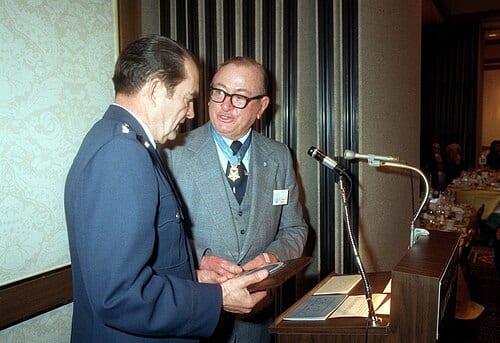
Colonel, U.S. Army
Support & adopt this hero ↓
His rifle jammed. He led Guadalcanal assault with his pistol
Charles Willis Davis earned the Medal of Honor by leading men forward when Japanese machine-gun fire threatened to halt the American advance on Guadalcanal. A U.S. Army infantry officer who later reached the rank of colonel, he became a combat veteran of World War II, the Korean War and the Vietnam War.
Born on 21 February 1917 in Gordo, Alabama, Davis received his commission through the University of Alabama ROTC program in 1940. After infantry training at Fort Benning and service at Fort Sam Houston, he joined the 27th Infantry Regiment, the Wolfhounds, of the 25th Infantry Division in Hawaii. During the Japanese attack on 7 December 1941, he manned a defensive position at Schofield Barracks on Oahu.
The division deployed to Guadalcanal in November 1942. By January 1943, Captain Davis was executive officer of the 2nd Battalion, 27th Infantry Regiment. During the fighting for the Galloping Horse, he volunteered on 12 January to carry instructions to leading companies caught in Japanese machine-gun crossfire. He reached the exposed troops, delivered the orders, supervised their execution and remained with them overnight.
The following day, Davis volunteered again. Leading four other soldiers against the Japanese strongpoint blocking the battalion, he pressed forward despite his rifle jamming at its first shot. Drawing his pistol, he waved his men onward and led the assault over the hill. Other American soldiers followed his example. The position fell, Japanese resistance broke and the battalion secured its objective. His Medal of Honor citation identifies him as Major, then Captain, preserving the distinction between his rank when cited and his rank in action.
His combat leadership continued on New Georgia, where he commanded the 3rd Battalion, 27th Infantry Regiment, in August 1943. Later service took him through the Korean War and to IV Corps in Vietnam. His career also included the 11th Airborne Division, the U.S. Military Advisory Group in Thailand, Third Army, military education and instructional assignments. His decorations included the Legion of Merit with two oak leaf clusters, the Bronze Star Medal for valor with one oak leaf cluster and the Air Medal with three oak leaf clusters.
After retirement, Davis continued advocating for veterans through the White House Commission on Veterans Affairs and served two terms as president of the Medal of Honor Society. He died on 18 January 1991 in San Francisco, California, and was buried at Arlington National Cemetery in Virginia. His legacy rests on the leadership he showed under fire and the service he continued to give to fellow veterans.
Medal of Honor citation
“For distinguishing himself conspicuously by gallantry and intrepidity at the risk of his life above and beyond the call of duty in action with the enemy on Guadalcanal Island. On 12 January 1943, Maj. Davis (then Capt.), executive officer of an infantry battalion, volunteered to carry instructions to the leading companies of his battalion which had been caught in crossfire from Japanese machineguns. With complete disregard for his own safety, he made his way to the trapped units, delivered the instructions, supervised their execution, and remained overnight in this exposed position. On the following day, Maj. Davis again volunteered to lead an assault on the Japanese position which was holding up the advance. When his rifle jammed at its first shot, he drew his pistol and, waving his men on, led the assault over the top of the hill. Electrified by this action, another body of soldiers followed and seized the hill. The capture of this position broke Japanese resistance and the battalion was then able to proceed and secure the corps objective. The courage and leadership displayed by Maj. Davis inspired the entire battalion and unquestionably led to the success of its attack.”
Become the named supporter for this profile and edit the tribute biography and portrait (Owner account required). Proceeds help keep the archive online.
$25 USD / year — annual sponsorship renewal. Keeps the page online and, where enabled, the family anniversary remembrance emails active.