★
Loading archive…
Loading archive…
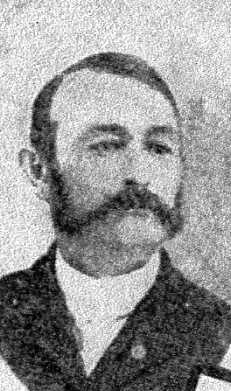
Private, U.S. Army
Support & adopt this hero ↓
The Volunteer Who Charged the Guns at Vicksburg
Charles Wesley Rundle was a Union Army soldier who received the Medal of Honor for extraordinary bravery during the American Civil War. Serving as a Private in Company A of the 116th Illinois Volunteer Infantry, Rundle volunteered for a dangerous assault against Confederate fortifications at Vicksburg, Mississippi, on May 22, 1863. He was among a group of approximately 150 Union soldiers selected to lead an attack against a heavily defended position, an operation that became known as the Forlorn Hope. His courage during the assault earned him the Medal of Honor on July 26, 1894.
Rundle was born on December 14, 1842. His official Medal of Honor recipient record identifies his birthplace as Covington, Kentucky, although some historical military records list Cincinnati, Ohio. His early life before military service is not extensively documented.
When the American Civil War began in 1861, Rundle was approaching adulthood. The conflict divided the nation and brought hundreds of thousands of volunteers into military service.
In August 1862, Rundle enlisted in the Union Army from Oakley Township in Macon County, Illinois. He joined Company A of the 116th Illinois Volunteer Infantry and served as a Private.
The regiment was organized during a period of expanding Union military operations in the western theater. Its soldiers were subsequently assigned to campaigns in the Mississippi Valley, where Union commanders sought control of the Mississippi River and the Confederate stronghold at Vicksburg.
Vicksburg occupied a strategically important position overlooking the Mississippi River. Confederate fortifications protected the city and presented a formidable obstacle to Union forces attempting to secure control of the river.
By the spring of 1863, Major General Ulysses S. Grant had advanced against Vicksburg after a series of successful operations in Mississippi. Confederate forces under Lieutenant General John C. Pemberton withdrew into the city's extensive defensive works.
Grant initially attempted to capture Vicksburg through direct assaults rather than a prolonged siege.
On May 19, 1863, Union troops attacked Confederate positions but failed to break through the defenses. A second, larger assault was ordered for May 22.
The planned offensive involved attacks against several sections of the Confederate defensive line. One important objective was the Stockade Redan, a fortified position guarding the Graveyard Road approach to Vicksburg.
Union commanders recognized that an assault against the redan would require soldiers to cross exposed ground while under concentrated Confederate fire.
A volunteer party was therefore organized to advance ahead of the main attacking force.
Approximately 150 unmarried volunteers were selected for the dangerous assignment. Their mission was to carry materials that could be used to cross the ditch in front of the Confederate fortifications and place ladders against the defensive works.
The men were not expected to lead the attack with their usual weapons. Instead, they carried materials such as planks, logs, and ladders needed to prepare a passage for the infantry following behind.
Because the assignment exposed the volunteers to exceptional danger, the group became known as the Forlorn Hope.
Charles W. Rundle volunteered to participate.
His decision placed him among the first soldiers expected to advance toward the Confederate position. The volunteers would have to cross ground covered by enemy artillery and small-arms fire before reaching the defensive ditch.
On May 22, 1863, the assault began.
The volunteer storming party advanced toward the Stockade Redan, carrying the materials necessary for the planned attack.
Confederate defenders quickly opened fire on the approaching soldiers. Artillery and musket fire struck the advancing party, causing heavy casualties and disrupting the attempt to place the bridging materials and ladders.
The planned advance became increasingly difficult as the volunteers encountered the concentrated fire of the defenders.
Some of the men reached the ditch immediately below the Confederate fortifications. There, they sought protection from the enemy fire coming from above.
Rundle was among the volunteers who survived the initial advance and became trapped near the base of the defensive works.
The position offered limited protection. Although the Confederate artillery could not easily be lowered sufficiently to fire directly into the ditch, the defenders continued attempting to attack the Union soldiers gathered below them.
Historical accounts describe Confederate troops lighting explosive shells and throwing them into the ditch where the Union volunteers had taken cover.
The burning fuses created an immediate threat to the trapped soldiers. The men had to react quickly to avoid the explosions.
Accounts of the fighting describe members of the volunteer party, including Rundle, picking up some of the burning shells and throwing them back toward the Confederate position before they exploded.
The extraordinary circumstances of the engagement reflected the danger faced by the volunteers. They were caught immediately below Confederate defenses, unable to advance successfully and exposed to continued enemy attacks.
The main Union assault failed to capture the Stockade Redan. Soldiers who reached the ditch remained in a precarious position as the fighting continued.
Rundle and other survivors endured the danger until darkness provided an opportunity to withdraw.
After nightfall, Rundle was among those who escaped back to the Union lines.
Historical accounts indicate that only about thirty members of the original 150-man volunteer party returned from the assault. The losses demonstrated the extreme danger of the mission.
Although the attack failed to break through the Confederate defenses, the conduct of the volunteers became one of the notable individual episodes of the Vicksburg Campaign.
Rundle's participation was formally recognized for gallantry.
His official Medal of Honor citation identifies his distinguished action as gallantry during the charge of the volunteer storming party on May 22, 1863, at Vicksburg.
The recognition was based on his willingness to participate in the dangerous advance against a strongly defended position, despite the extraordinary risks faced by the attacking soldiers.
After the unsuccessful assaults in May, Grant continued operations against Vicksburg through a prolonged siege.
Union forces surrounded the city, cutting off supply routes and subjecting Confederate positions to sustained military pressure.
On July 4, 1863, the Confederate garrison surrendered to Grant's army.
The capture of Vicksburg was one of the most significant Union victories of the Civil War. Together with the subsequent surrender of Port Hudson, it enabled Union forces to establish control over the Mississippi River.
Rundle's service with the 116th Illinois Infantry continued beyond the events of May 1863. His documented military career extended through the final years of the conflict, ending in 1865.
Following the war, Rundle returned to civilian life and eventually settled in Colorado.
He became a farmer near Grand Junction, where he established a home and raised a family with his wife, Hettie.
The couple had six children, including four daughters and two sons. One of their sons died in a railroad accident in 1905.
Rundle remained associated with agricultural life in Colorado for several decades.
In 1894, more than thirty-one years after the assault at Vicksburg, his wartime gallantry received formal national recognition.
On July 26, 1894, Charles Wesley Rundle was presented with the Medal of Honor for his actions during the volunteer storming party's attack on May 22, 1863.
The award preserved the history of his participation in one of the most hazardous infantry assaults of the Vicksburg Campaign.
Rundle continued living in Colorado after receiving the decoration.
In 1902, he sold his farm and subsequently worked for the United States Post Office in Grand Junction.
His employment with the postal service continued until his retirement in 1919.
Rundle also participated in veterans' and community organizations, including the Grand Army of the Republic, which brought together former Union soldiers who had served during the Civil War.
Following his retirement, Rundle moved with his wife to Southern California. The relocation was intended in part to provide a more favorable climate for Hettie's health.
During their later years, the couple lived at a veterans' home in California.
Charles Wesley Rundle died on July 11, 1924, in Los Angeles, California, at the age of 81.
He was buried at Los Angeles National Cemetery. His wife, Hettie, died in 1931 and was buried beside him.
Rundle's military legacy remains closely connected to the Union assault against the Stockade Redan at Vicksburg on May 22, 1863.
As a Private in Company A of the 116th Illinois Infantry, he volunteered for an exceptionally dangerous assignment and advanced toward Confederate fortifications as part of the Forlorn Hope.
The assault exposed him and his fellow volunteers to devastating enemy fire. Despite the failure of the attack, Rundle survived the ordeal and returned to Union lines after darkness fell.
His courage was recognized with the Medal of Honor more than three decades later.
Charles Wesley Rundle is remembered as a Union soldier whose willingness to volunteer for a nearly impossible assault demonstrated extraordinary bravery during the Vicksburg Campaign and secured his place among the recipients of America's highest military decoration.
Become the named supporter for this profile and edit the tribute biography and portrait (Owner account required). Proceeds help keep the archive online.
$25 USD / year — annual sponsorship renewal. Keeps the page online and, where enabled, the family anniversary remembrance emails active.