★
Loading archive…
Loading archive…
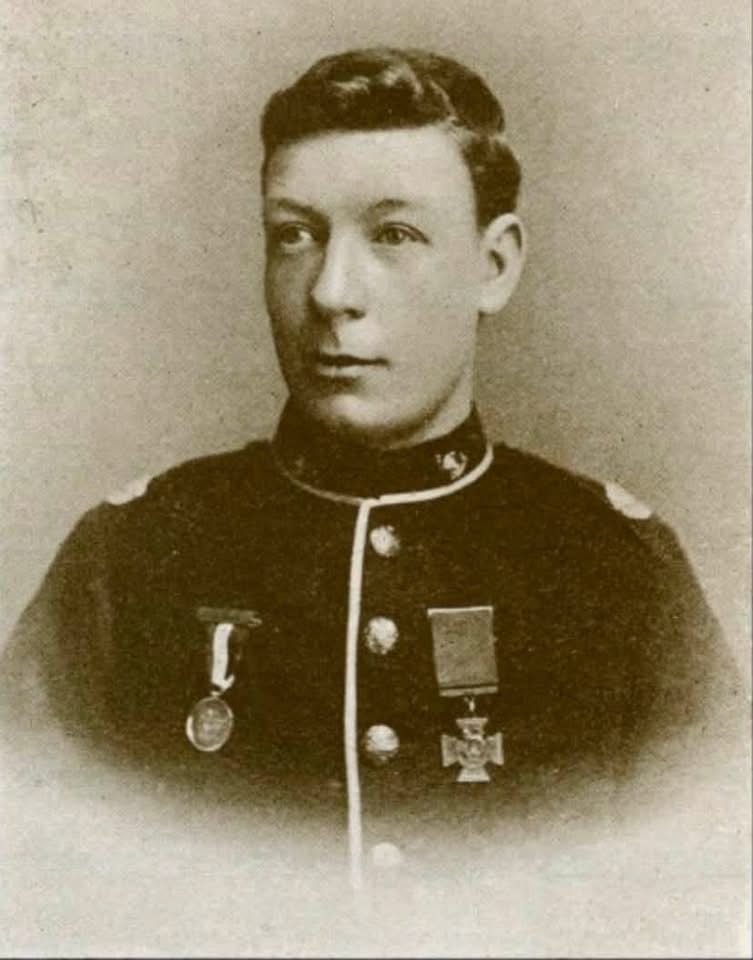
Company sergeant major, British Army
Support & adopt this hero ↓On 26 June 1900, surrounded by hundreds of Boer fighters and facing almost certain death, one young British soldier volunteered for a mission that others believed impossible. He crossed a battlefield swept by enemy fire, delivered a desperate message requesting reinforcements, and then made an extraordinary decision. He turned around and crossed the same deadly ground again to confirm that his message had been received. That soldier was Private Charles Burley Ward, one of the bravest recipients of the Victoria Cross during the Second Boer War.
Born in Hunslet, Leeds, on 10 July, Charles Burley Ward enlisted in the King's Own Yorkshire Light Infantry in April 1897. After serving with the 1st Battalion, he was posted to the 2nd Battalion, which deployed to South Africa in 1899 during the Second Boer War. It was there that his courage under fire would earn him Britain's highest award for gallantry.
On 26 June 1900, near Lindley in the Orange Free State, a small picquet of the Yorkshire Light Infantry found itself surrounded by approximately 500 Boers. The position was under intense attack. Both officers had been wounded, and all but six of the men had been killed or injured. With the defenders facing the real possibility of being overwhelmed, an urgent message requesting reinforcements needed to reach a nearby signalling station approximately 150 yards behind the position.
Private Ward volunteered for the mission. His offer was initially refused because the exposed ground was under such heavy fire that crossing it appeared almost certain to cost him his life. But Ward persisted. Given permission to go, he crossed the dangerous ground through a storm of enemy bullets and successfully delivered the message. Yet his courage did not end there. Having reached a place of relative safety, he voluntarily returned across the same fire-swept ground to reassure his commanding officer that the message had been sent. During this second crossing, he was severely wounded.
His extraordinary determination helped save the isolated position. Reinforcements arrived, and the post was not captured. The official Victoria Cross citation recorded that without Ward's gallant action, the position would certainly have fallen. His conduct represented the highest traditions of military courage, selflessness and devotion to duty.
For this remarkable act of bravery, Charles Burley Ward was awarded the Victoria Cross. On 15 December 1900, he travelled to Windsor Castle, where Queen Victoria personally invested him with the decoration. He was among the final group of five soldiers to receive their Victoria Crosses from the Queen before her death in January 1901.
Ward's return to Leeds was met with a tremendous public welcome. His courage had made him a local hero, and a generous benefactor, William Owen, presented him with a specially struck gold testimonial medal and £600 in recognition of his service and sacrifice. However, the physical consequences of his Boer War wounds had already affected his military career. He was medically discharged from the Army in early 1901.
Returning to civilian life, Ward worked as a newsagent and tobacconist in Hunslet before pursuing a career in education. He eventually became a physical education instructor at Bridgend Grammar School in Wales, where he helped train and educate younger generations.
When the First World War broke out in 1914, Ward once again answered Britain's call. He re-enlisted in September 1914 and served with the Duke of Wellington's (West Riding) Regiment. His wartime service included duties with the 9th Battalion and training responsibilities. He also served in France during 1918, attaining the rank of Company Sergeant Major before his discharge on 21 November 1918. His First World War service was recognised with the British War Medal 1914–1920 and the Victory Medal 1914–1919.
Charles Burley Ward died on 30 December 1921 at Glamorgan County Asylum in Bridgend. He was buried with full military honours in St Mary's churchyard, Whitchurch, Cardiff. Although decades passed before renewed historical interest brought attention to his final resting place, researchers located his grave in 1986, and a permanent headstone was dedicated that September.
Today, Charles Burley Ward is remembered as a Victoria Cross recipient whose courage at Lindley demonstrated what one determined soldier could accomplish in the face of overwhelming danger. His decision to cross enemy fire not once, but twice, transformed a desperate situation and helped save his comrades. His story remains an enduring tribute to the extraordinary bravery of the ordinary soldier and to the men whose actions shaped the history of the British Army during the Second Boer War.
Become the named supporter for this profile and edit the tribute biography and portrait (Owner account required). Proceeds help keep the archive online.
$25 USD / year — annual sponsorship renewal. Keeps the page online and, where enabled, the family anniversary remembrance emails active.