★
Loading archive…
Loading archive…
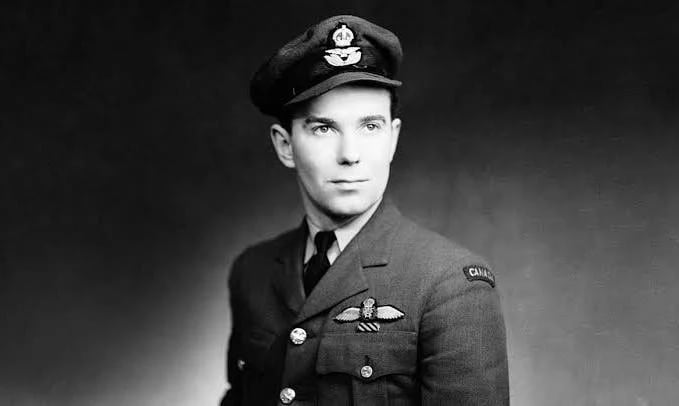
Honorary Colonel, Royal Canadian Air Force
Support & adopt this hero ↓The Canadian Spitfire Pilot Who Earned the Distinguished Flying Cross Twice
Three missions on D-Day. More than 200 combat sorties. Two awards of the Distinguished Flying Cross. For Canadian Spitfire pilot Charles William “Charley” Fox, courage was not defined by a single extraordinary moment, but by the relentless dangers he faced in the skies over Nazi-occupied Europe.
Born on 26 February 1920 in Guelph, Ontario, Fox enlisted in the Royal Canadian Air Force in October 1940. After qualifying as a pilot, he initially trained other airmen before being posted overseas in 1943. In January 1944, he joined No. 412 Squadron, RCAF, flying Supermarine Spitfires on fighter escorts, armed reconnaissance and ground-attack missions.
On 6 June 1944, as Allied forces stormed the beaches of Normandy, Fox flew three operational sorties supporting the D-Day invasion. His skill in attacking German transport columns, locomotives and military positions soon established him as a formidable fighter pilot. Despite intense anti-aircraft fire, he repeatedly pressed home his attacks, disrupting enemy movements across occupied Europe.
His exceptional courage earned him the Distinguished Flying Cross, gazetted on 29 December 1944. The official citation praised his determination and flying skill, recording that he had destroyed or damaged at least 64 enemy vehicles during four consecutive days of operations and 127 vehicles since the Normandy invasion. His fearless example and contribution to his squadron's success were specifically recognized.
Fox's achievements continued. His Bar to the Distinguished Flying Cross, gazetted on 27 February 1945, recognized his outstanding leadership, accuracy and determination under fire. The citation credited him with destroying or damaging 22 locomotives and a cumulative total of 153 enemy vehicles, alongside four enemy aircraft destroyed. It also highlighted a December 1944 attack on German airfields near Münster and his accurate reporting, which enabled the destruction of four additional enemy aircraft.
Yet one mission would make his name particularly famous. On 17 July 1944, Fox attacked a German staff car in Normandy, an incident later associated with the serious wounding of Field Marshal Erwin Rommel, the celebrated German commander known as the Desert Fox. Although later research identified Fox as the most likely attacking pilot, other Allied airmen also claimed responsibility, and the precise attribution remains disputed.
By the end of his operational tour in January 1945, Fox had completed 224 combat sorties, demonstrating exceptional endurance and professionalism. After the war, he continued serving with the RCAF Auxiliary, including No. 420 Squadron. In April 2004, he returned to his former wartime unit as Honorary Colonel of No. 412 Squadron, dedicating himself to preserving military traditions and mentoring a new generation.
His service was further recognized with the Canadian Forces' Decoration, presented shortly before his death. Through his Torchbearers initiative, Fox championed remembrance, particularly the stories of Canadian prisoners of war and those whose sacrifices risked being forgotten.
Charles William Fox died on 18 October 2008, aged 88. His legacy extends far beyond his remarkable combat record. He remains a powerful symbol of Canadian aviation courage, wartime leadership and the responsibility to remember those who served.
Become the named supporter for this profile and edit the tribute biography and portrait (Owner account required). Proceeds help keep the archive online.
$25 USD / year — annual sponsorship renewal. Keeps the page online and, where enabled, the family anniversary remembrance emails active.