★
Loading archive…
Loading archive…
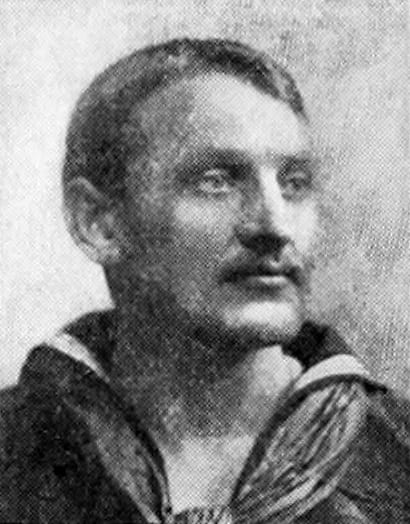
Lieutenant, U.S. Navy
Support & adopt this hero ↓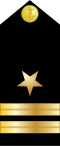
He Sank a Ship Under Enemy Fire—Then Was Captured
Claus Kristian Randolph Clausen was born on December 9, 1869, in Denmark. He later immigrated to the United States and entered the United States Navy from New York. His naval career eventually carried him into the Spanish-American War, where he served as a Coxswain aboard USS New York. It was during this conflict that Clausen volunteered for the dangerous mission that would define his place in American naval history.
In June 1898, American forces were attempting to trap the Spanish fleet inside Santiago Harbor, Cuba. Rear Admiral William T. Sampson developed a daring plan to sink the collier USS Merrimac across the narrow harbor entrance, hoping the wreck would block the Spanish warships from escaping. Lieutenant Richmond P. Hobson led the mission and Clausen became one of the small group of Navy volunteers willing to take the ship directly into a harbor protected by Spanish guns.
During the night of June 2–3, 1898, Merrimac steamed toward the entrance of Santiago Harbor while Spanish batteries opened intense fire. Enemy shells struck the vessel, damaging its steering equipment and disrupting the carefully planned attempt to position it across the channel. Clausen remained at his post as the ship came under sustained fire and the crew continued trying to complete the mission despite the rapidly deteriorating situation.
Merrimac was ultimately sunk, but not in a position that completely blocked the harbor. Clausen and the other surviving members of the volunteer crew were left in the water following the sinking. Spanish forces rescued them and took them prisoner. Their captivity continued until after the Battle of Santiago de Cuba, when the destruction of the Spanish fleet and changing military situation led to their release.
For his extraordinary heroism during the Merrimac operation, Clausen received the Medal of Honor. The decoration recognized his courage while participating in the attempt to sink the vessel at the entrance to Santiago Harbor despite heavy fire from Spanish batteries. The award was formally documented in 1899. The Medal of Honor is the verified decoration included in his profile and represents the defining combat action of his Spanish-American War service.
Clausen did not allow the Merrimac mission, captivity, or Medal of Honor to become the end of his naval career. He remained in the United States Navy and continued advancing professionally. On July 30, 1903, he was promoted to the warrant officer rank of Boatswain. His subsequent assignments included service aboard the cruiser USS Detroit in Caribbean waters and duty aboard the receiving ship USS Hancock at the New York Navy Yard.
He later returned to sea aboard the battleship USS Mississippi, serving there from 1908 to 1911. While aboard Mississippi, Clausen was promoted to Chief Boatswain on July 30, 1909. Following this assignment he again served at the New York Navy Yard. During this period he also obtained a master's license under the Steamboat-Inspection Service, reflecting the extensive professional seamanship and maritime experience he had accumulated during his naval career.
Clausen next joined the battleship USS New Jersey. His service aboard New Jersey eventually carried him into another major conflict when the United States entered World War I. In May 1917, during the war, he received a temporary promotion to Lieutenant Junior Grade. His World War I service meant that his career had now extended across two distinct wars—the Spanish-American War, in which he had earned the Medal of Honor, and World War I.
After World War I, Clausen returned to duty at the New York Navy Yard. In 1920 he reverted to the rank of Chief Boatswain and subsequently served aboard USS Florida. His later assignments included duty at the Naval Torpedo Station in Newport, Rhode Island, followed by service aboard the receiving ship USS Pueblo in New York. These assignments demonstrated the length of a career that continued for decades after the extraordinary Santiago Harbor mission.
Clausen was placed on the Navy retired list on November 15, 1925. His connection with the Navy's rank structure continued even after retirement. In June 1930 he was promoted to Lieutenant, the highest rank he attained. Years later his retired status was administratively adjusted again, but Lieutenant remained the highest rank reached during his naval career.
From an immigrant sailor born in Denmark to a Medal of Honor recipient and commissioned naval officer, Clausen's life followed an extraordinary course. His most famous moment came when he voluntarily entered a heavily defended enemy harbor aboard a ship intended to be deliberately sunk, survived intense Spanish fire, endured captivity, and returned to continue serving the United States Navy for many more years.
Claus Kristian Randolph Clausen died on December 23, 1958, at St. Albans, New York, at the age of 89. He was interred at the U.S. Columbarium in Middle Village, New York. His legacy remains centered on the USS Merrimac mission—a failed attempt to physically block Santiago Harbor that nevertheless became one of the Spanish-American War's most celebrated examples of naval courage. His Medal of Honor permanently records the extraordinary heroism he displayed while sailing directly into enemy fire on that mission.
Become the named supporter for this profile and edit the tribute biography and portrait (Owner account required). Proceeds help keep the archive online.
$25 USD / year — annual sponsorship renewal. Keeps the page online and, where enabled, the family anniversary remembrance emails active.