★
Loading archive…
Loading archive…
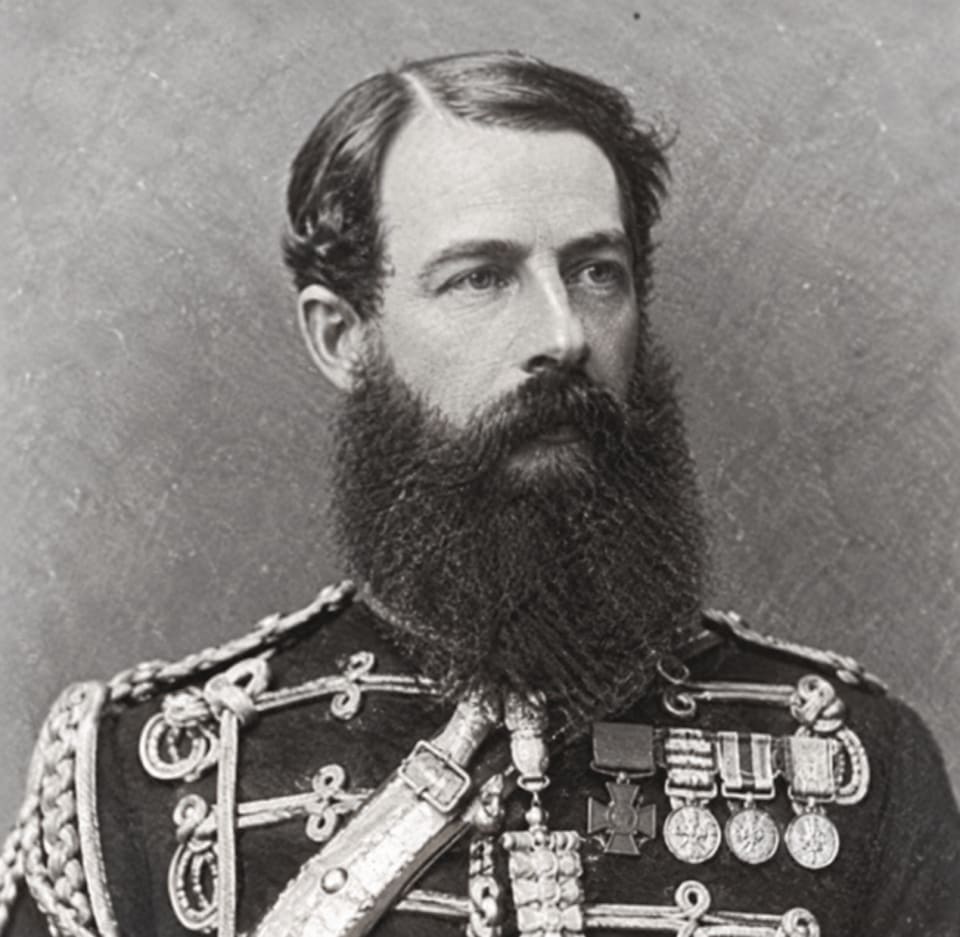
Major, British Army
Support & adopt this hero ↓
Clement Walker Heneage VC
Clement Walker Heneage survived one of the most famous cavalry charges in British military history, the Charge of the Light Brigade, only to distinguish himself again four years later in India in the action that earned him the Victoria Cross.
Clement Walker Heneage was born on 6 March 1831 at Compton Bassett, Wiltshire, the eldest son of George Heneage Walker Heneage, who represented Devizes in Parliament. He entered the British Army in August 1851, purchasing a commission as a cornet in the 8th King’s Royal Irish Hussars, and was promoted lieutenant in September 1854.
The Crimea and the Charge of the Light Brigade
Within weeks of his promotion, Heneage was campaigning in the Crimea. His service took him through some of the war’s best-known engagements, including Alma, Balaklava, Inkerman and the siege of Sebastopol. On 25 October 1854, he rode with the 8th Hussars in the Charge of the Light Brigade at Balaklava and survived. His subsequent Crimean service also included Tchernaya and other operations during the campaign.
For his Crimean service Heneage received the Crimea Medal with four clasps, Alma, Balaklava, Inkermann and Sebastopol, together with the Turkish Crimea Medal. Contemporary Army List evidence also records his appointment to the 5th Class of the Ottoman Order of the Medjidie, an honour not present in the surviving four-medal group now associated with him.
India and the Victoria Cross
Promoted captain in May 1857, Heneage went with the 8th Hussars to India, where the regiment took part in operations during the Indian Rebellion. His service included the capture of Kotah, the reoccupation of Chundaree, operations at Kotah-ke-Serai and Gwalior, and further campaigning in Central India.
On 17 June 1858, near Gwalior, a squadron of the 8th Hussars charged rebel forces advancing against Brigadier Smith’s position. Supported by Bombay Horse Artillery and the 95th Regiment, the Hussars drove through the enemy camp and attacked two batteries. Despite heavy converging fire from the fort and town, they captured two enemy guns and brought them back into their own camp.
The Victoria Cross warrant then permitted a unit, in certain circumstances involving collective gallantry, to elect representatives to receive the decoration. Heneage was selected as the officer, alongside Sergeant Joseph Ward, Farrier George Hollis and Private John Pearson.
Victoria Cross Citation
The award was published in the London Gazette on 28 January 1859. The citation recorded that Heneage and his comrades had been:
“Selected for the Victoria Cross by their companions in the gallant charge”
and described their charge through the rebel camp, capture of the two guns and exposure to heavy fire.
The citation identified him as Captain (now Brevet-Major) Clement Walker Heneage, reflecting his promotion following the campaign. His VC was presented in India on 18 June 1859 by Lieutenant-General Sir Henry Somerset, GOC Bombay.
For his Indian service he also received the Indian Mutiny Medal with the Central India clasp.
Later Life
Heneage became a substantive major in 1860. On 7 December 1865, he married Henrietta Letitia Victoria Vivian, daughter of John Henry Vivian of Singleton, Glamorgan. They had five children, four sons and a daughter. Their descendants continued the family’s tradition of military service, including their son Algernon, who became an admiral in the Royal Navy.
After leaving active military life, Heneage returned to his family’s Wiltshire estates. He succeeded to the estates following his father’s death and became a prominent local landowner and justice of the peace. In 1887 he was appointed High Sheriff of Wiltshire.
Clement Walker Heneage died suddenly at Compton House, Compton Bassett, on 9 December 1901, aged 70. He was buried at St Swithun’s Church in his home village.
His surviving medal group is now associated with the Lord Ashcroft Collection. The four medals displayed are his Victoria Cross, Crimea Medal with four clasps, Indian Mutiny Medal with Central India clasp and Turkish Crimea Medal. His documented Order of the Medjidie, 5th Class, appears not to have remained with that surviving group.
Become the named supporter for this profile and edit the tribute biography and portrait (Owner account required). Proceeds help keep the archive online.
$25 USD / year — annual sponsorship renewal. Keeps the page online and, where enabled, the family anniversary remembrance emails active.