★
Loading archive…
Loading archive…
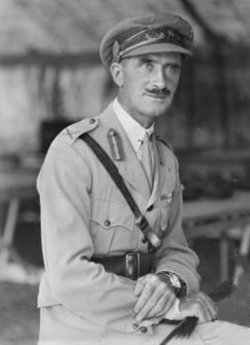
Brigadier-General, British Army
Support & adopt this hero ↓
Some soldiers earn their place in history through a single moment of courage. Brigadier-General Clement Leslie Smith built his reputation over nearly three decades of service, fighting in South Africa, Somaliland, the Sudan, Egypt, and the First World War. His extraordinary gallantry at the Battle of Jidballi earned him the Victoria Cross, while his leadership in later campaigns established him as one of the British Army's most respected officers of his generation.
Clement Leslie Smith was born on 11 December 1880 in London, England, and was educated at Cheltenham College before entering the Royal Military College, Sandhurst. He was commissioned into the Duke of Cornwall's Light Infantry in 1900, joining the British Army during the closing stages of the Second Boer War. Serving in South Africa, he took part in operations across Cape Colony, the Orange Free State, and the Transvaal, earning the Queen's South Africa Medal with five clasps for his service.
Soon after the Boer War, Smith was deployed to British Somaliland, where he took part in the campaign against the forces of Mohammed Abdullah Hassan, widely known by the British as the "Mad Mullah." On 10 January 1904, during the Battle of Jidballi, Smith displayed exceptional courage under heavy enemy fire. Seeing wounded soldiers lying exposed on the battlefield, he repeatedly advanced into dangerous ground to rescue them. He remained beside a wounded medical officer despite intense fire until the officer was killed, refusing to abandon his comrades while there was still hope of saving them. For these actions he was awarded the Victoria Cross, the highest decoration for gallantry in the British Empire. His award was announced in the London Gazette on 15 April 1904.
Smith continued to build an impressive military career after receiving the Victoria Cross. He served with the Egyptian Army in Southern Kordofan in 1910, where his distinguished service earned the Khedive's Sudan Medal with the South Kordofan 1910 clasp. His growing reputation also led to his appointment to the Egyptian Order of the Nile. In 1911, he received the King George V Coronation Medal in recognition of his service during the Coronation celebrations.
During the First World War, Smith served in Egypt and the Middle East, where he played an important role in the Sinai and Palestine campaigns. He commanded formations within the Imperial Camel Corps Brigade and worked alongside many of the officers who shaped Britain's operations in the region. His leadership and devotion to duty earned him the Military Cross and a Mention in Despatches. His wartime service was further recognised by the award of the 1914–15 Star, British War Medal and Victory Medal.
Promoted to Brigadier-General, Smith became known as an experienced commander whose career spanned colonial campaigns and modern industrial warfare. From the plains of South Africa to the deserts of Somaliland, Sudan, Sinai and Palestine, he consistently demonstrated courage, determination and professional leadership under demanding conditions.
Brigadier-General Clement Leslie Smith died on 14 December 1927 at the age of 47. Although his life was comparatively short, his military career was remarkable for both sustained operational service and exceptional gallantry. His Victoria Cross remains the defining symbol of his bravery, but his wider record reflects a soldier whose dedication extended across some of the British Army's most challenging campaigns during the early twentieth century.
Become the named supporter for this profile and edit the tribute biography and portrait (Owner account required). Proceeds help keep the archive online.
$25 USD / year — annual sponsorship renewal. Keeps the page online and, where enabled, the family anniversary remembrance emails active.