★
Loading archive…
Loading archive…

Colonel, U.S. Army
Support & adopt this hero ↓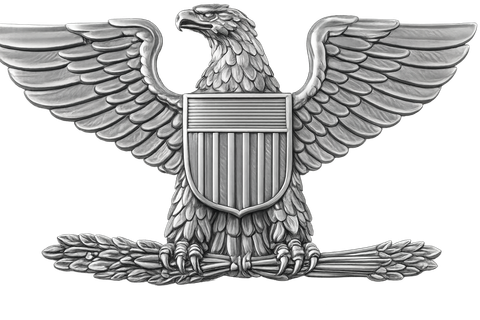
Five cavalrymen held White River against repeated onslaughts
Cornelius Cole Smith earned the Medal of Honor for his conduct near White River, South Dakota, on 1 January 1891. A corporal in Troop K, 6th U.S. Cavalry, he and four other men held their position against repeated attacks by a numerically superior force and subsequently pursued the attackers. His medal was issued on 4 February 1891, during the closing period of the American Indian Wars.
Born on 7 April 1869 in Tucson, Arizona Territory, Smith enlisted in the Regular Army in 1890. He received a commission in the 2nd Cavalry in 1892 and built a long career in mounted service. His wartime service included Cuba during the Spanish-American War era, although his exact 1898 deployment dates and individual combat participation require further confirmation.
From 1903 to 1906, Smith served with the 14th Cavalry in Mindanao during the Moro campaigns. Between August 1904 and February 1905, he commanded a provisional cavalry troop in operations against Datu Ali's forces in the Cotabato Valley. This assignment established his operational command experience, but he should not be credited with leading the final October 1905 action against Datu Ali, which was commanded by Captain Frank R. McCoy.
Smith returned to the Philippines around 1910–1912 for constabulary and district administration responsibilities under General John J. Pershing. These duties were distinct from his earlier field command in Mindanao. His later career included cavalry service at Fort Huachuca and command responsibilities involving the 10th Cavalry, one of the Army's historic Buffalo Soldier regiments.
During World War I, Smith performed military-diplomatic, training and stateside command duties. His wartime service did not include verified combat in France. He retired as a colonel in 1920, having advanced from an enlisted cavalryman to senior Army command.
Smith died on 10 January 1936 in Riverside, California. His career connected the Army's late nineteenth-century frontier campaigns with its overseas expansion and the mobilization of World War I. His Medal of Honor action remains the best documented individual combat engagement in that record.
Become the named supporter for this profile and edit the tribute biography and portrait (Owner account required). Proceeds help keep the archive online.
$25 USD / year — annual sponsorship renewal. Keeps the page online and, where enabled, the family anniversary remembrance emails active.