★
Loading archive…
Loading archive…
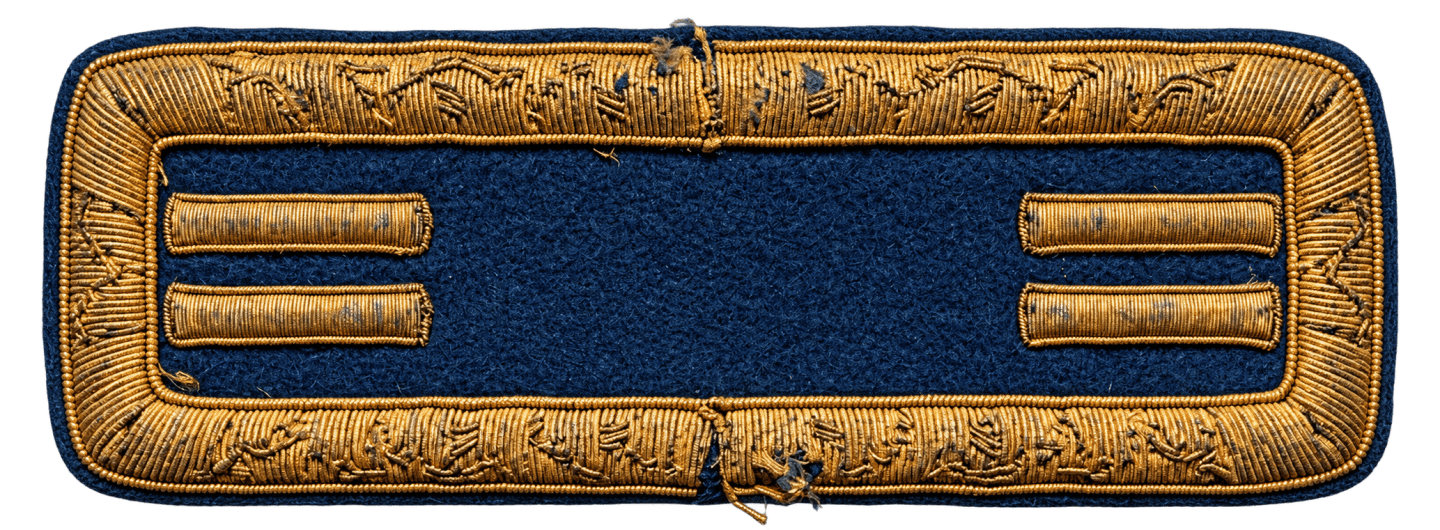
Daniel G. Caldwell was born on June 1, 1842, at Marble Hill in Montgomery County, Pennsylvania. He grew up in the years immediately preceding the American Civil War and eventually entered the Union war effort as a soldier of the United States Army. His military career became associated with Company H, 13th Pennsylvania Cavalry, formally connected with the 117th Pennsylvania Volunteers. The Congressional Medal of Honor Society records his rank during the action that made him famous as Sergeant, while identifying Captain as the highest rank he ultimately attained. Congressional Medal of Honor Society The 13th Pennsylvania Cavalry was a mounted regiment whose service took it through some of the hardest campaigning in the Eastern Theater. The regiment performed scouting, reconnaissance, security, raiding, and conventional cavalry combat and later served with the Army of the Potomac’s Cavalry Corps. Its broader wartime record included operations connected with the Shenandoah Valley, the Wilderness and Spotsylvania campaigns, Cold Harbor, the Petersburg operations, and finally Hatcher’s Run. The U.S. Army Heritage and Education Center preserves an extensive bibliography documenting the regiment’s wartime service. Army Heritage Center Foundation By early 1865, the Civil War had entered its final months. General Robert E. Lee’s Army of Northern Virginia remained entrenched around Petersburg and Richmond, but Union forces under Lieutenant General Ulysses S. Grant were steadily extending their lines and threatening the remaining roads and railroads supplying Lee’s army. One particularly important objective was the Boydton Plank Road, while the South Side Railroad remained another critical Confederate supply connection. This strategic situation produced the fighting known as the Battle of Hatcher’s Run, fought from February 5 through February 7, 1865. Congressional Medal of Honor Society It was during this fighting that Sergeant Daniel G. Caldwell performed the action for which his name entered Medal of Honor history. On February 6, 1865, Caldwell was serving with Company H of the 13th Pennsylvania Cavalry at Hatcher’s Run, Virginia. As Union and Confederate forces struggled through the heavily wooded country southwest of Petersburg, cavalry troops were repeatedly required to attack, maneuver, and exploit openings in the opposing lines. Caldwell took part in a mounted charge against Confederate forces. Congressional Medal of Honor Society During that charge, Caldwell did something extraordinarily dangerous. Rather than remaining with the safer mass of the attacking formation, he rode directly into the center of the Confederate line. There, in the midst of the enemy position, he captured the colors of the 33rd North Carolina Infantry. The Congressional Medal of Honor Society preserves the essential description of his act: during the mounted charge, Caldwell penetrated the enemy line and seized the regiment’s colors. Congressional Medal of Honor Society The significance of capturing enemy colors during the Civil War is difficult to overstate. Regimental flags were not merely ceremonial symbols. On smoke-filled battlefields where verbal orders could be impossible to hear and formations could quickly become disorganized, soldiers used their colors as visual rallying points. A regiment’s flag represented its identity, cohesion, and honor. Color bearers therefore operated in exceptionally dangerous positions, and the soldiers protecting them often fought fiercely to prevent the colors from being taken. For a mounted cavalryman such as Caldwell to seize an enemy infantry regiment’s colors meant entering extremely close combat. It required him to approach the Confederate formation closely enough to reach the flag and then escape or survive while carrying it away. His action was therefore both tactically dangerous and symbolically significant. Caldwell’s heroism was recognized remarkably quickly. Unlike many Civil War soldiers who waited decades before receiving the Medal of Honor, Caldwell received his decoration while the war was still being fought. His action occurred on February 6, 1865, and his Medal of Honor presentation is recorded as February 25, 1865—only nineteen days later. The award was made during his lifetime and was not posthumous. Congressional Medal of Honor Society The Medal of Honor and Caldwell’s Award The Medal of Honor itself was born during the American Civil War. Congress had first authorized a Medal of Honor for naval personnel in 1861. The Army version followed when President Abraham Lincoln approved the Army Medal of Honor legislation on July 12, 1862. It originally provided recognition for noncommissioned officers and enlisted soldiers who distinguished themselves through exceptional gallantry and soldierly conduct. Congress expanded the law in March 1863 to include commissioned officers. Army Caldwell therefore received the decoration during the Medal of Honor’s earliest historical period. He was still a Sergeant, a noncommissioned officer, when he carried out his Hatcher’s Run action—exactly the type of Civil War soldier for whom the original Army Medal of Honor legislation had been created. His official Army record identifies him as: Sergeant, Company H, 13th Pennsylvania Cavalry Action: Hatcher’s Run, Virginia Date: February 6, 1865 Medal of Honor: February 25, 1865 The defining act was his capture of the Confederate colors during the mounted charge. Army For the VictoriaCross.ca database, the decoration is therefore represented as: Medal of Honor 1862–1895 Army — 1865 — No device or clasp The 1865 designation represents the year Caldwell received the decoration. His action and his award occurred in the same year, unlike many Civil War Medal of Honor cases where recognition came decades later. No additional star, clasp, bar, oak leaf cluster, or other device has been established for Caldwell’s Medal of Honor. His award should therefore remain a plain Medal of Honor ribbon with no additional device. Caldwell’s rank requires an important historical distinction. At Hatcher’s Run and in his Medal of Honor record, he was Sergeant. However, the Congressional Medal of Honor Society records his highest rank as Captain. For that reason the hero database correctly uses Captain as his final/highest rank, while any description of his Medal of Honor action must continue to call him Sergeant Daniel G. Caldwell. The sources used here do not provide enough authoritative detail to assign an exact complete promotion chronology without further personnel-record evidence, so the two verified facts should remain separate rather than guessing intermediate dates. Congressional Medal of Honor Society Caldwell’s cavalry background is also why his combat classification is properly Armor / Cavalry rather than Infantry. His Medal of Honor citation explicitly places his act in a mounted charge, and his regiment was the 13th Pennsylvania Cavalry. His defining combat engagement for the present profile is therefore Hatcher’s Run, with the capture of the 33rd North Carolina Infantry’s colors serving as the defining mission of his military career. The Battle of Hatcher’s Run did not by itself end the Petersburg Campaign, but it formed part of Grant’s continuing effort to stretch and weaken Lee’s defenses. Less than two months after Caldwell’s Medal of Honor action, Petersburg and Richmond would fall, Lee would retreat westward, and the Army of Northern Virginia would surrender at Appomattox Court House on April 9, 1865. Caldwell’s action therefore took place during the final great sequence of operations that brought the Eastern Theater of the Civil War to a close. The 13th Pennsylvania Cavalry continued in Federal service beyond the fall of Petersburg. The regiment eventually served in North Carolina and remained in service after the major Confederate surrender before being mustered out in July 1865. Its wartime experience had carried its soldiers through scouting operations, raids, battlefield charges, and the long campaigns that characterized Union cavalry service during the final years of the war. Army Heritage Center Foundation Civil War Campaign Medal The later Army Civil War Campaign Medal should not be treated as part of Caldwell’s verified published medal rack merely because he was unquestionably a Civil War veteran. Caldwell lived until 1917, so he survived into the period when the Army Civil War Campaign Medal had been established. However, under the client project’s strict evidence standard, qualifying wartime service or survival into the medal’s authorization period does not by itself prove recipient-specific issuance. For Caldwell, we have not established sufficiently strong recipient-specific documentation—such as an individual medal roll or issuance record—to add that campaign medal confidently. The final rack therefore remains limited to the award directly supported by his personal decoration record: Medal of Honor 1862–1895 Army — 1865 — No device or clasp. After the Civil War, Caldwell lived for more than half a century. The strongest surviving public military records preserve much more detail about his wartime service and Medal of Honor action than about his later civilian occupation and family life. Rather than filling those years with unsupported assumptions, the historically defensible record is that he survived the war, lived into the twentieth century, and remained recognized as one of the Union Army’s Civil War Medal of Honor recipients. His association with Philadelphia, Pennsylvania, remained important. His Medal of Honor record is accredited to Philadelphia, and it was also there that his life eventually ended. Congressional Medal of Honor Society Daniel G. Caldwell died in Philadelphia on April 15, 1917, at the age of seventy-four. He was buried at Mount Peace Cemetery in Philadelphia, where the Congressional Medal of Honor Society records his grave in Section H, Lot 105, Grave 3. Congressional Medal of Honor Society Caldwell’s military legacy ultimately rests on a single extraordinary moment in the closing months of the Civil War. On February 6, 1865, while serving as a Sergeant of Company H, 13th Pennsylvania Cavalry, he joined a mounted charge at Hatcher’s Run. Instead of merely following the attack, he drove into the center of the Confederate position and captured the colors of the 33rd North Carolina Infantry. Nineteen days later, the United States formally recognized his courage with the Medal of Honor. He later reached the highest verified rank of Captain, but his Medal of Honor will forever preserve the rank he held when he performed his defining act: Sergeant Daniel G. Caldwell. His final verified medal record may contain only one decoration, yet that decoration is the United States’ highest military award for valor and represents an act carried out at extremely close range during one of the final major campaigns of the American Civil War. Congressional Medal of Honor Society
Become the named supporter for this profile and edit the tribute biography and portrait (Owner account required). Proceeds help keep the archive online.
$25 USD / year — annual sponsorship renewal. Keeps the page online and, where enabled, the family anniversary remembrance emails active.