★
Loading archive…
Loading archive…
Corporal, U.S. Army
Support & adopt this hero ↓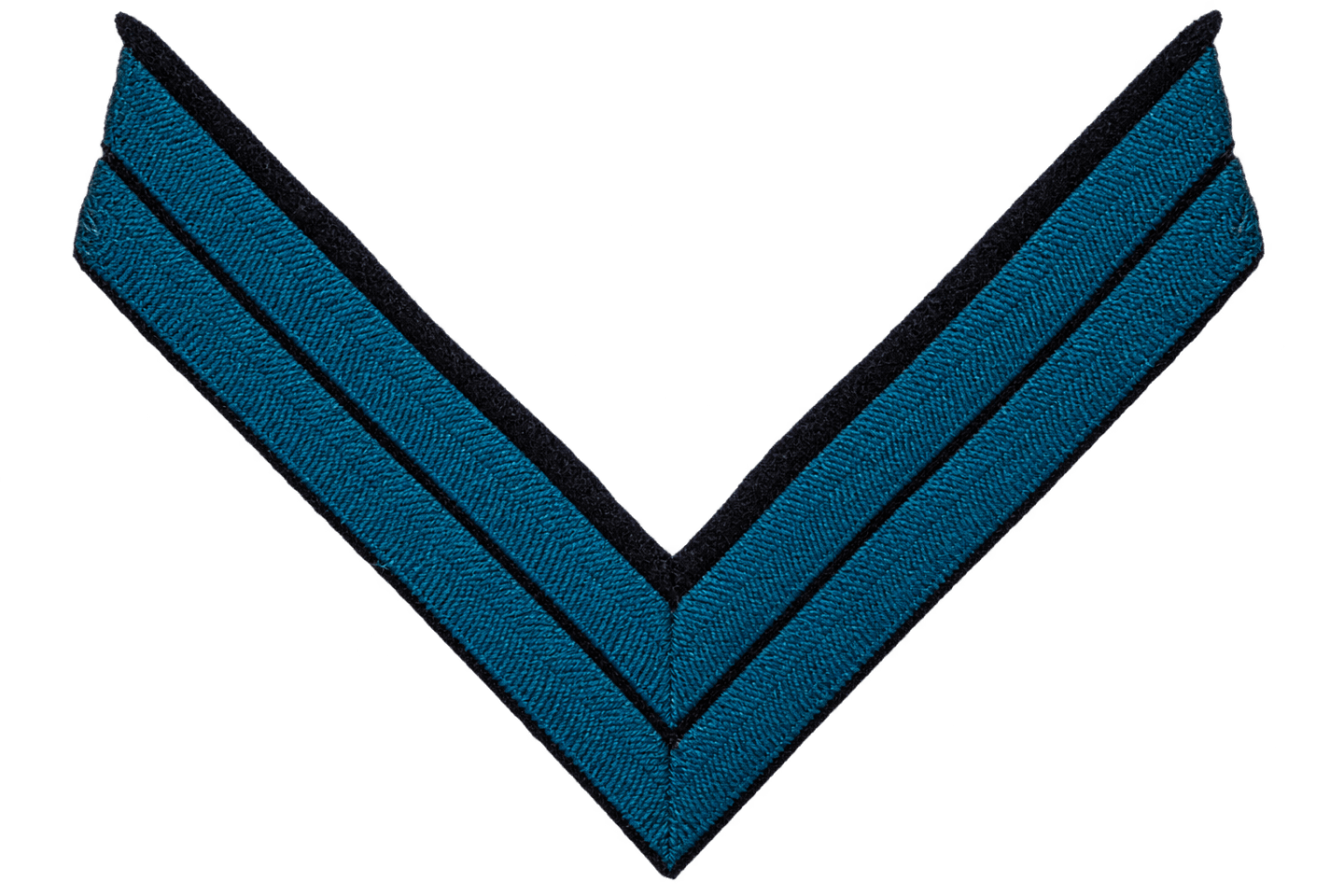
The Line Fell Back—He Charged for the Enemy Flag
Daniel Irving Holcomb was born on November 13, 1845, in Hartford, Trumbull County, Ohio. He grew up in northeastern Ohio during the years immediately preceding the American Civil War, and when the conflict began he was still remarkably young. Nevertheless, Holcomb entered Union military service in 1861 and began a wartime career that would last through nearly the entire conflict and eventually earn him the Medal of Honor.
On August 20, 1861, Holcomb enlisted in the United States Army and became a member of Company A, 41st Ohio Volunteer Infantry. The regiment was organized in Cleveland during the late summer and autumn of 1861 and became part of the Union forces assigned to operations in the Western Theater.
The 41st Ohio developed into one of the Army of the Cumberland’s veteran infantry regiments. Its soldiers would experience years of campaigning across Kentucky, Tennessee, Mississippi, Georgia, and eventually Texas. Holcomb served through this demanding period as an enlisted infantryman.
Early in 1862, the regiment moved south with the Army of the Ohio. Its first major combat came at the Battle of Shiloh in Tennessee on April 6 and 7. Shiloh became one of the first battles to demonstrate the enormous destructive potential of the Civil War. The 41st Ohio suffered heavily, losing more than a third of the men it carried into action.
For a young soldier such as Holcomb, Shiloh was an introduction to warfare on a scale few Americans had previously experienced. Infantry formations fought at close range through woods, fields, and broken terrain while artillery and musketry inflicted severe casualties.
The regiment survived Shiloh and continued campaigning. It participated in the advance against Corinth, Mississippi, and later operated in Alabama before joining the pursuit of Confederate General Braxton Bragg during the Kentucky Campaign.
By the end of 1862, the 41st Ohio was again facing major combat during the Battle of Stones River near Murfreesboro, Tennessee. The fighting there began at the end of December and continued into the opening days of 1863.
The regiment endured another costly battle and remained part of the Army of the Cumberland as Union forces gradually pushed deeper into Tennessee.
During 1863, the 41st Ohio participated in the Tullahoma Campaign and then advanced toward Chattanooga. The campaign eventually brought the regiment into the Battle of Chickamauga in September, one of the bloodiest engagements fought in the Western Theater.
At Chickamauga, Confederate forces defeated much of the Union army and drove it back toward Chattanooga. The 41st Ohio suffered heavily during the fighting but remained part of the veteran force that defended the crucial Union position.
The months that followed brought additional hardship as Confederate forces threatened Chattanooga. Union troops eventually reopened their supply lines, and in November 1863 the Army of the Cumberland went onto the offensive.
The 41st Ohio participated in the dramatic fighting around Chattanooga, including the operations that culminated in the Union assault on Missionary Ridge. The Confederate line was broken, and Union forces secured one of the most important strategic gateways into the Deep South.
By this point, Daniel Holcomb had already spent more than two years in uniform. His service had carried him from the early camps of Ohio through Shiloh, Stones River, Chickamauga, and Chattanooga.
He nevertheless remained in service.
In 1864, the regiment joined Major General William T. Sherman’s Atlanta Campaign. Union armies moved south from Tennessee into Georgia, attempting to destroy Confederate military power and seize Atlanta, one of the South’s most important transportation and industrial centers.
The campaign involved months of marching, skirmishing, artillery fire, defensive construction, and repeated battles. Veteran regiments such as the 41st Ohio were frequently required to move rapidly, attack prepared positions, hold defensive lines, and endure the exhaustion created by nearly continuous operations.
After the fall of Atlanta, Confederate General John Bell Hood attempted to shift the strategic balance by moving his army north into Tennessee. Union forces under Major General George H. Thomas concentrated around Nashville to stop him.
The resulting Battle of Nashville, fought on December 15 and 16, 1864, became one of the most decisive Union victories of the war.
Daniel Holcomb entered the battle as a Private in Company A of the 41st Ohio Infantry.
On December 16, the second day of fighting, Union troops attacked Confederate positions south of Nashville in the area associated with Brentwood Hills and Overton Hill.
The Confederate defenses were formidable. Infantry occupied prepared earthworks supported by artillery, and Union soldiers advancing against them faced open ground swept by musket and cannon fire.
The 41st Ohio moved forward as part of the Union attack.
During the fighting, Holcomb and several other soldiers advanced aggressively toward the Confederate position. The larger Union movement encountered severe resistance, and portions of the attacking line fell back.
Holcomb did not simply disappear into the retreat.
He remained close to the enemy position with a small number of comrades.
As Confederate resistance began collapsing and soldiers withdrew from their works, Holcomb moved forward and captured a Confederate guidon.
A guidon was more than a piece of cloth. It represented the identity and presence of a military formation and served as a visible rallying and alignment point. During Civil War combat, capturing an enemy flag or guidon carried considerable tactical and symbolic importance.
Such colors were normally protected by soldiers who understood that losing them to the enemy was a serious humiliation to the unit.
Holcomb therefore had to move into extremely dangerous ground to seize the Confederate guidon.
His official Medal of Honor citation later reduced the entire action to four words:
“Capture of Confederate guidon.”
The brevity of that citation should not disguise the danger of the achievement. Holcomb performed the action during the collapse of a Confederate defensive line while Union and Confederate infantry were still engaged at close range.
The Battle of Nashville ended in overwhelming Confederate defeat. Hood’s Army of Tennessee was shattered as an effective offensive force, and the surviving Confederates retreated southward under relentless Union pressure.
For Holcomb, December 16, 1864 became the defining day of his military career.
Recognition came quickly compared with the experience of many Civil War Medal of Honor recipients.
On February 20, 1865, Holcomb was promoted to Corporal. This became his highest verified Army rank.
Two days later, on February 22, 1865, Daniel Irving Holcomb was formally presented with the Medal of Honor for his conduct at Brentwood Hills.
The Medal of Honor was still a relatively new decoration.
Congress had authorized the Army Medal of Honor in 1862, during the early years of the Civil War. At the time, the United States did not possess the extensive hierarchy of combat decorations that would exist in later generations.
There was no Distinguished Service Cross or Silver Star in the modern system. For Union soldiers, the Medal of Honor therefore became the principal national decoration available for extraordinary military conduct.
Flag captures became one of the most frequently recognized forms of Civil War battlefield gallantry. This was not because flags were merely valuable trophies. They were critical symbols of military organization and were usually positioned in some of the most dangerous areas of a battlefield.
Holcomb’s award belonged directly to this early Medal of Honor tradition.
His heroic action took place on December 16, 1864.
His Medal of Honor was presented on February 22, 1865.
For the historical database, the correct verified representation is Medal of Honor 1862–1895 Army — 1865.
Holcomb received one Medal of Honor.
No additional star, clasp, bar, oak leaf cluster, or other device has been verified with the decoration.
His final verified decoration therefore remains Medal of Honor 1862–1895 Army — 1865 — no device or clasp.
Receiving the Medal of Honor did not immediately end Holcomb’s Army service.
The Civil War was entering its final months, but the enormous Union military establishment could not simply disappear when major Confederate armies surrendered. Regiments still had duties to perform while troops were demobilized and Federal authority was reestablished.
The 41st Ohio remained in service after the principal Confederate surrender in the spring of 1865. Later that year the regiment was sent to Texas as part of the Federal military presence there.
Holcomb remained with the organization through this final stage of service.
On November 27, 1865, the 41st Ohio was mustered out, bringing Holcomb’s military career to an end after more than four years in uniform.
He had entered the Army in 1861 as a very young Private.
He left it as Corporal Daniel Irving Holcomb, veteran of the Western Theater and recipient of the Medal of Honor.
Civilian life required another transformation.
After returning from military service, Holcomb entered business and sales work. During the postwar decades he lived at different times in Ohio and Iowa before eventually making Missouri his permanent home.
By 1879, he had moved to Sedalia, Missouri, a rapidly developing railroad and commercial community in the central part of the state.
Holcomb became involved in the civic life of his adopted city. His military background remained important, and he maintained connections with veterans and local military organizations.
He became a captain in the Queen City Guards, a local military organization that allowed veterans and younger men to continue participating in organized drill and public military activities during the postwar period.
Holcomb also became active in the Grand Army of the Republic, the influential organization composed of Union veterans. The GAR became one of the most important veterans’ associations in nineteenth-century America, promoting comradeship, remembrance, assistance for veterans, and preservation of the Union war experience.
His public involvement extended beyond veterans’ affairs.
Holcomb became active in Republican politics in Sedalia and served in municipal government. He was elected to the city council and at one point served as president of the council.
The transition was striking.
The Private who had advanced through Confederate fire in Tennessee was now participating in the routine government and civic development of a growing Missouri city.
For decades, Holcomb remained one of the thousands of Civil War veterans who carried their military experiences into American public life. Men who had fought at places such as Shiloh, Chickamauga, Atlanta, and Nashville became businessmen, public officials, community leaders, and members of veterans’ organizations.
Holcomb’s Medal of Honor gave his military record particular distinction.
Unlike many Civil War veterans who received the decoration decades after their battlefield actions, Holcomb had been recognized while still in military service. He therefore carried the Medal of Honor identity throughout virtually his entire adult civilian life.
As the nineteenth century drew toward its end, the war in which he had fought increasingly became a matter of national memory. Veterans gathered for reunions, regimental histories were written, monuments appeared on battlefields, and communities commemorated the soldiers who had fought to preserve the Union.
Holcomb lived through that transformation.
He had known the Civil War as a teenager carrying a rifle through major battles.
Later generations knew it through monuments, books, veterans’ stories, and ceremonies.
Yet one moment in Holcomb’s life remained unchanged in the official military record.
December 16, 1864.
Brentwood Hills, Tennessee.
Private Daniel Irving Holcomb of Company A, 41st Ohio Infantry moved into the collapsing Confederate position and captured an enemy guidon.
The United States formally recognized him only sixty-eight days later.
Daniel Irving Holcomb died on December 14, 1900, in Sedalia, Missouri, two days before the thirty-sixth anniversary of his Medal of Honor action. He was fifty-five years old.
He was buried in Crown Hill Cemetery in Sedalia.
His life had begun in rural northeastern Ohio and passed through some of the most violent battlefields of the American Civil War before ending in the Missouri community where he had built his postwar life.
Holcomb’s military story is remarkable not because he entered the Army as a senior officer or professional soldier.
He did neither.
He entered as an enlisted volunteer.
He endured years of campaigning with the 41st Ohio.
He survived the brutal Western Theater.
And during the Battle of Nashville, when an attack recoiled and Confederate defenses were still dangerous, he remained close enough to the enemy to seize one of their colors.
His single verified decoration remains Medal of Honor 1862–1895 Army — 1865 — no device or clasp.
Daniel Irving Holcomb’s legacy can therefore be reduced to one cinematic battlefield image: the Union line falling back, a Confederate position beginning to break, and a young Private moving forward instead of backward—returning with the enemy’s guidon in his hands.
Become the named supporter for this profile and edit the tribute biography and portrait (Owner account required). Proceeds help keep the archive online.
$25 USD / year — annual sponsorship renewal. Keeps the page online and, where enabled, the family anniversary remembrance emails active.