★
Loading archive…
Loading archive…
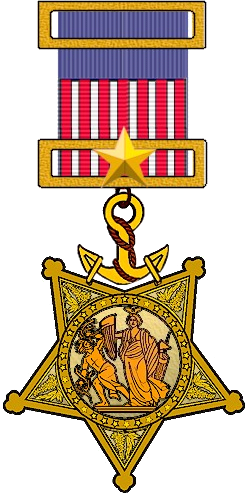
Quarter Gunner, U.S. Navy
Support & adopt this hero ↓
Daniel Scammon Milliken was a United States Navy sailor whose Civil War service placed him aboard one of the Union Navy’s most powerful ironclad warships. He served as a Quarter Gunner aboard USS New Ironsides, a heavily armored vessel that played a major role in attacks against Confederate coastal defenses. His courage under fire during these operations ultimately earned him the Medal of Honor.
USS New Ironsides was one of the most important armored warships in the Union fleet. Built for heavy combat against fortified positions, the ship carried powerful guns and thick armor and was repeatedly used in dangerous operations along the Confederate coast. Serving aboard such a vessel meant operating under constant threat from enemy artillery, mines, and close-range fire.
As a Quarter Gunner, Milliken held a specialized enlisted position connected with the ship’s armament and gunnery operations. Quarter Gunners assisted with the management, maintenance, and readiness of naval guns and ammunition. During combat, these responsibilities became especially demanding because the effectiveness of the ship depended on maintaining an accurate and sustained rate of fire while under enemy attack.
Milliken’s most important wartime service came during Union operations against Charleston, South Carolina. Charleston was one of the Confederacy’s most strategically and symbolically important ports, and its surrounding forts presented a formidable obstacle to Union naval forces.
USS New Ironsides participated in repeated attacks on Confederate fortifications in Charleston Harbor. These operations exposed the ship and its crew to heavy artillery fire from shore batteries. Despite the protection offered by iron armor, the crew remained vulnerable to direct hits, flying fragments, mechanical failures, and the possibility of catastrophic damage.
During these actions, Daniel Milliken remained at his assigned station and continued to perform his duties under fire. His conduct demonstrated the discipline expected of an experienced naval gunner and the personal courage required to keep a warship fighting during sustained bombardment.
For his bravery and faithful performance of duty during combat aboard USS New Ironsides, Milliken was awarded the Medal of Honor. The decoration recognized his conduct during the dangerous naval operations against Confederate defenses.
The Medal of Honor was still a relatively new decoration during the American Civil War. The Navy Medal of Honor had been authorized in 1861 and was used to recognize sailors and Marines who displayed extraordinary courage, devotion to duty, and exceptional conduct in battle.
During the Civil War, the Navy did not yet possess the later system of decorations such as the Navy Cross, Silver Star, or other modern awards. The Medal of Honor therefore served as the principal national recognition for extraordinary naval valor.
Milliken’s Medal of Honor belongs to the historical Navy category represented in the project database as Medal of Honor 1862–1912 Navy. No additional star, clasp, bar, or other device is associated with his award.
His final medal history for the project therefore consists of one verified decoration:
Medal of Honor 1862–1912 Navy — No device or clasp
The Navy Civil War Medal is not included in Milliken’s final rack under the project’s client-specific rules. Although he unquestionably served in the United States Navy during the Civil War, the naval Civil War service medal was created decades after the conflict.
For this project, Navy and Marine Civil War veterans are treated separately from Army veterans. The Army Civil War Campaign Medal is not used for Navy personnel, and the separate Navy Civil War Medal is considered only when the individual was still alive during the relevant early twentieth-century issuance period.
Daniel Milliken died on May 3, 1899. Because he died before 1909, the Navy Civil War Medal is not included in his profile under the project’s current correction rules.
This distinction is important because it prevents a medal from being added merely because someone performed qualifying Civil War service. The project requires evidence and historical eligibility to be matched carefully to the individual veteran.
Milliken’s military legacy is therefore centered on his Medal of Honor. His award reflects not simply his presence aboard USS New Ironsides, but his conduct while serving in a heavily engaged Union warship under enemy fire.
His service also represents the changing character of naval warfare during the Civil War. The conflict saw the rapid development of ironclad ships, armored monitors, heavy naval artillery, and increasingly powerful coastal defenses.
USS New Ironsides became one of the Union Navy’s principal armored vessels in this transformation. Its crew fought in conditions very different from traditional wooden-ship warfare, operating close to fortified shore batteries while relying on armor and heavy guns to survive.
Milliken served within this new environment as an enlisted specialist responsible for gunnery duties. His position demanded technical knowledge, discipline, physical endurance, and calm behavior during battle.
The work of naval gunners was physically exhausting and extremely dangerous. Guns had to be loaded, aimed, fired, cleaned, and prepared repeatedly while the ship itself might be shaking from recoil or enemy impacts.
Explosive shells and solid shot could strike the armor or penetrate vulnerable areas, while smoke and heat filled the gun decks. Under such conditions, maintaining an effective rate of fire required both teamwork and individual courage.
Milliken’s Medal of Honor represents his ability to continue performing these duties during combat. His courage was expressed through professional discipline and persistence under fire rather than through a single isolated act detached from his naval responsibilities.
His combat specialty should be understood as Surface Naval. He served aboard an armored surface warship engaged directly against Confederate coastal fortifications, making Surface Naval the most historically accurate classification for his military role.
He should not be classified as a naval commander because there is no evidence that he commanded a ship or naval formation. His importance lies in his service as an enlisted Navy gunner whose work directly supported the combat effectiveness of USS New Ironsides.
After the Civil War, Milliken returned to civilian life and lived for several decades after the conflict. Like many Civil War veterans, he carried into the postwar era the experience of a conflict that had transformed both the United States and modern military technology.
Daniel Scammon Milliken died in 1899, more than three decades after the end of the Civil War. His life therefore bridged the era of Civil War ironclads and the beginning of the modern steel Navy.
His story is a reminder that the effectiveness of famous warships depended on the sailors who served deep inside them. Officers could direct operations, but enlisted specialists such as Milliken kept the guns functioning and ensured that the ship remained capable of fighting.
Daniel Scammon Milliken’s place in military history rests on his courage as a United States Navy sailor during the Civil War. As a Quarter Gunner aboard USS New Ironsides, he served under dangerous combat conditions and earned the highest military decoration of the United States.
His final project medal record remains simple but significant: one Medal of Honor, representing extraordinary naval service during one of the most transformative periods in American military history.
Become the named supporter for this profile and edit the tribute biography and portrait (Owner account required). Proceeds help keep the archive online.
$25 USD / year — annual sponsorship renewal. Keeps the page online and, where enabled, the family anniversary remembrance emails active.