★
Loading archive…
Loading archive…

Captain, U.S. Army
Support & adopt this hero ↓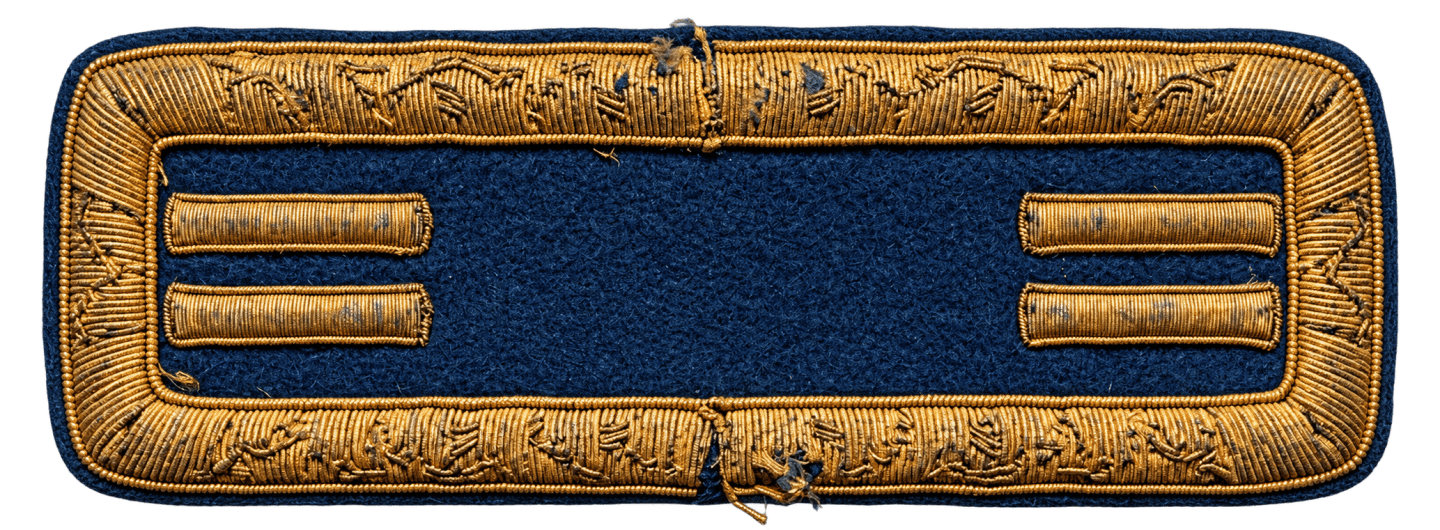
He Swam a Frozen Creek Under Fire to Take the Crossing
David Eastburn Buckingham was born in Pleasant Hill, Delaware, and came of age during a period when the United States was moving toward the crisis that became the American Civil War. When the conflict demanded military service, Buckingham entered the Union Army and became an officer in Company E of the 4th Delaware Infantry. His military career would eventually carry him from First Lieutenant to Captain and place him at the center of one of the most dangerous small-unit actions of the closing months of the war.
Buckingham served as an infantry officer at a time when Union forces were tightening their operations around Petersburg and Richmond, Virginia. By early 1865 the Confederacy was under enormous pressure, but its forces continued defending roads, railways, bridges and waterways that remained vital to military movement. Control of even a single crossing could determine whether an advancing formation maintained momentum or became trapped under enemy fire.
On February 5, 1865, Buckingham was serving as a First Lieutenant with Company E, 4th Delaware Infantry, during operations at Rowanty Creek, Virginia. The action occurred during the wider fighting associated with the Hatcher’s Run operations, as Union troops attempted to extend their reach against Confederate positions and transportation routes southwest of Petersburg.
When the Union soldiers reached Rowanty Creek, they faced a serious obstacle. The crossing was contested, the water was dangerously cold, and the creek was partly frozen. Confederate forces were positioned to resist the advance, meaning anyone attempting to enter the water would be exposed not only to the freezing conditions but also to enemy fire.
Buckingham chose to move forward. Rather than waiting for a safer opportunity, he entered the partly frozen creek while under fire and attempted to reach the opposite side so the crossing could be captured. The combination of icy water, battlefield confusion and hostile fire transformed what might otherwise have been a simple river crossing into an act of extraordinary personal risk.
Swimming in military clothing and equipment was dangerous even under calm conditions. At Rowanty Creek, Buckingham had to contend with freezing water while enemy fire continued around the attacking troops. Nevertheless, he pressed into the creek as part of the effort to secure a route for the Union advance.
His action was not performed from the safety of a command post. Although he was an officer, Buckingham personally entered the danger facing his men. His decision demonstrated the kind of frontline leadership in which an officer accepted the same immediate physical risks expected of the soldiers under his command.
For his courage at Rowanty Creek, David Eastburn Buckingham was awarded the Medal of Honor. His official citation recorded the essential act in direct terms: he swam the partly frozen creek under fire in an attempt to capture the crossing. Like many Civil War-era Medal of Honor citations, the wording was brief, but the simplicity of the language reflected the clarity of the deed itself.
The Medal of Honor was issued to Buckingham in 1895, three decades after the action. Such delayed recognition was not unusual among Civil War veterans. During the years after the conflict, wartime records and recommendations continued to be reviewed, and a number of soldiers received formal recognition long after returning to civilian life.
Buckingham’s award belonged to the early Army Medal of Honor tradition. During the Civil War there was no extensive American system of individual combat decorations comparable to the later Distinguished Service Cross, Silver Star and other awards. The Medal of Honor therefore became the principal national decoration through which exceptional courage could be formally recognized.
For Buckingham’s final medal record, the Medal of Honor is the verified decoration associated with his service. No additional clasp, star, bar or device is attached to his Medal of Honor. No other campaign or service medal is included without recipient-specific evidence establishing that it was personally awarded or issued to him.
The Rowanty Creek action also illustrates the importance of infantry mobility during the final stages of the Petersburg Campaign. Rivers, streams, roads and bridges were not simply geographical features; they could determine whether entire military formations could continue advancing. A defended crossing could halt an attack, while capturing it could open the route for thousands of soldiers following behind.
Buckingham’s role in that moment was therefore both personal and operational. His Medal of Honor recognized his individual bravery, but the purpose of his action was larger: securing access across the creek so Union forces could continue their movement against Confederate positions.
The action occurred only a few months before the Civil War ended. By February 1865, Confederate forces around Petersburg were increasingly strained, and Union forces were constantly probing and extending their lines. The Hatcher’s Run operations formed part of that pressure, pushing the fighting farther west and threatening the remaining transportation routes supporting the Confederate position.
Buckingham survived the action and continued his military career. Although he was a First Lieutenant during the deed for which he received the Medal of Honor, he eventually attained the rank of Captain, the highest verified rank associated with his service. This distinction is important because his Medal of Honor story belongs specifically to First Lieutenant Buckingham, while Captain represents the highest rank he later achieved.
After the war, Buckingham joined the large generation of Union veterans who returned to civilian life carrying memories of battles that had transformed the country. Decades later, the Medal of Honor formally connected his name with the freezing waters of Rowanty Creek and ensured that the courage displayed there would remain part of the historical record.
David Eastburn Buckingham lived until 1915, surviving the Civil War by half a century. By the end of his life, the battlefield on which he had fought belonged to another era, but the action that defined his military legacy remained unchanged: a young infantry officer entered a partly frozen creek while enemy fire swept the crossing because the mission required someone to move forward.
His story is remembered not for a large command, a famous speech or a sweeping strategic decision, but for a single choice made in the middle of danger. At Rowanty Creek, Buckingham faced freezing water, enemy fire and an uncertain outcome, yet he continued toward the objective. That act earned him the Medal of Honor and secured his place among the soldiers whose courage became part of the enduring history of the United States Army.
Become the named supporter for this profile and edit the tribute biography and portrait (Owner account required). Proceeds help keep the archive online.
$25 USD / year — annual sponsorship renewal. Keeps the page online and, where enabled, the family anniversary remembrance emails active.