★
Loading archive…
Loading archive…
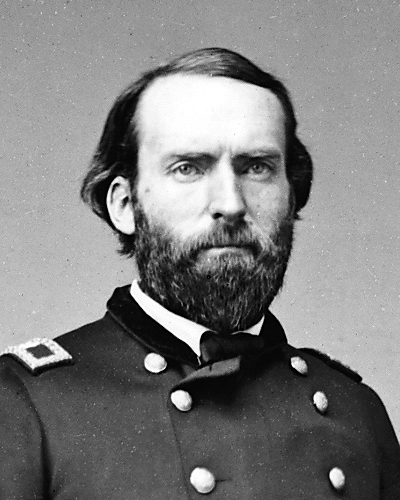
Major General, U.S. Army
Support & adopt this hero ↓
Gallantry at Franklin Earned the Medal of Honor
David Sloane Stanley (June 1, 1828 – March 13, 1902) was a United States Army officer, Union major general, and Medal of Honor recipient whose military career spanned four decades. He distinguished himself during the American Civil War, particularly at the Battle of Franklin, Tennessee, on November 30, 1864, when he personally led a counterattack that restored a threatened Union defensive line. His courage earned him the Medal of Honor on March 29, 1893.
Born in Cedar Valley, Wayne County, Ohio, Stanley was the son of John Bratton Stanley and Sarah Peterson Stanley. Raised in a farming family, he received his early education in Ohio before gaining admission to the United States Military Academy at West Point in 1848. He graduated ninth in the class of 1852 and received an assignment to the 2nd United States Dragoons.
During his early military career, Stanley served on the American frontier and participated in surveying expeditions associated with proposed railroad routes to the Pacific coast. He subsequently served with the 1st United States Cavalry in Kansas and other western territories. His responsibilities included frontier patrols, reconnaissance, and military operations during the conflicts involving the United States government and Native American nations.
Stanley married Anna Maria Wright on April 2, 1857, and the couple had seven children. He continued his Regular Army service and was promoted to Captain in March 1861, shortly before the outbreak of the American Civil War.
When the Civil War began, Stanley remained loyal to the Union. He led his command from Arkansas toward Union-held territory and became involved in military operations in Missouri. His service during the early stages of the conflict brought rapid advancement, and he was appointed Brigadier General of United States Volunteers on September 28, 1861.
In 1862, Stanley commanded infantry formations during Union operations against Confederate positions along the Mississippi River. He participated in the campaigns against New Madrid and Island No. 10, followed by the Siege of Corinth, Mississippi. Later that year, he commanded a division during the battles of Iuka and Second Corinth, contributing to Union victories in the western theater.
His successful performance led to additional responsibilities. In November 1862, he became Chief of Cavalry of the Army of the Cumberland under Major General William S. Rosecrans. Stanley directed cavalry operations during the Battle of Stones River, fought from December 31, 1862, to January 2, 1863. His service during the campaign earned recognition through a brevet appointment in the Regular Army.
Stanley advanced to Major General of United States Volunteers, with his appointment dated November 29, 1862. During the Tullahoma Campaign in the summer of 1863, he commanded cavalry forces that performed essential reconnaissance, screening, and security duties as the Union army advanced through Tennessee.
In late summer 1863, Stanley became seriously ill and was unable to accompany the army into the Battle of Chickamauga on September 19–20. Although his cavalry command was associated with the wider campaign, Stanley was absent from the battle itself and should not be recorded as a personal participant.
After recovering, Stanley returned to active duty in November 1863 and assumed command of the First Division of the IV Corps. He participated in operations associated with the relief of Knoxville, Tennessee, where Confederate forces under Lieutenant General James Longstreet had threatened Union troops commanded by Major General Ambrose E. Burnside.
In May 1864, Stanley joined Major General William Tecumseh Sherman's Atlanta Campaign as a division commander in the IV Corps of the Army of the Cumberland. His troops participated in major operations around Dalton, Resaca, Dallas, Kennesaw Mountain, and other positions defending the Confederate approaches to Atlanta.
During the campaign, Stanley demonstrated his ability to command large infantry formations under demanding battlefield conditions. In July 1864, he succeeded Major General Oliver O. Howard as commander of the IV Corps, taking responsibility for a substantial Union force operating against Confederate armies in Georgia.
Stanley continued commanding the corps through the remaining stages of the Atlanta Campaign, including the fighting around Jonesborough. The Union capture of Atlanta in September 1864 represented a major strategic achievement and weakened Confederate control of Georgia.
Following the fall of Atlanta, Stanley's military assignment diverged from Sherman's next major operation. Rather than accompanying Sherman on his March to the Sea, Stanley and the IV Corps were directed toward Tennessee to help defend the state against General John Bell Hood's advancing Confederate Army of Tennessee.
Working with Union forces under Major Generals George H. Thomas and John M. Schofield, Stanley became involved in the Franklin–Nashville Campaign. The Union commanders sought to prevent Hood from defeating their divided forces before they could concentrate around Nashville.
On November 29, 1864, Union troops maneuvered past Confederate forces near Spring Hill, Tennessee, and continued withdrawing toward Franklin. The following day, Hood launched a major assault against the Union defensive positions outside the town.
The Battle of Franklin, fought on November 30, 1864, became one of the most devastating engagements of the western theater. Confederate infantry attacked strongly defended Union positions, and the fighting near the center of the Federal line developed into a desperate struggle.
During the Confederate assault, portions of Brigadier General George D. Wagner's division became disorganized, and the Union defenses faced a dangerous breakthrough.
At this critical moment, Stanley rode toward the threatened position and personally took part in restoring the defensive line. He rallied soldiers of one of his brigades and led them forward in a successful counterattack against the advancing Confederate troops.
His direct intervention helped stabilize the Union position during the intense fighting. While leading the action, Stanley was wounded in the neck, and his horse was shot beneath him. The injury forced him to leave the battlefield for medical treatment.
Stanley's conduct during the counterattack became the defining act of his military career. His official Medal of Honor citation recognized his decision to ride forward at a critical moment, restore his brigade's lines, and lead a successful assault.
The Battle of Franklin ended with Confederate forces suffering devastating losses. Union troops subsequently withdrew toward Nashville, where the campaign continued under Major General George H. Thomas.
Because of his wound, Stanley remained away from active command during the Battle of Nashville in December 1864. He returned to command of the IV Corps in January 1865, after the major fighting of the Franklin–Nashville Campaign had concluded.
During the final months of the Civil War, Stanley continued his military responsibilities. In June 1865, he led the IV Corps to Texas as the United States reinforced its military presence near the Mexican border. His headquarters were established at several locations, including Victoria and San Antonio.
Stanley was mustered out of volunteer service in February 1866 but continued his career in the Regular Army. He was appointed Colonel of the 22nd United States Infantry and served at military posts throughout the American West.
In 1873, Stanley commanded an important expedition along the Yellowstone River in Montana Territory. The expedition explored and documented parts of the northern Great Plains while providing military protection for surveying activities. Among the forces accompanying the expedition were cavalry troops commanded by Lieutenant Colonel George Armstrong Custer.
Stanley later served in Texas and New Mexico during continued frontier military operations. In March 1884, he was promoted to Brigadier General in the Regular Army and appointed commander of the Department of Texas. Although this was his highest permanent Regular Army rank, he had previously held the higher rank of Major General in the volunteer forces during the Civil War.
After approximately forty years of military service, Stanley retired from active duty on June 1, 1892.
His wartime bravery received formal national recognition on March 29, 1893, when he was awarded the United States Army Medal of Honor for his conduct at the Battle of Franklin. The award specifically commemorated his personal leadership and courage in restoring a threatened Union position during the Confederate assault.
Following his retirement, Stanley remained associated with military veterans and public service. From September 1893 until April 1898, he served as Governor of the Soldiers' Home in Washington, D.C., an institution providing accommodation and care for former military personnel.
His extensive military experiences were later preserved in his autobiography, Personal Memoirs of Major-General D. S. Stanley, U.S.A., published posthumously in 1917.
David Sloane Stanley died in Washington, D.C., on March 13, 1902, at the age of seventy-three. He was buried in the United States Soldiers' and Airmen's Home National Cemetery.
Stanley's legacy reflects a distinguished career of military leadership from the western frontier to the major campaigns of the American Civil War. His service included infantry and cavalry command, the Atlanta Campaign, the defense of Tennessee, and later frontier operations.
His Medal of Honor remains a lasting recognition of his extraordinary courage at Franklin on November 30, 1864, when he personally led Union soldiers in a successful counterattack despite the immediate danger to his own life.
Become the named supporter for this profile and edit the tribute biography and portrait (Owner account required). Proceeds help keep the archive online.
$25 USD / year — annual sponsorship renewal. Keeps the page online and, where enabled, the family anniversary remembrance emails active.