★
Loading archive…
Loading archive…
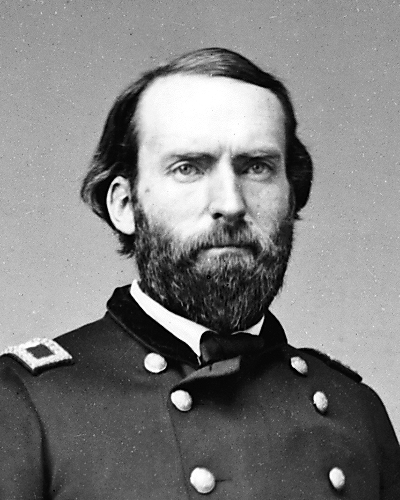
Major General, U.S. Army
Support & adopt this hero ↓
David Sloane Stanley was a career officer of the United States Army whose military service spanned the antebellum era, the American Civil War, and the long period of western frontier duty that followed. He became one of the most experienced Union commanders of his generation and later received the Medal of Honor for personal gallantry during the Battle of Franklin in 1864.
Stanley was born on June 1, 1828, in Cedar Valley, Ohio. He entered the United States Military Academy at West Point and graduated in 1852. After graduation, he began his professional Army career as a cavalry officer, serving in the years before the Civil War on the expanding western frontier.
His early Regular Army service exposed him to mounted operations, long-distance campaigning, reconnaissance, and the difficult conditions of frontier military life. These experiences gave Stanley a strong background in cavalry operations and field command before the country entered the Civil War.
When the Civil War began in 1861, Stanley remained loyal to the United States and quickly assumed increasingly important responsibilities. His professional military training and prewar experience made him valuable at a time when the Union Army was rapidly expanding and needed experienced officers.
Stanley initially became closely associated with cavalry operations. He served in important western campaigns and gradually advanced in command as the war developed.
During the early part of the conflict, he participated in operations connected with the Union campaigns in Missouri and the Mississippi Valley. His career then moved into increasingly senior field responsibilities.
Stanley took part in the Battle of New Madrid and the operations against Island No. 10 in 1862. These actions formed part of the Union effort to gain control of the Mississippi River and weaken Confederate defenses in the western theater.
He later served during the campaign leading to the Battle of Corinth, Mississippi, another important Union operation against Confederate forces in the region.
As Stanley’s responsibilities increased, he was promoted and placed in command of larger formations. His career gradually shifted from primarily cavalry-related assignments to command responsibilities involving infantry and combined field forces.
He served during the major campaigns of the Army of the Cumberland and took part in some of the most important operations in the western theater.
Stanley participated in the Battle of Stones River, fought from late December 1862 into early January 1863 near Murfreesboro, Tennessee. The battle was one of the bloodiest engagements of the war and ended with Confederate withdrawal, allowing the Union to maintain control of central Tennessee.
He later participated in the Tullahoma Campaign, a skillfully conducted Union operation that forced Confederate forces out of middle Tennessee with comparatively limited major fighting.
Stanley also served during the Chickamauga Campaign in 1863. The Battle of Chickamauga became one of the most significant Confederate victories in the western theater and placed Union forces under great pressure around Chattanooga.
The subsequent Chattanooga Campaign restored Union control of the region and opened the way for later operations deeper into the Confederacy.
By 1864, Stanley had become a highly experienced senior commander. He served during the Atlanta Campaign, where Union forces under Major General William T. Sherman advanced through Georgia against the Confederate Army of Tennessee.
The Atlanta Campaign required continuous movement, defensive maneuvering, assaults against entrenched positions, and sustained pressure on Confederate forces. Stanley’s experience in field command became increasingly important as the Union armies advanced southward.
Later in 1864, he assumed command of the IV Corps of the Army of the Cumberland. This placed him in command of a major Union formation during the critical Tennessee Campaign.
The defining action of Stanley’s military career occurred on November 30, 1864, during the Battle of Franklin, Tennessee.
The Battle of Franklin developed when Confederate forces under General John Bell Hood launched a massive frontal assault against Union defensive positions south of Nashville.
The Confederate attack struck the Union line with enormous force. In several places, Confederate soldiers penetrated or disrupted the Federal defenses, creating a dangerous situation for the Union army.
At a critical moment in the battle, Stanley personally moved to the front.
Rather than remaining safely behind the lines as a senior corps commander, he went directly into the fighting and helped rally Union troops whose position had become unstable.
Stanley moved in front of one of his brigades and assisted in reestablishing the line.
He then helped lead a successful counterattack against Confederate troops who had broken into the Union position.
During this action, Stanley was wounded.
His willingness to expose himself personally to enemy fire while restoring order during a critical moment became the basis for his later Medal of Honor recognition.
The Battle of Franklin was one of the most destructive engagements of the Civil War for the Confederate Army of Tennessee. Hood’s repeated frontal assaults caused devastating losses among Confederate officers and soldiers.
The Union army successfully held its position before withdrawing toward Nashville as part of its broader operational plan.
Stanley’s conduct at Franklin became the most celebrated act of personal bravery in his long military career.
For his actions on November 30, 1864, David Sloane Stanley was awarded the Medal of Honor.
The Medal of Honor had been created during the Civil War as the highest military decoration of the United States. The Army version was authorized in 1862 and was awarded for extraordinary acts of courage and distinguished conduct.
Stanley’s Medal of Honor belongs to the historical category Medal of Honor 1862–1895 Army.
His award recognized his personal leadership at Franklin, specifically his decision to move forward during the crisis, rally troops, restore the line, and participate directly in the successful counterattack.
The decoration was issued to him on March 29, 1893, nearly three decades after the battle.
The long delay between Stanley’s heroic action and the formal award was not unusual among some Civil War Medal of Honor recipients. Many actions were reviewed years after the war, and veterans were sometimes formally recognized long after the events had taken place.
Stanley’s Medal of Honor carried no additional clasp, star, bar, or other device.
After Franklin, Stanley continued his military service. The war soon moved toward its conclusion, but his Army career did not end with the defeat of the Confederacy.
Following the Civil War, Stanley returned to Regular Army service and became heavily involved in operations across the western United States.
His postwar duties included command and administrative assignments in areas where the Army was responsible for protecting transportation routes, military posts, settlements, and federal interests across a vast region.
Stanley served for many years in the frontier Army and became one of the senior officers associated with the difficult military environment of the postwar West.
His later career included service connected with operations involving Native American groups during the period commonly known as the Indian Campaigns.
He held increasingly senior Regular Army responsibilities and eventually became a Brigadier General in the Regular Army.
This distinction is important when understanding Stanley’s rank history. During the Civil War, he reached the rank of Major General of U.S. Volunteers. In the permanent Regular Army, he later held the rank of Brigadier General.
His highest wartime volunteer rank was therefore Major General, while his later permanent Regular Army rank was Brigadier General.
Stanley’s postwar assignments reflected the professional continuity of his Army career. Unlike many Civil War generals who returned to civilian life, Stanley remained in military service and continued to hold important commands.
He eventually commanded the Department of Texas, one of the most significant Army commands in the American Southwest.
During his years in Texas, Stanley dealt with the logistical and administrative challenges of maintaining military forces across a large region.
His long career connected several distinct periods of United States military history: the pre-Civil War frontier Army, the massive volunteer armies of the Civil War, and the professional Regular Army of the postwar western frontier.
Stanley retired from active military service in 1892 after approximately four decades in uniform.
His Medal of Honor was awarded the following year, formally commemorating the courage he had displayed at Franklin nearly thirty years earlier.
David Sloane Stanley died on March 13, 1902, in Washington, D.C.
He was buried at the United States Soldiers’ and Airmen’s Home National Cemetery in Washington.
Stanley’s military legacy rests on far more than a single battle. He served as a professional soldier before the Civil War, commanded cavalry and infantry formations during the conflict, led a corps in one of the war’s most important western campaigns, and continued serving the Army for decades afterward.
His service included operations in Missouri, the Mississippi Valley, Tennessee, Georgia, and the western territories of the United States.
Among all of those experiences, however, the Battle of Franklin remained the defining moment of his personal battlefield courage.
On November 30, 1864, at a moment when part of the Union position was in serious danger, Stanley personally entered the crisis, rallied troops, restored the line, and helped lead a counterattack while exposed to enemy fire.
That action ultimately earned him the Medal of Honor 1862–1895 Army, the highest military decoration of the United States.
David Sloane Stanley is therefore remembered as a career United States Army officer, a Major General of U.S. Volunteers during the Civil War, a later Regular Army Brigadier General, a veteran of numerous major campaigns, and a Medal of Honor recipient whose courage at Franklin became the defining act of a long and distinguished military career.
Become the named supporter for this profile and edit the tribute biography and portrait (Owner account required). Proceeds help keep the archive online.
$25 USD / year — annual sponsorship renewal. Keeps the page online and, where enabled, the family anniversary remembrance emails active.